

- How to Recover Deleted or Lost Files From a USB Flash Drive with Hasleo Data Recovery Free
- Frequently Asked Questions (FAQ)
- Conclusion
A USB flash drive—also known as a pen drive, thumb drive, or memory stick—is a small, portable storage device that plugs into a computer's USB port and functions like a portable hard drive. These drives are widely used due to their compact size, portability, and compatibility with virtually any computer. They are primarily used to transfer data between devices. However, data loss on a USB flash drive can occur for various reasons, including power issues, hardware or software failure, unauthorized access, human error, or malware damage. But don't worry—after reading this article, you'll find it easy to recover lost data from your USB flash drive.
Hasleo Data Recovery Free is a powerful USB flash drive data recovery solution I came across recently. I have tried several USB flash drive data recovery tools in last week and Hasleo Data Recovery is the best among them for its recovery ability and simple user interface. It supports to recover all lost and missing files and folders from your USB flash drive due to wrong deletion, format, power failure, virus infection or damaged, etc. Please download and install the software first before heading to the next steps.

How to Recover Deleted or Lost Files From a USB Flash Drive with Hasleo Data Recovery Free.
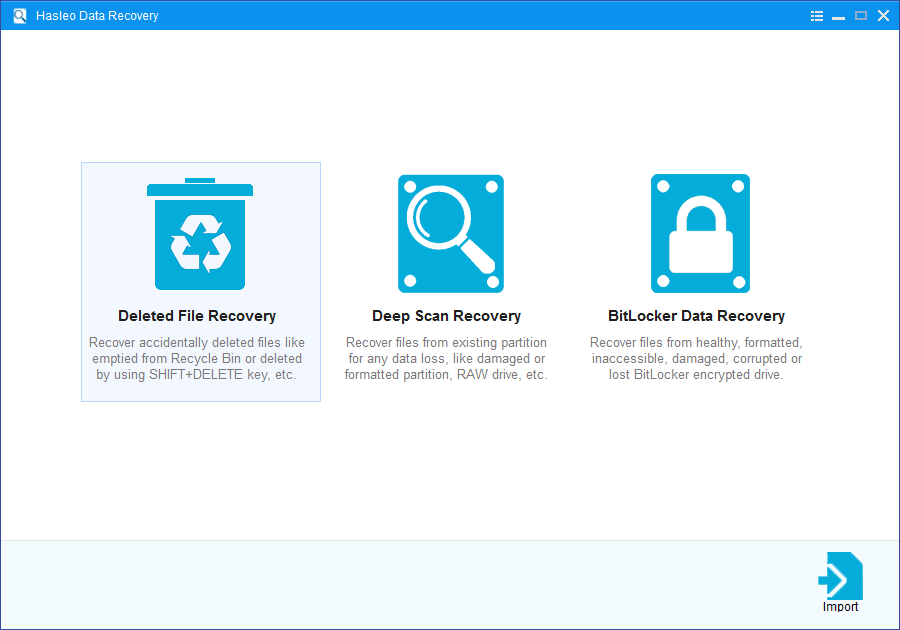
Step 1: Choose Deleted File Recovery
Connect the USB flash drive to your PC. Run Hasleo Data Recovery, and you will see a screen with multiple recovery options. Select Deleted File Recovery mode.
Step 2: Select the USB flash drive to Scan
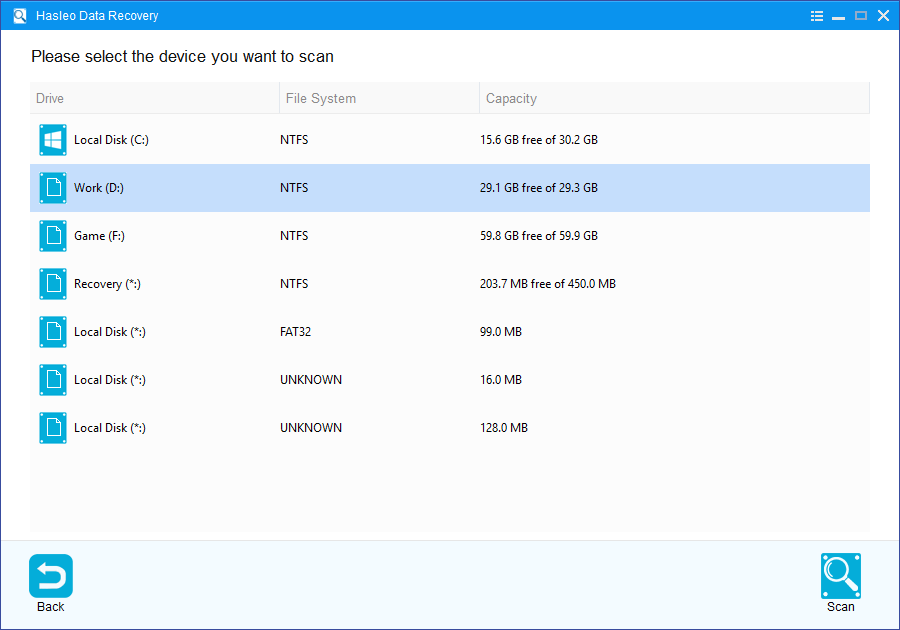
Select the USB flash drive where you lost your files, then let the software scan it for recoverable data.
Step 3: Preview and Recover Deleted Files
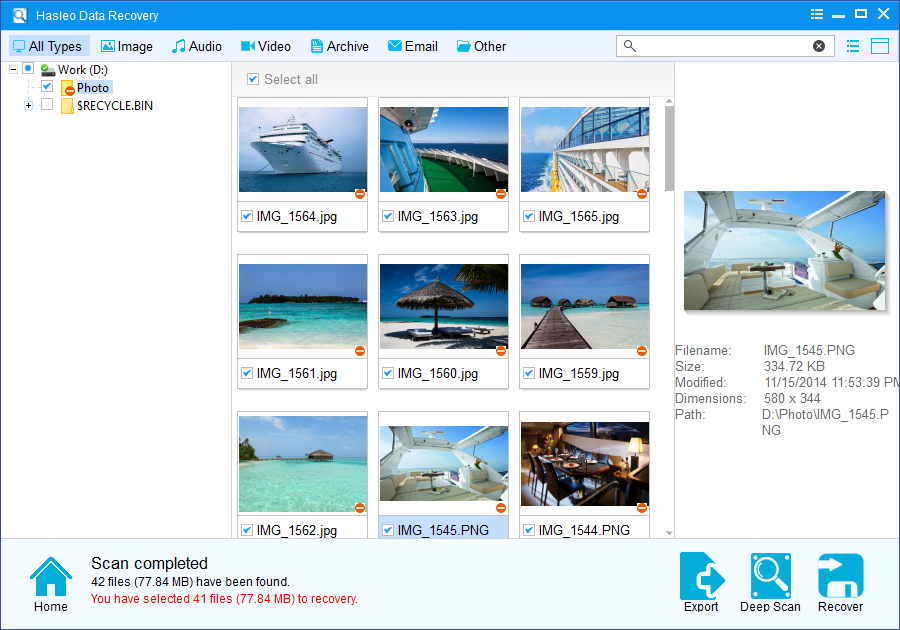
The software will display a list of found files. You can preview them by path or by type. Select the files you want to recover, then click the "Recover" button to save them.
Important Notes:
- If some files are not found by Deleted File Recovery, please click "Deep Scan" button to start the Deep Scan Recovery process, deep scan takes more time, but can find much more lost files.
- If the device you want to recover data from is encrypted with BitLocker Drive Encryption, try BitLocker Data Recovery.
- Do not save recovered files to the original device where data loss occurred, as this may overwrite the lost data.
- You can export or save the scan results for later use or future recovery.
Frequently Asked Questions (FAQ)
A: Yes, you can recover data from a USB flash drive after accidental deletion if you act quickly. When files are deleted, they are not immediately erased—they remain on the drive until overwritten. Stop using the USB drive immediately and use data recovery software like Hasleo Data Recovery to scan and recover your deleted files before new data overwrites them.
A: Common causes of USB flash drive data loss include: accidental deletion, formatting the drive, power failure during file transfer, virus or malware attacks, physical damage, improper removal without using 'Safely Remove Hardware', and file system corruption. To prevent data loss: always safely eject your USB drive, maintain backups on multiple storage devices, use antivirus software, and avoid using the drive on unreliable computers.
A: When you delete files from a USB flash drive (not using Shift+Delete), the files go to the Recycle Bin and can be restored from there. If files are permanently deleted or if the drive appears empty after a format, use Hasleo Data Recovery to scan the USB drive. The recovery software can find deleted files by examining the file system structures even after deletion or formatting.
A: To recover data from a corrupted USB flash drive: first, try connecting it to a different USB port or computer to rule out connection issues. If it still shows as RAW, inaccessible, or needs formatting, use Hasleo Data Recovery's Deep Scan feature which can read raw sectors to reconstruct files. For severely corrupted drives, the Deep Scan mode reads every sector to find file signatures and reconstruct recoverable data.
A: Quick scan examines file system records (like the file allocation table) to find recently deleted files. This is faster but may miss files if the file system is damaged. Deep scan reads every sector of the USB drive and searches for file signatures (specific byte patterns that identify file types) to reconstruct files. Deep scan is slower but much more effective for formatted, corrupted, or severely damaged USB drives.
Conclusion
Hasleo Data Recovery Free is a professional data recovery tool that can recover deleted or lost files from USB flash drives—whether the data loss is due to accidental deletion, formatting, power failure, virus infection, or physical damage.
Related Articles
- How to Recover Data from a RAW USB Flash Drive?
- How to Recover Deleted/Lost Files from Sandisk SD Card?
- How to Recover Lost Files From BitLocker Encrypted Drive?
- How to recover lost files after upgrading to Windows 10 form Windows 7/8/8.1?
- How to recover deleted/lost files from BitLocker To Go encrypted USB flash drive?


