

- How to Recover Deleted or Lost Files from an SD Card Using Hasleo Data Recovery Free
- Frequently Asked Questions (FAQ)
- Conclusion
As we know, SD Card (Secure Digital Card) is a non-volatile memory card format for use in portable devices, such as mobile phones, digital cameras, GPS navigation devices, and tablet computers. In these devices, SD card acts like a hard disk in desktop computers, where stores all kinds of system data and personal files. However, there will be risks if you did certain operations carelessly, like deleting an important SD card file by accident or formatting a SD card by mistake. It will be hard to get the file back as there are no Recycle or Trash function available for these device. And restoring the deleted/lost files becomes a tough task for most of common users who don't have much experience dealing with such issues.
Losing important files can be a disaster. Recovering those lost files helps minimize the damage. To recover deleted or lost files from an SD card, you need reliable data recovery software. We tested several tools that claimed to restore lost files, but most failed to deliver. The only one that successfully recovered all my lost data was Hasleo Data Recovery. This program uses advanced algorithms to detect lost or deleted files on various storage devices, including PC hard drives, external hard drives, USB flash drives, and SD cards. Before proceeding to the next steps, please download and install the software.

How to Recover Deleted or Lost Files from an SD Card Using Hasleo Data Recovery Free
Step 1: Choose Deleted File Recovery
Connect the SD card to your PC. Download, install, and run Hasleo Data Recovery. You will then see a screen with several recovery options. Select Deleted File Recovery mode.
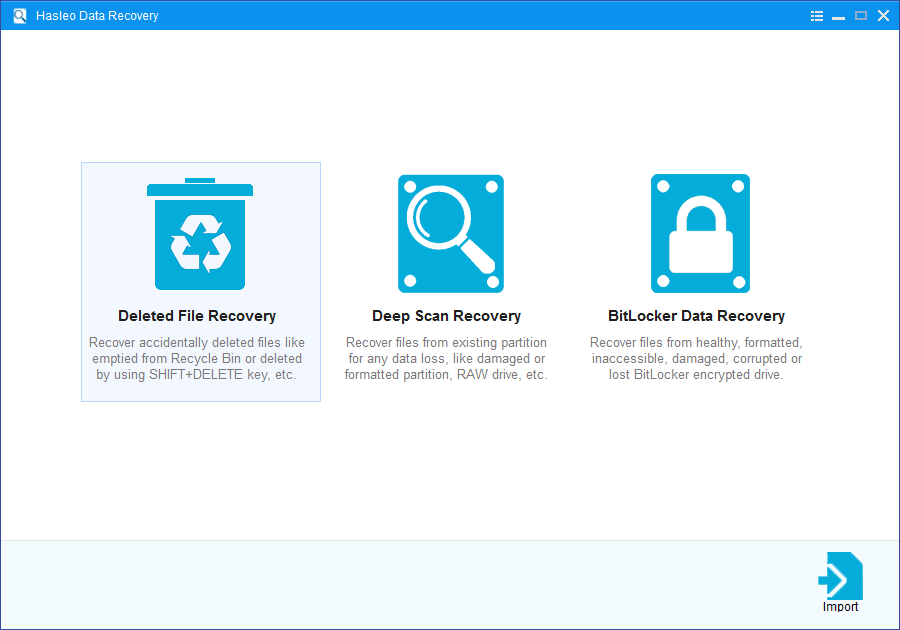
Step 2: Select the SD Card to Scan
Select the SD card where you lost your files, then let the software scan it for recoverable data.
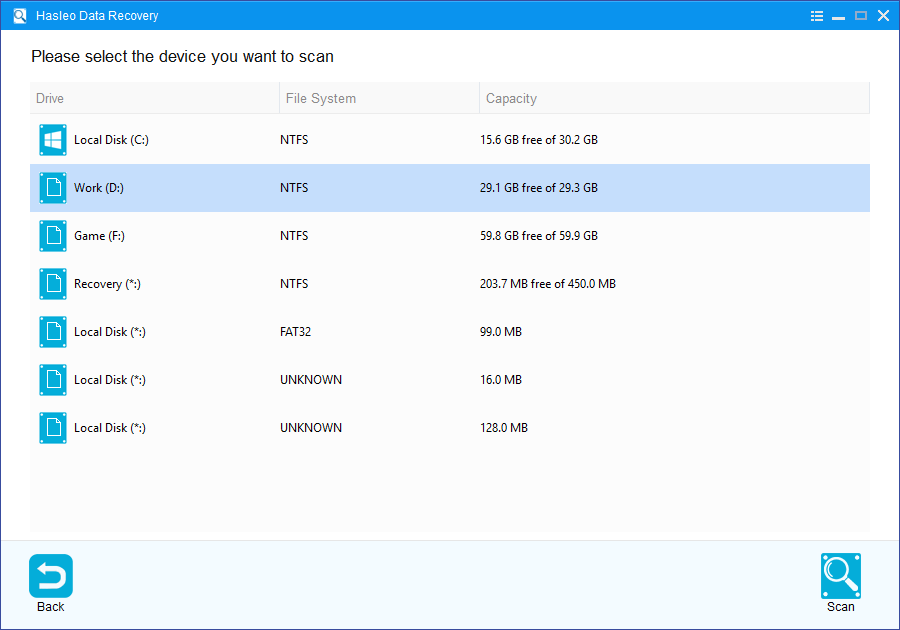
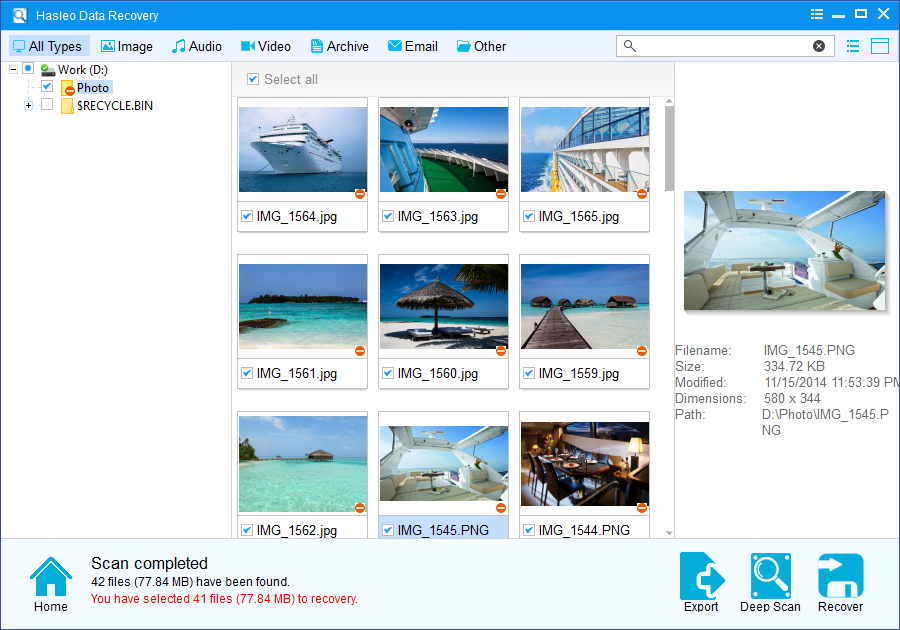
Step 3: Preview and Recover Deleted Files
The software will display a list of found files. You can preview them by path or by type. Select the files you want to recover, then click the "Recover" button to save them.
Important Notes:
- If some files are not found by Deleted File Recovery, please click "Deep Scan" button to start the Deep Scan Recovery process, deep scan takes more time, but can find much more lost files.
- If the device you want to recover data from is encrypted with BitLocker Drive Encryption, try BitLocker Data Recovery.
- Do not save recovered files to the original device where data loss occurred, as this may overwrite the lost data.
- You can export or save the scan results for later use or future recovery.
Frequently Asked Questions (FAQ)
A: Yes, deleted photos and videos can be recovered from an SD card if they haven't been overwritten. When files are deleted, the data remains on the card until new files overwrite the space. Use SD card recovery software like Hasleo Data Recovery immediately after deletion to scan and recover your lost media files before new data writes over them.
A: Common SD card data loss causes include: accidental deletion, formatting the card, card becoming RAW or inaccessible, virus or malware infection, sudden removal during file transfer, power failure, physical damage, file system corruption, and wear and tear from long-term use. Different causes may require different recovery approaches.
A: A quick format only removes the file allocation table, making data appear erased but keeping it recoverable until overwritten. A full format writes zeros to all sectors and is much harder to recover. Hasleo Data Recovery's Deep Scan can still recover many files from formatted SD cards by reading raw sectors and searching for file signatures, regardless of format type.
A: When an SD card shows as RAW or asks to be formatted, do NOT format it—this would cause permanent data loss. Instead, use Hasleo Data Recovery's Deep Scan feature which reads raw sectors to find recoverable files. The software can reconstruct files even when the file system is corrupted. Connect the card, run the scan, preview found files, and recover them to a different storage device.
A: Hasleo Data Recovery supports all major SD card brands including SanDisk, Samsung, Kingston, Sony, Transcend, Lexar, Toshiba, and others. The recovery process doesn't depend on the brand—it reads the raw data on the card regardless of manufacturer. As long as the card is recognized by your computer, recovery software can scan and recover data from it.
Conclusion
As professional data recovery software, Hasleo Data Recovery allows you to completely recover deleted or lost files from any SD Card. It supports all brands, including SanDisk, Samsung, Kingston, Sony, Transcend, and more.


