

With the huge increase in the use of USB drives, the potential for sensitive data to be lost or stolen has really become more of a problem because it is much easier to lose or steal a device no bigger than a package of chewing gum. To protect sensitive data stored on USB drives, BitLocker To Go have emerged. BitLocker Drive Encryption has been a feature of Microsoft's client operating systems since Windows Vista, but Windows 7 adds some compelling new features, most notable of which is BitLocker To Go, which allows you to encrypt a USB flash drive using BitLocker Drive Encryption. With this feature, any USB flash drive formatted with FAT32, exFAT, or NTFS can be encrypted with BitLocker Drive Encryption in Windows 7 or later operating system.
Typically, the data stored on a BitLocker To Go USB flash drive is very important, so the loss of this data may lead to great troubles and unhappiness. However, for avarious reasons, users still frequently experience data loss on these drives. If you accidentally lose data on a BitLocker To Go USB flash drive, what should you do? The good news is that Hasleo released a powerful and reliable BitLocker To Go Data Recovery software—Hasleo Data Recovery—which is fully capable of recovering deleted files and data from BitLocker To Go USB flash drives.

User Guide: How to Recover Deleted or Lost Files from a BitLocker To Go Drive Using Hasleo Data Recovery?
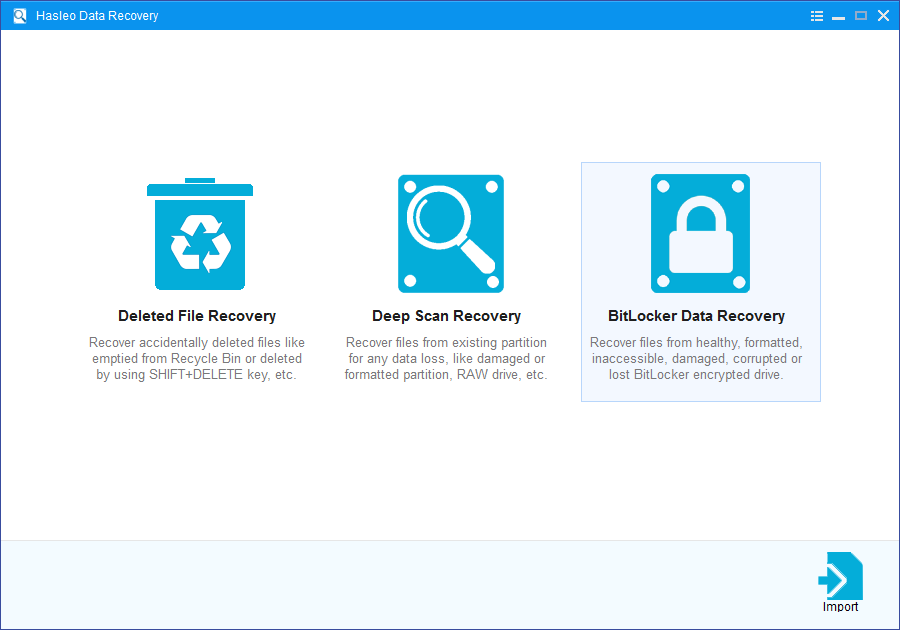
Step 1: Choose BitLocker Data Recovery
Connect the BitLocker To Go USB flash drive to your PC. Download, install, and run Hasleo Data Recovery. From the main screen, please select BitLocker Data Recovery mode.
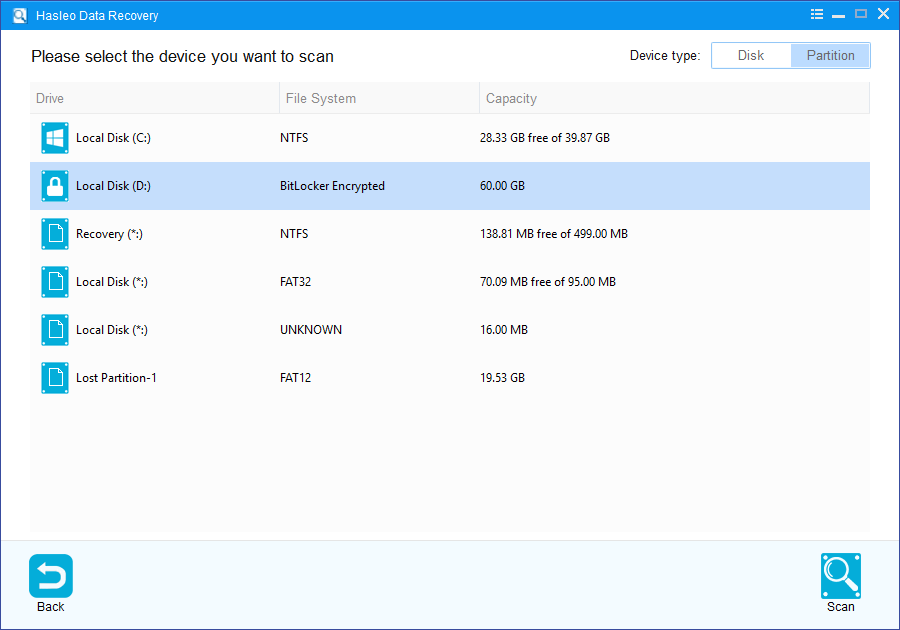
Step 2: Select the USB flash drive to scan
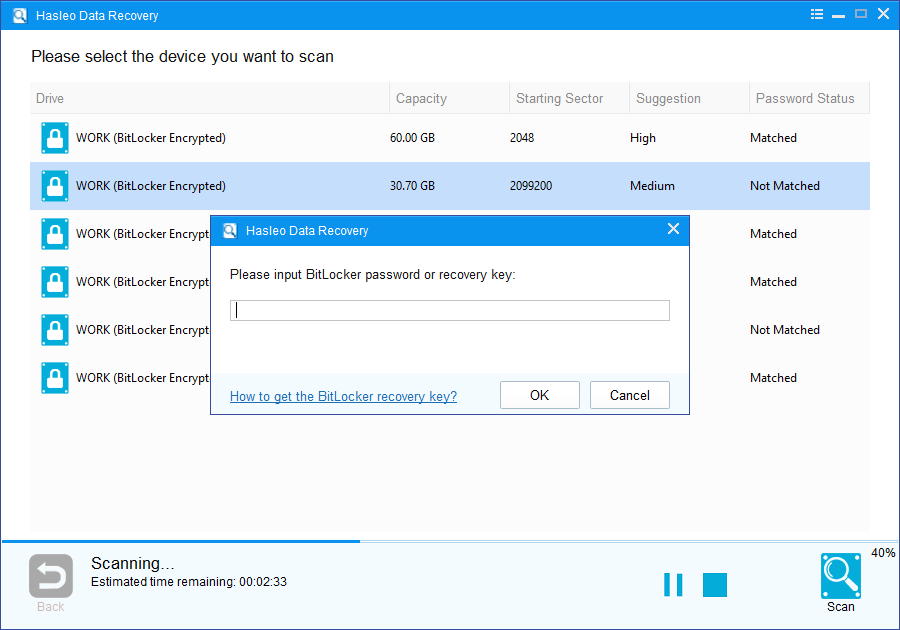
1. Select the USB flash drive where you lost your files. Click the "Scan" button to detect all BitLocker-encrypted partitions on the device.
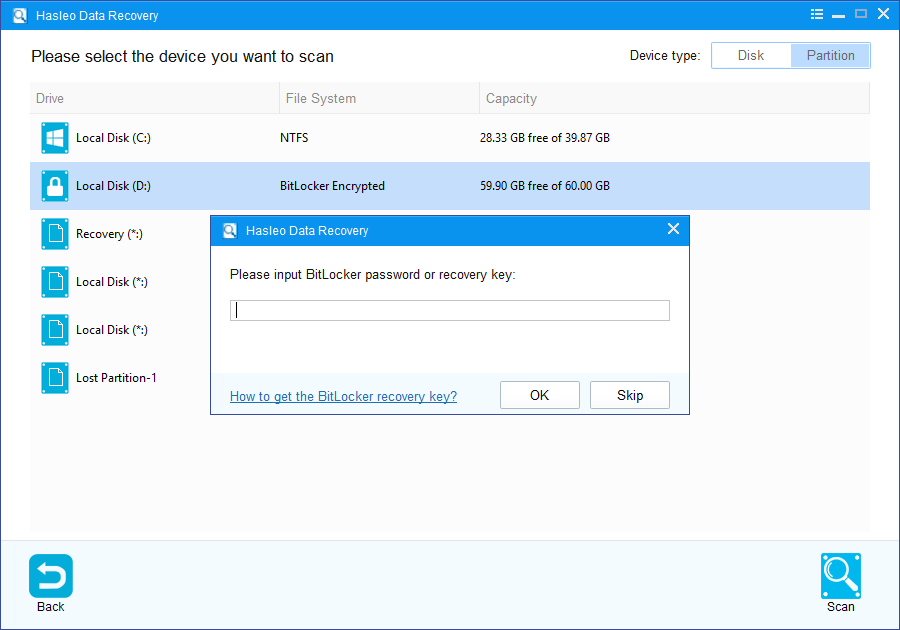
2. A pop-up window will appear asking you to enter the BitLocker password or 48-digit BitLocker recovery key. If you don't want to enter the password or BitLocker recovery key here, just click the "Skip" button to skip it.
3. Hasleo Data Recovery will display all detected BitLocker-encrypted partitions on the target device. If you provided the password or BitLocker recovery key in the previous step, the password status will show whether they match the partition.
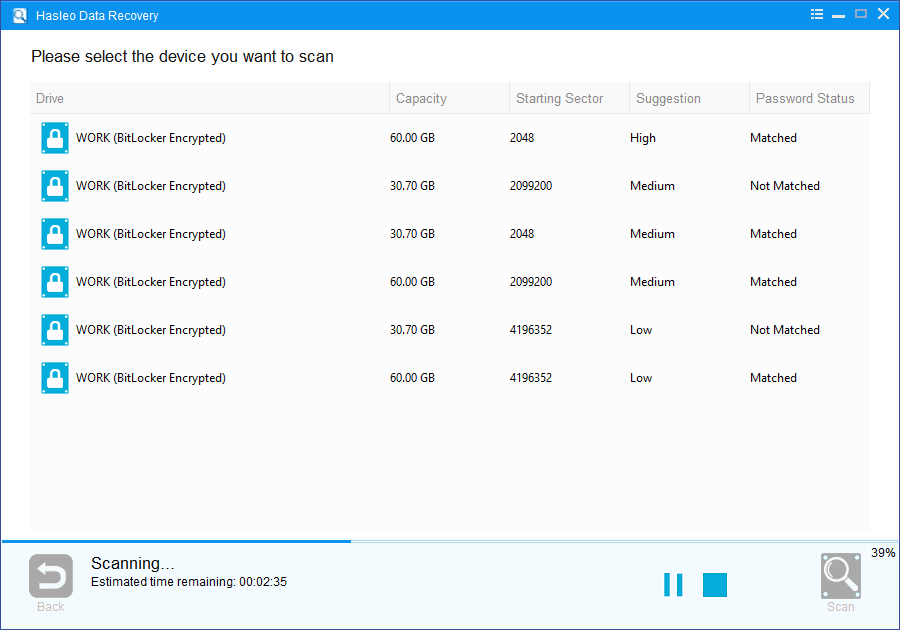
4. Double-click the partition you want to recover data from. If you've already entered the password or BitLocker recovery key and the password or recovery key matches, Hasleo Data Recovery will start scanning lost files. Otherwise, a prompt will appear asking for your BitLocker password or 48-digit recovery key. After entering the correct credentials and clicking "OK", the scan will start.
Step 3: Preview and Recover Deleted Files
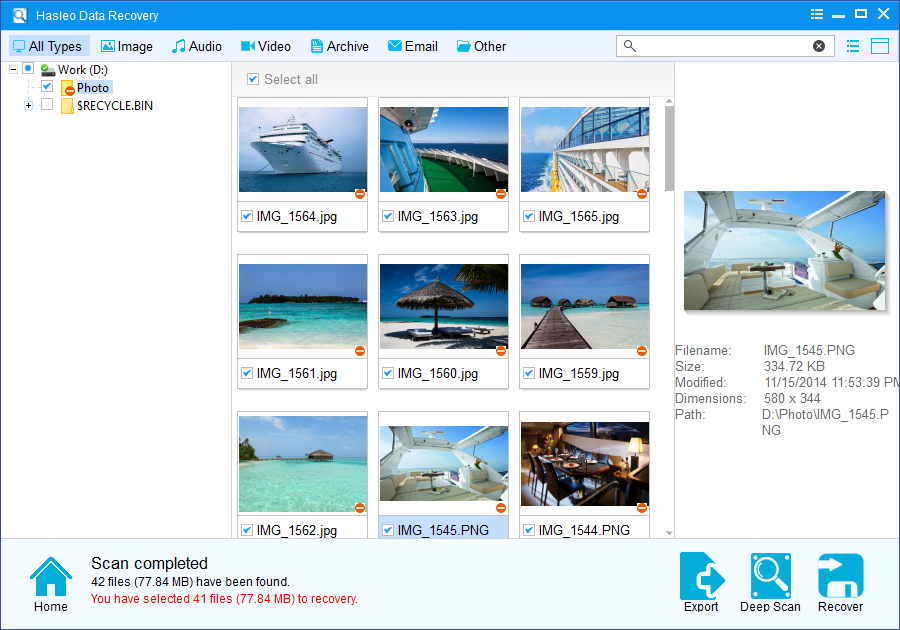
After scanning, the software will display a list of found files. You can preview them by browsing their paths or types. Select the files you wish to recover, then click the "Recover" button to save them to a destination of your choice. If your desired files are not found, click "Deep Scan" to initiate the Deep Scan Recovery process. This process takes additional time but can recover many more lost files.
Hasleo Data Recovery is professional BitLocker Data Recovery software that can recover data from not only BitLocker-encrypted USB flash drives but also recover data from a BitLocker encrypted external hard drive.
Important Notes:
- You must enter the correct Bitlocker password or the 48-digit Bitlocker recovery key to successfully recover data from a BitLocker-encrypted drive.
- If the metadata area of a BitLocker-encrypted drive is severely corrupted, data recovery from that partition may fail—even with the correct password or recovery key.
- Do not save recovered files to the original partition where the lost data was stored. This prevents the data from being overwritten.
- You can export or save the scan results for later use or future recovery sessions.
Frequently Asked Questions (FAQ)
A: BitLocker To Go is a feature introduced in Windows 7 that allows you to encrypt USB flash drives using BitLocker Drive Encryption. While regular BitLocker encrypts internal hard drives and fixed drives, BitLocker To Go specifically extends BitLocker encryption to removable drives like USB flash drives and external hard drives.
A: No, you cannot recover data from a BitLocker To Go encrypted drive without the correct BitLocker password or 48-digit recovery key. The encryption protects all data on the drive, and recovery software like Hasleo Data Recovery requires these credentials to unlock and access the files.
A: Use Hasleo Data Recovery in BitLocker Data Recovery mode. Connect the USB drive, select it for scanning, enter your BitLocker password or recovery key when prompted, and the software will scan for recoverable files. You can then preview and save the recovered files to a safe location.
A: USB flash drives are small and easy to lose or steal, making them a significant data security risk. BitLocker To Go encrypts your portable drives, ensuring that even if the device is lost or stolen, your sensitive data remains protected and inaccessible to unauthorized users.
A: BitLocker To Go supports USB flash drives formatted with FAT32, exFAT, or NTFS file systems. This covers most USB flash drives on the market, as these are the most common file system formats for removable media.


