To access a BitLocker encrypted drive in Linux, first we need to mount the BitLocker encrypted drive because Linux is not able to recognize BitLocker encrypted drive by default. Hasleo BitLocker Anywhere For Linux is such a tool that you can use it to mount BitLocker encrypted drive in Linux, after that you can access the drive as you would access a Linux's native drive, such as read, write, copy, delete files, etc. In this tutorial we will tell you how to mount, read and write BitLocker encrypted drive in Linux with Hasleo BitLocker Anywhere For Linux.



Tutorial to Open, Read and Write BitLocker Encrypted Drive in Linux.
Step 1. Download and extract Hasleo BitLocker Anywhere For Linux.
Step 2. Open a terminal as a non-root user, go to the bin subfolder under the extract folder, then execute the 'run.sh' script to start the program.
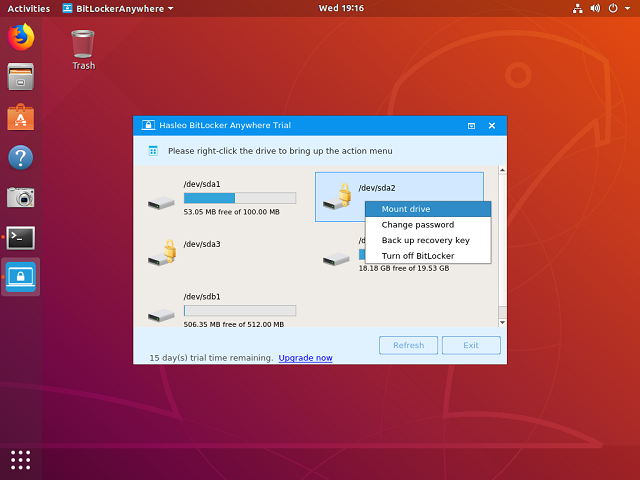
Step 3. Right-click the BitLocker encrypted drive you want to access in main window, then click "Mount Drive".
Step 4. Enter the password or recovery key, then click "Mount" button to mount the drive.
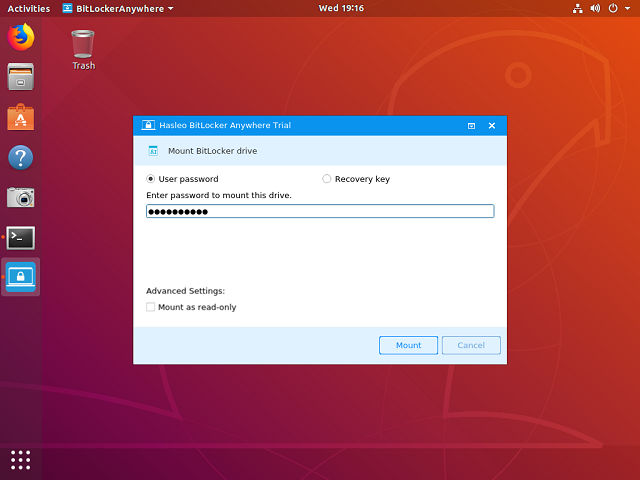
- Mount as read-only: Allows you to mount the bitlocker-encrypted drive in read-only mode.
Step 5. After the operation completes successfully, the drive has been successfully mounted. Please note that the default mount path for the drive is: /mnt/BitLockerAnywhere/xxxx (xxxx is the device name of the device.).
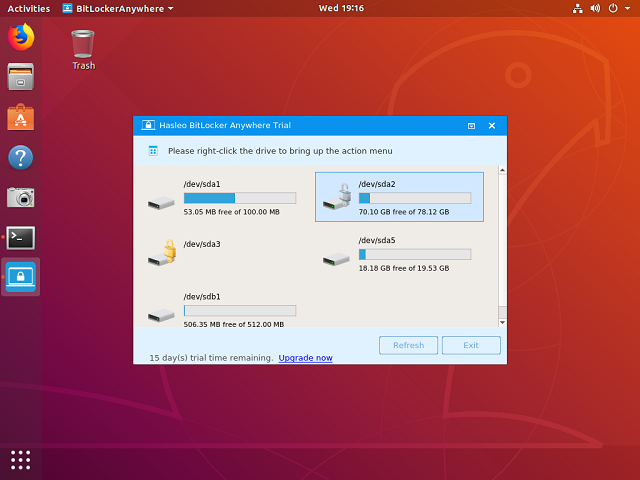
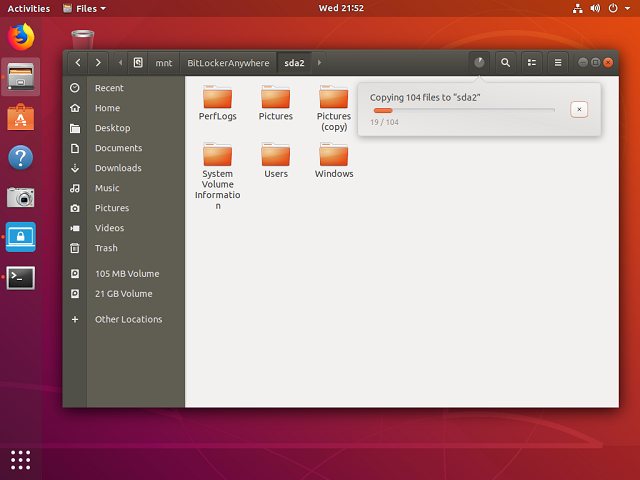
Step 6. In most Linux distributions, you can double-click on the drive icon in the main window to browse the drive, if this doesn't work, you have to browse the drive manually. After that you can access the BitLocker encrypted drive like a native Linux drive, such as read, write, copy, delete files, etc.
When a mounted BitLocker encrypted drive is no longer being used, you should unmount the drive to prevent unauthorized access, for more information please refer to: How to unmount BitLocker Encrypted Drive in Linux?
Frequently Asked Questions (FAQ) for Reading and Writing BitLocker Drive in Linux
A: No, Linux cannot natively recognize BitLocker encrypted drives. You need third-party software like Hasleo BitLocker Anywhere For Linux to mount, read, and write BitLocker encrypted drives in Linux.
A: You must first mount the BitLocker encrypted drive using Hasleo BitLocker Anywhere For Linux before you can access it. After mounting, you can read and write as if it were a native Linux drive.
A: After mounting, you can perform all file operations including read, write, copy, delete files, and create new folders, just like accessing a native Linux drive.
A: The default mount path is /mnt/BitLockerAnywhere/xxxx, where xxxx is the device name of the mounted BitLocker encrypted drive.
A: Yes, you can use the "Mount as read-only" option when mounting to prevent any modifications to the drive contents.
A: You can double-click the drive icon in the main window to browse, or manually navigate to /mnt/BitLockerAnywhere/xxxx using your file manager.
A: Yes, when a mounted BitLocker encrypted drive is no longer being used, you should unmount the drive to prevent unauthorized access.
A: Yes, Hasleo BitLocker Anywhere For Linux can read and write both internal and external BitLocker encrypted drives including USB flash drives and external hard drives.