

BitLocker-encrypted drives cannot be accessed directly in Linux because BitLocker uses a proprietary encryption algorithm developed by Microsoft for Windows. Linux does not natively support reading or writing BitLocker-encrypted drives. To access a BitLocker drive on a Linux PC, you need a third-party BitLocker solution for Linux such as Hasleo BitLocker Anywhere For Linux.
For security reasons, many Windows users use BitLocker to encrypt drives to prevent unauthorized access to their important data. If you are a Linux user, you may want to access BitLocker encrypted drives in the Linux operating system. Hasleo BitLocker Anywhere For Linux is a free download BitLocker read and write software which allows you to access BitLocker encrypted drives in Linux, such as Ubuntu, Fedora, Debian, OpenSUSE, Red Hat Enterprise Linux, etc.
Tutorial to access BitLocker encrypted drive in Linux, such as Ubuntu, Fedora, Debian, OpenSUSE, Red Hat Enterprise Linux, etc.
Step 1. Download and extract Hasleo BitLocker Anywhere For Linux.
Step 2. Open a terminal as a non-root user, go to the bin subfolder under the extract folder, then execute the 'run.sh' script to start the program.
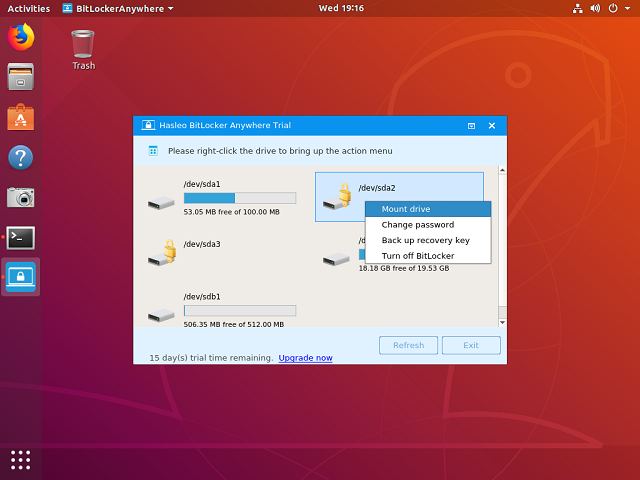
Step 3. Right-click the BitLocker encrypted drive you want to access in main window, then click "Mount drive".
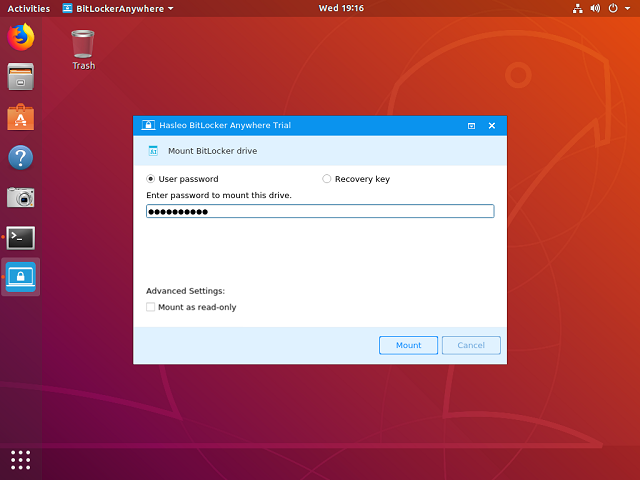
Step 4. Enter the password or recovery key, then click "Mount" button to mount the drive.
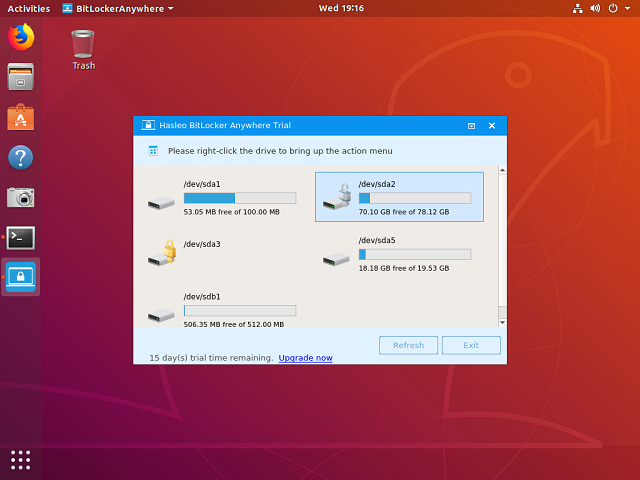
Step 5. After the operation completes successfully, the drive has been successfully mounted. The default mount path for the drive is: /mnt/BitLockerAnywhere/xxxx (xxxx is the device name of the device).
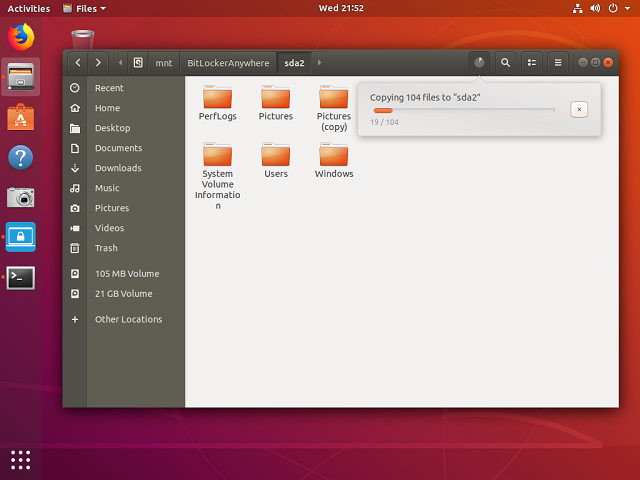
Step 6. Now you can access the BitLocker encrypted drive like a Linux's native drive, such as read, write, copy, delete files, etc.
Hasleo BitLocker Anywhere For Linux is a BitLocker read and write software which we can use to access BitLocker encrypted drives in Linux, such as Ubuntu, Fedora, Debian, OpenSUSE, Red Hat Enterprise Linux, etc. As an all-in-one BitLocker solution for Linux, we can also use it to encrypt drives with BitLocker in Linux or decrypt drives with BitLocker in Linux.
Frequently Asked Questions
A: No, Linux does not natively support BitLocker encryption. You need third-party software like Hasleo BitLocker Anywhere For Linux to access BitLocker encrypted drives in Linux.
A: Hasleo BitLocker Anywhere For Linux supports popular Linux distributions including Ubuntu, Fedora, Debian, OpenSUSE, and Red Hat Enterprise Linux.
A: Launch Hasleo BitLocker Anywhere For Linux, right-click the BitLocker encrypted drive, select "Mount drive", enter your password or recovery key, then click "Mount". The drive will be accessible at /mnt/BitLockerAnywhere/xxxx.
A: Yes, Hasleo BitLocker Anywhere For Linux provides full read and write access to BitLocker encrypted drives in Linux, allowing you to copy, modify, and delete files.
A: If you forget your BitLocker password, you can use the BitLocker recovery key. The recovery key is typically saved to your Microsoft account, printed, or stored in a secure location when BitLocker was originally enabled.
A: Yes, Hasleo BitLocker Anywhere For Linux can access both internal and external BitLocker encrypted drives, including USB flash drives and external hard drives.
A: Yes, it can handle TPM-protected drives by using the password or recovery key for authentication. The software does not bypass TPM security; it simply requires proper credentials to unlock the drive.