Anyone who knows the BitLocker password can access the BitLocker encrypted drive, if one day your password leaks abnormally, how do we ensure that the data does not leak? The answer is to change the password in time. This tutorial mainly explains how to change BitLocker password with Hasleo BitLocker Anywhere in Linux.



Tutorial to Change BitLocker Password in Linux.
Step 1. Download and extract Hasleo BitLocker Anywhere For Linux.
Step 2. Open a terminal as a non-root user, go to the bin subfolder under the extract folder, then execute the 'run.sh' script to start the program.
Step 3. Right-click the BitLocker encrypted drive you want to change password in main window, then click "Change password".
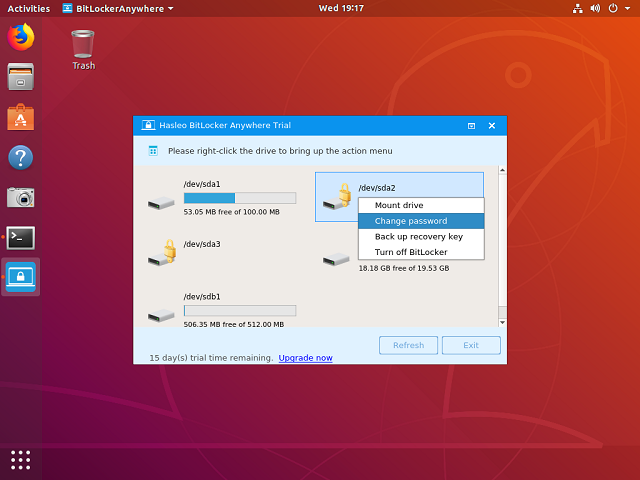
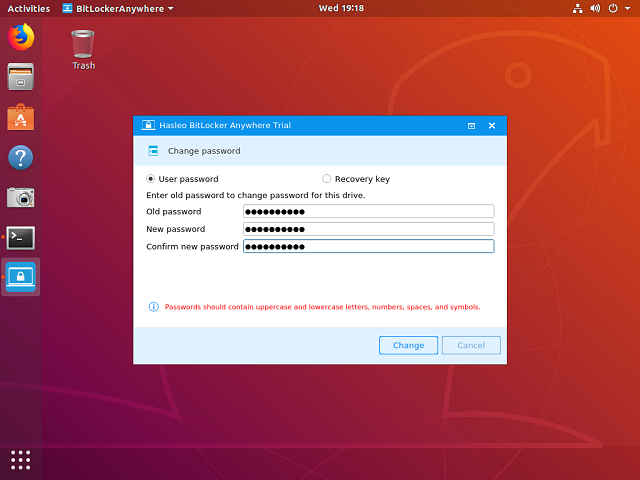
Step 4. Enter the old password or recovery key, followed by the new password (entered twice), and then click "Change" button to change password. In order to ensure data security, the new password should contain upper and lower case alphabets, numbers, and special symbols.
Step 5. When the program prompts that the password has been successfully changed, click the "Cancel" button to return to the main window.
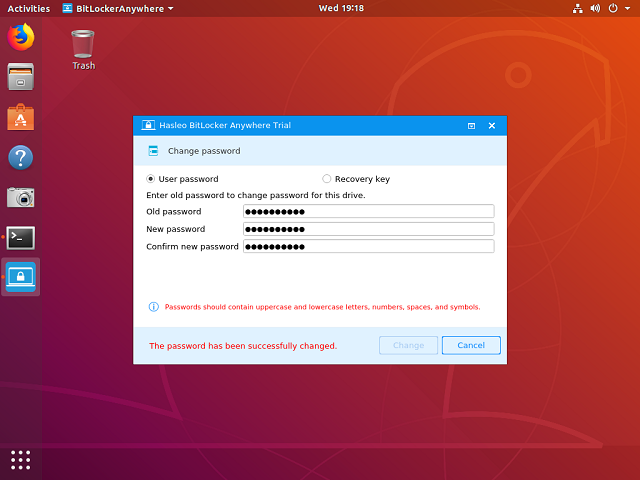
After the password has been successfully changed, you have to enter the newly password to mount the BitLocker encrypted drive and then read and write the BitLocker encrypted drive.
Frequently Asked Questions (FAQ) for Changing BitLocker Password in Linux
A: Yes, Hasleo BitLocker Anywhere For Linux is the only software available that can change BitLocker password for encrypted drives in Linux.
A: You need to have Hasleo BitLocker Anywhere For Linux installed, and you must know the current BitLocker password or recovery key to change the password.
A: Yes, if you have forgotten your current BitLocker password, you can use the BitLocker recovery key to authenticate and change the password.
A: For optimal security, your new BitLocker password should contain a combination of uppercase and lowercase letters, numbers, and special symbols.
A: Yes, after successfully changing the password, you must use the new password to mount the BitLocker encrypted drive before you can access it.
A: Yes, Hasleo BitLocker Anywhere For Linux can change passwords for both internal and external BitLocker encrypted drives including USB flash drives and external hard drives.
A: It is recommended to change your BitLocker password immediately if you suspect your password has been leaked or compromised, or periodically as part of good security practices.
A: No, changing the BitLocker password does not affect or encrypt the data on the drive. The encryption key remains the same; only the authentication method is updated.