In Linux, when we no longer use a drive, we usually choose to unmount the drive to ensure data security. This tutorial will teach you how to unmount BitLocker encrypted drive in Linux with Hasleo BitLocker Anywhere For Linux.



Tutorial to unmount BitLocker Encrypted Drive in Linux.
Step 1. Download and extract Hasleo BitLocker Anywhere For Linux.
Step 2. Open a terminal as a non-root user, go to the bin subfolder under the extract folder, then execute the 'run.sh' script to start the program.
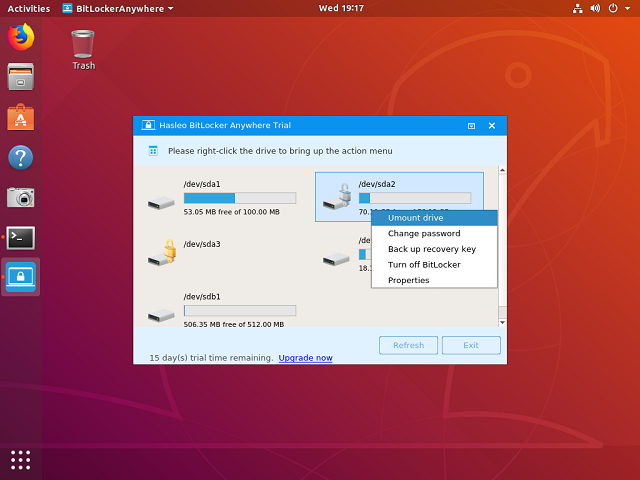
Step 3. Right-click the drive you want to unmount in main window, then click "Umount Drive".
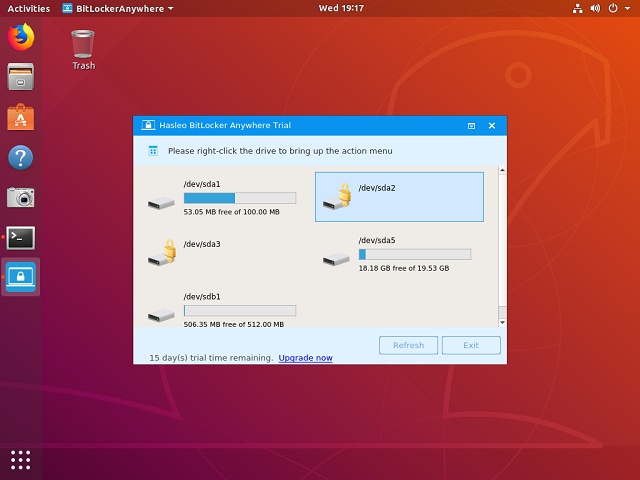
Step 4. When the operation completes successfully, indicates that the drive was successfully unmounted.
Frequently Asked Questions (FAQ) for Unmounting BitLocker Drive in Linux
A: In Linux, when you no longer use a drive, you should unmount it to ensure data security. Unmounting prevents unauthorized access and ensures data integrity.
A: Right-click the mounted BitLocker encrypted drive in Hasleo BitLocker Anywhere For Linux main window, then click "Umount Drive". When the operation completes successfully, the drive is unmounted.
A: Unmounting does not affect or delete your data. It simply disconnects the drive from the system, preventing further access until you mount it again with your password.
A: Yes, you should save all your work and close any files on the BitLocker encrypted drive before unmounting to prevent data loss or corruption.
A: Yes, you can remount the BitLocker encrypted drive at any time by entering your password or recovery key in Hasleo BitLocker Anywhere For Linux.
A: Unmounting temporarily locks the drive so it cannot be accessed. Decrypting (turning off BitLocker) permanently removes the encryption from the drive.
A: Yes, it is recommended to properly unmount external BitLocker drives before physically removing them from the Linux computer to ensure data integrity.
A: You need Hasleo BitLocker Anywhere For Linux to unmount BitLocker encrypted drives in Linux. It provides a simple interface to manage mounted BitLocker drives.