

- How Windows 11/10 Handles File Deletion
- How to Undelete Files in Windows 11/10 Using Hasleo Data Recovery Free
- Frequently Asked Questions (FAQ)
- Conclusion
I accidentally deleted an entire folder of files on my computer running Windows 10 Enterprise. This folder contains important documents and photos that I urgently need to complete my work. I have used Hasleo Data Recovery Free before, but I would like to confirm whether it can recover these deleted files. I look forward to your positive reply.
If you accidentally deleted some files from Windows 11/10, don't panic, please go to the Recycle Bin to see if these files are here. If you're lucky enough to find them, right click the file and click "Restore" to recover deleted files from Recycle Bin.
Can I recover deleted files from Windows 10 or 11 if they're not in the Recycle Bin? Yes. You may wonder why deleted files can still be recovered. When a file is deleted—whether by pressing Shift + Delete or by emptying the Recycle Bin—Windows only removes or marks the file entry as deleted. The space previously occupied by the file is marked as free and available for reuse. However, the actual file content remains on the storage media and is not immediately destroyed. This is the fundamental principle of the Windows file system. As long as newly written data does not overwrite the original file content, recovery remains possible.
Now that you understand why deleted files can be recovered in Windows 11 and 10, if you accidentally delete important files, you simply need reliable deleted file recovery—such as Hasleo Data Recovery—to get them back.

How Windows 11/10 Handles File Deletion
When you press the Delete key in Windows 11 or 10, the behavior depends on your settings and the type of deletion:
- Recycle Bin deletion - The file is moved to the Recycle Bin. Its directory entry is marked but the data stays intact. Restoring is instant. This is the standard behavior for internal drives when files are deleted normally.
- Shift + Delete - The file bypasses the Recycle Bin entirely. Windows marks the file's disk clusters as available for reuse, but the raw data remains on the drive until overwritten by new writes.
- Emptied Recycle Bin - Same effect as Shift+Delete: directory markers are cleared, but file content persists in the unallocated space.
On Windows 10, the Recycle Bin behaves consistently across all editions. On Windows 11, the Recycle Bin includes a "File cleanup recommendations" feature in Storage Sense that can auto-empty files after a configurable period — which means files may be permanently removed sooner than expected if this setting is enabled.
| Method | Recovery Scope | Success Rate | Best For |
| Recycle Bin Restore | Normally deleted files (not emptied) | High (near 100% if Recycle Bin not full) | Accidental deletion, mistaken removal |
| Previous Versions (Shadow Copy) | Files with prior versions on the same volume | Medium to High (depends on System Protection being on & restore points not deleted) | Overwritten or modified files |
| File History | Files backed up to an external or network drive | High (requires pre-configured backup) | Users who have already enabled automatic backup |
| Data Recovery Software | Permanently deleted, emptied Recycle Bin, formatted drives, lost partitions | Moderate to High (varies by overwrite) | Shift+Delete, emptied Bin, data loss |
How to Undelete Files in Windows 11/10 Using Hasleo Data Recovery Free.
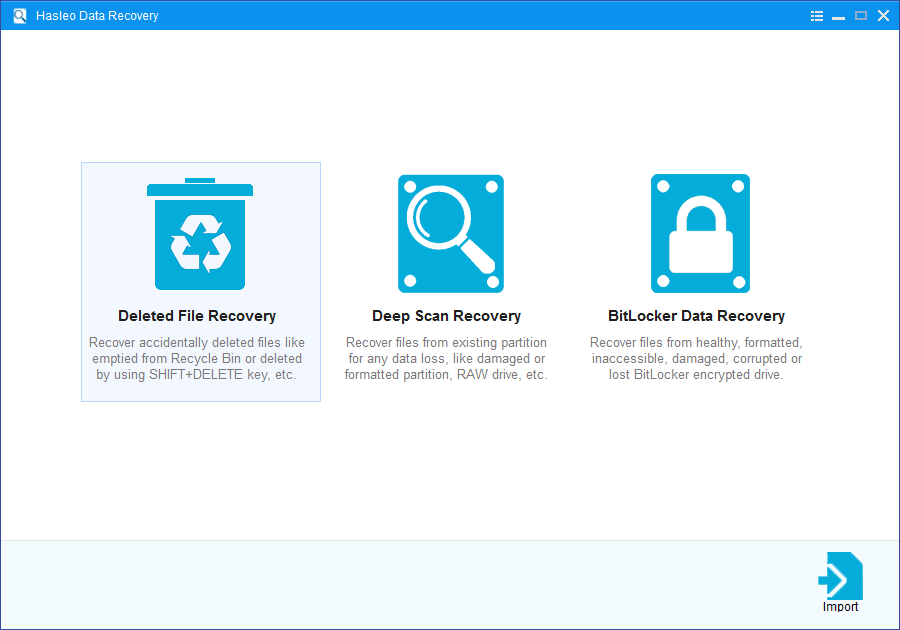
Step 1: Choose Deleted File Recovery
Download, install, and run Hasleo Data Recovery. On the main interface, select Deleted File Recovery mode.
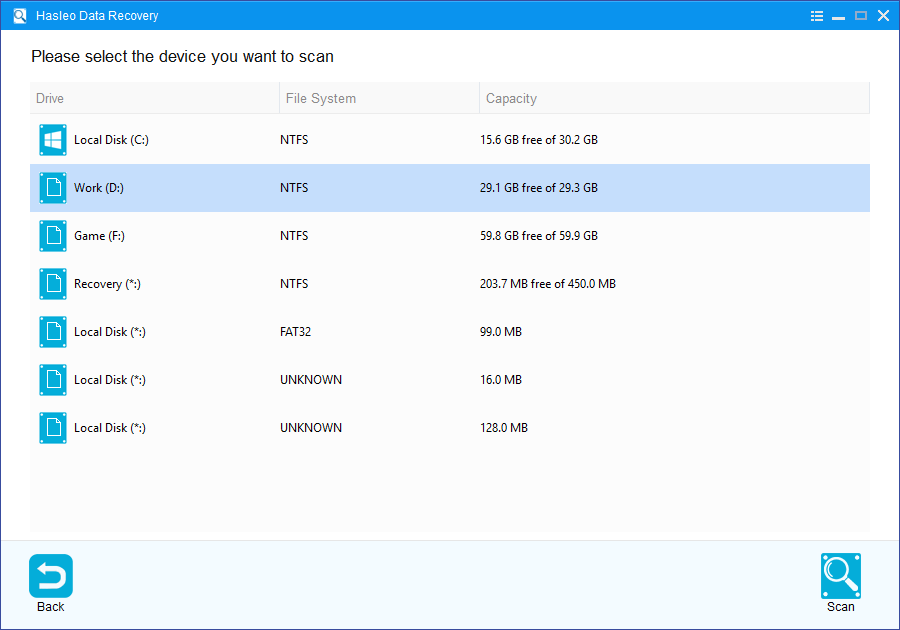
Step 2: Select a Location to Scan
Select the partition where you lost your files, then let the software scan it for recoverable data.
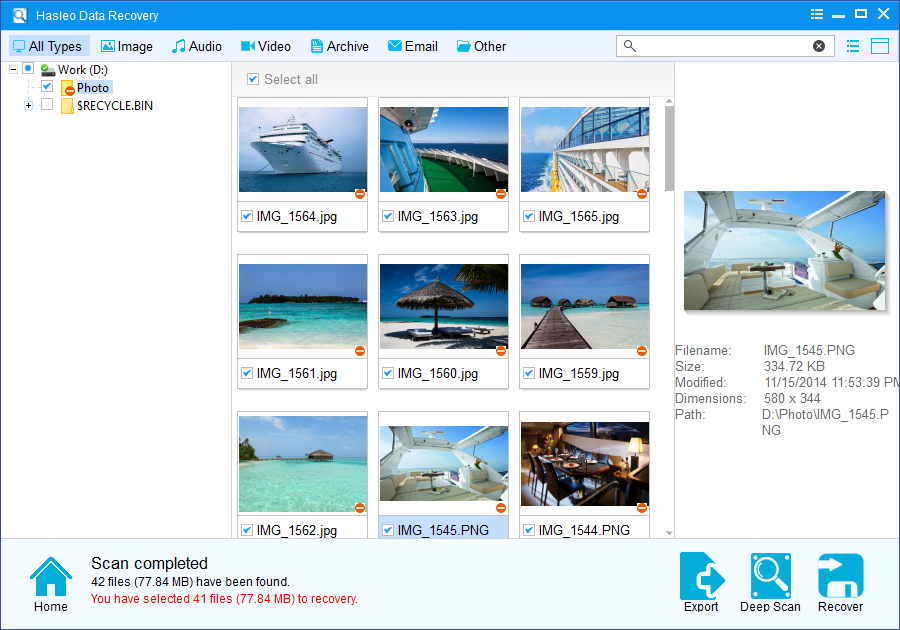
Step 3: Preview and Recover Deleted Files
The software will display a list of found files. You can preview them by path or by type. Select the files you want to recover, then click the "Recover" button to save them.
Important Notes:
- If some files are not found by Deleted File Recovery, please click "Deep Scan" button to start the Deep Scan Recovery process, deep scan takes more time, but can find much more lost files.
- If the device you want to recover data from is encrypted with BitLocker Drive Encryption, try BitLocker Data Recovery.
- Do not save recovered files to the original device where data loss occurred, as this may overwrite the lost data.
- You can export or save the scan results for later use or future recovery.
Frequently Asked Questions (FAQ)
A: When you delete files normally (without Shift+Delete), they go to the Recycle Bin and can be restored by opening the Recycle Bin and clicking 'Restore'. If you used Shift+Delete or emptied the Recycle Bin, files are permanently deleted but the data remains on the drive until overwritten. You can use data recovery software like Hasleo Data Recovery to scan and recover these permanently deleted files from Windows 11/10.
A: Deleted files remain recoverable until the space they occupy is overwritten by new data. The timeline varies based on how much you use your computer. Files may be recoverable for days, weeks, or even months if the drive has low usage. The best practice is to attempt recovery as soon as possible after deletion to maximize your chances of success.
A: Recycle Bin recovery is for normally deleted files that haven't been emptied—it restores files to their original location with one click. Software recovery (using tools like Hasleo Data Recovery) is for permanently deleted files or files deleted from external drives. Software recovery scans the raw storage to find file signatures and reconstruct deleted data, making it effective for files that bypass the Recycle Bin.
A: Hasleo Data Recovery offers several advantages: it has both quick scan and deep scan modes—the quick scan finds recently deleted files while deep scan reads every sector for maximum recovery. It supports all file types and file systems, includes a preview feature so you can verify files before recovery, and can handle complex scenarios like formatted drives, corrupted partitions, and BitLocker encrypted drives.
A: Yes, Hasleo Data Recovery can recover all common file types including photos (JPG, PNG, RAW), documents (DOC, PDF, XLS), videos (MP4, AVI, MOV), audio files (MP3, WAV), and more. The software organizes recovered files by type and allows preview before recovery, so you can selectively recover only the files you need from your Windows 11/10 system.
Conclusion
Accidental or intentional file deletion in Windows 10 or 11 can lead to critical data loss. Fortunately, you can recover deleted files using free software like Hasleo Data Recovery Free.
Important: If you have lost or deleted files, stop using the affected partition immediately. Continued use may overwrite the original data and significantly reduce your chances of successful recovery.
Related Articles
- How to Recover Deleted/Lost Files from SD Card?
- How to Recover Deleted/Lost Files from USB flash drive?
- How to Recover Deleted/Lost Files from External Hard Drive?
- How to Recover Deleted/Lost Files from BitLocker Encrypted Drive?
- How to Recover Lost Files after Upgrading to Windows 10 form Windows 7/8/8.1?


