

rEFInd is a boot manager for UEFI computer that will allow you to choose between Windows, Linux and macOS, and other operating systems when you boot your computer, it can auto-detect your installed operating systems and presents a pretty GUI menu these operating systems. rEFInd is one of the most popular multi-boot managers on the market.
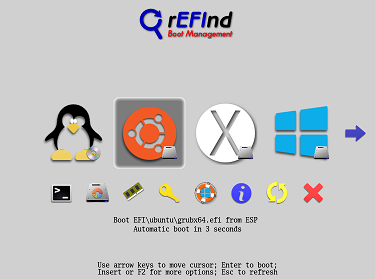
Under Linux and macOS operating systems, you can use refind-install script to install rEFInd, it automatically copies rEFInd's files to the EFI System Partition (ESP) and makes changes to the firmware's NVRAM settings so that rEFInd will start the next time you boot. If the refind-install script does not work properly or you want to install it using Windows, you may need to use EasyUEFI to complete the installation and configuration. EasyUEFI is a Windows software for users to manage EFI boot options and ESP partitions, it is the tool recommended by rEFInd official. Below we'll show you how to set up multi-boot of Windows, Linux and Mac using rEFInd and EasyUEFI.
Tutorial to set up multi-boot of Windows, Linux and Mac using rEFInd and EasyUEFI.
Step 1. Download rEFInd from rEFInd's official website, and unzip it if it is a compressed package.
Step 2. Download, install and run EasyUEFI, click the  button, and then click the
  button.
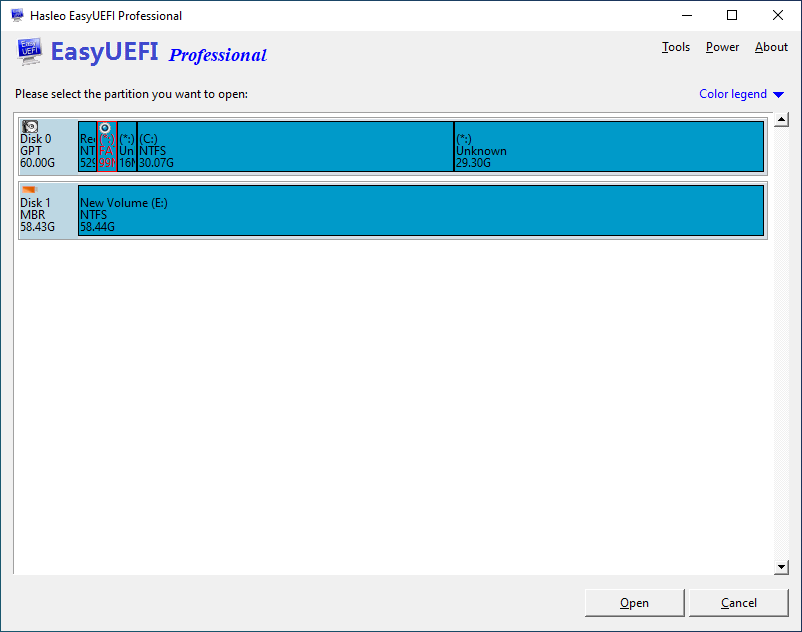
Step 3. Select the EFI System Partition (ESP) where you want to install rEFInd in the disk/partition list, then click the "Open" button to open the EFI System Partition Explorer.
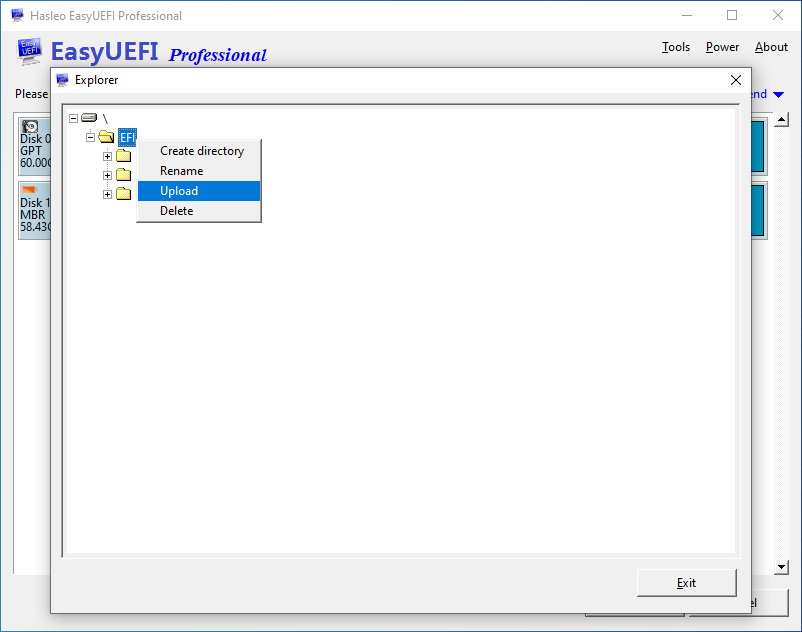
Step 4. Right-click on the EFI directory and select "Upload".
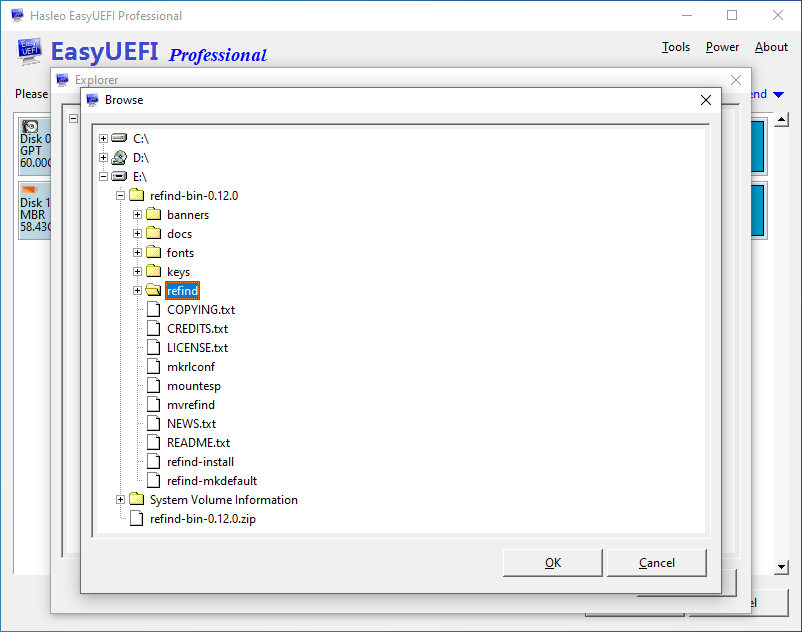
Step 5. Select the refind in the directory extracted from the rEFInd compressed file, then click "OK" button to upload it.
Step 6. After the upload is complete, right-click "refind.conf-sample" in the refind directory and select "Rename".
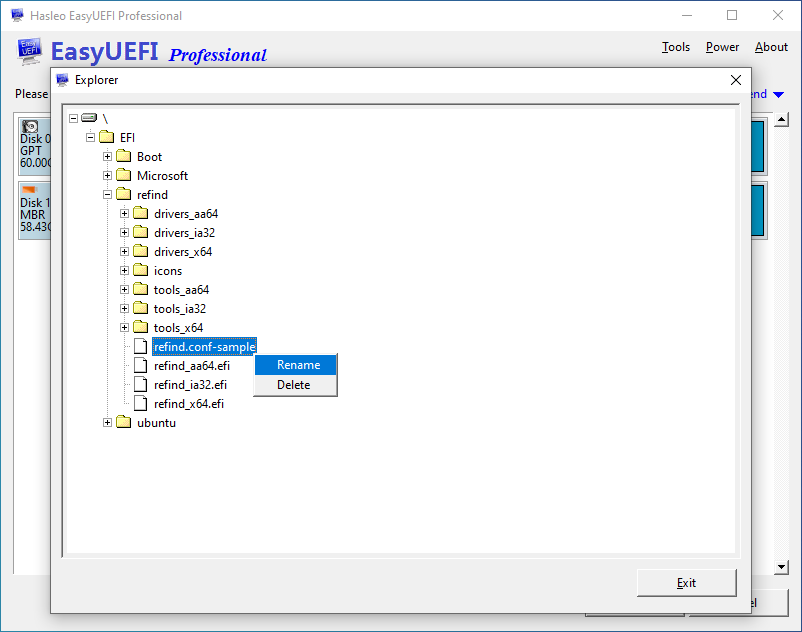
Step 7. In the dialog box that pops up, rename "refind.conf-sample" to "refind.conf", and then click "OK".
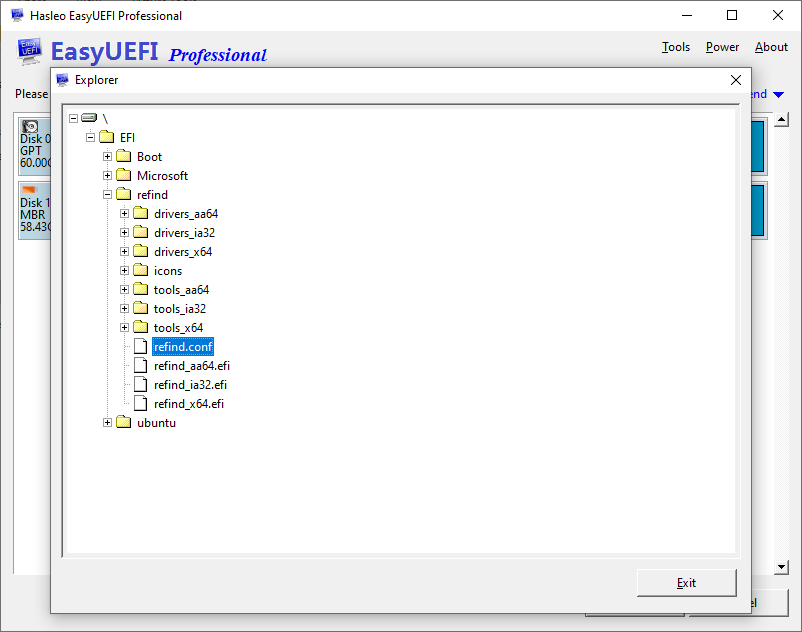
Step 8. After all the above operations are completed, click the "Exit" button to close the EFI System Partition Explorer.
Step 9. Return to the main page of the program, click the  button, then click the
  button.
Step 10. In this page, select the type as "Linux or other OS", enter "rEFInd" as the description, select the ESP partition that rEFInd has been copied into, then click the "Browse" button and select "\EFI\refind\refind_*.efi" as the file path (Please note that you need to select the corresponding efi file according to the architecture of your computer).
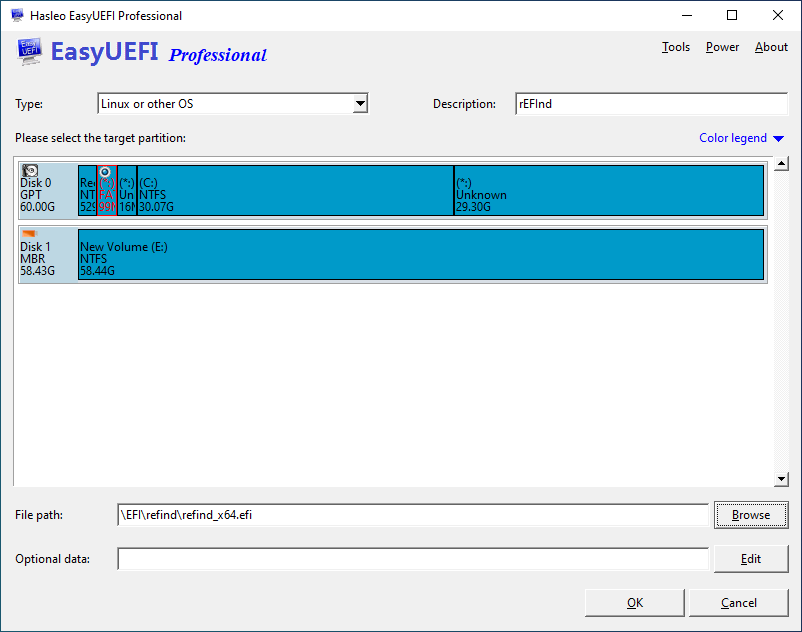
Step 11. After completing the settings, click "OK" to create the boot option, then move rEFInd to the top of the boot order list as the priority startup item.
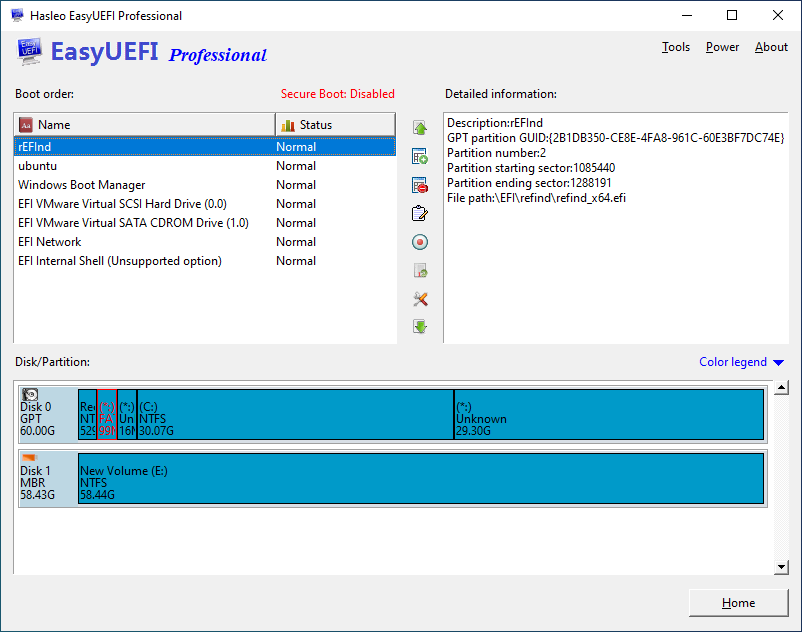
Step 12. Restart the computer, refind will start and display the multi-boot menu.
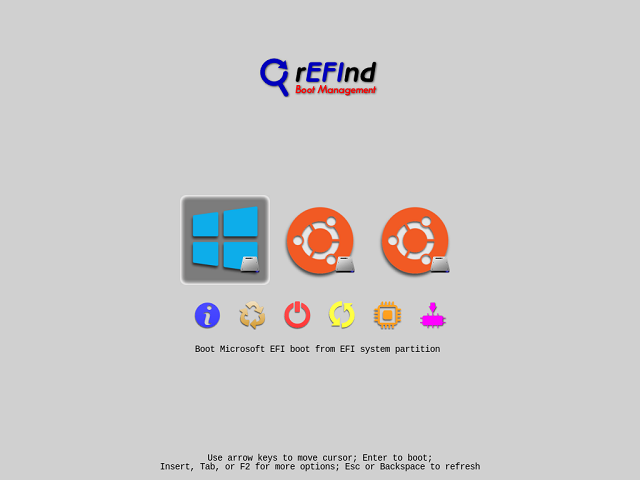
As described above, you can set up multi-boot of Windows, Linux and Mac using rEFInd and EasyUEFI easily, EasyUEFI is a surprise for users who use rEFInd for multi-boot management.
Frequently Asked Questions
A: rEFInd is a boot manager for UEFI computers that automatically detects installed operating systems and presents a graphical menu for selection. It supports Windows, Linux, and macOS, and is one of the most popular multi-boot solutions available.
A: The refind-install script works best on Linux and macOS. On Windows, you may encounter permission issues when trying to copy files to the EFI System Partition. EasyUEFI provides a simple graphical interface to bypass these restrictions and install rEFInd easily.
A: You need to select the correct .efi file based on your CPU architecture. Most modern computers use x64 (64-bit) processors and should use refind_x64.efi. Older 32-bit systems would use refind_ia32.efi. You can check your system type in Windows System Information.
A: Yes, rEFInd supports various themes that change the appearance of the boot menu. You can download themes from the rEFInd community and configure them by editing the refind.conf file. Themes can add backgrounds, icons, and custom fonts.
A: Yes, one of rEFInd's key features is automatic detection. It scans EFI partitions for boot loaders and automatically creates menu entries for Windows, Linux (including GRUB), and macOS. This makes setup much easier compared to manually configuring boot entries.
A: rEFIt was the original project that was discontinued. rEFInd is a fork of rEFIt with additional features, better UEFI support, and ongoing development. rEFInd includes more configuration options and better compatibility with modern systems.
A: You can adjust the timeout by editing refind.conf. Set 'timeout' to the number of seconds you want rEFInd to wait before automatically booting the default option. Set 'timeout = 0' for manual selection only, or 'timeout = -1' to wait indefinitely.
A: Yes, rEFInd can detect boot loaders on external USB drives and other removable media. This is useful for creating portable recovery tools or running live Linux distributions. The external boot options will appear in the rEFInd menu when the media is connected.