- Understanding GDPR and Data Protection Requirements
- Why Encryption Helps Avoid GDPR Fines
- Introduction to BitLocker Drive Encryption
- How to Encrypt Disks with BitLocker Using Hasleo BitLocker Anywhere
- Frequently Asked Questions (FAQ) for BitLocker and GDPR Compliance
Understanding GDPR and Data Protection Requirements
Have you ever heard of the General Data Protection Regulation (GDPR)? If you haven't, then I recommend you get up to speed. The GDPR represents the biggest change to privacy and data protection laws since the Data Protection Act. Fundamentally, the GDPR is about protecting and enabling the privacy rights of individuals. It was enforced across Europe on May 25, 2018. Under the GDPR, organizations are required to obtain user consent before collecting, storing, or using personal information. Users have absolute control over their personal data, no matter where that data is sent, processed, or stored. The penalties for non-compliance are severe. Organizations that fail to comply could face substantial fines of up to €20 million or 4% of their global annual turnover (whichever is higher), as well as reputational damage. Therefore, understanding these laws is essential, whether you are an organization or an individual. In short, unless you are willing to risk a €20 million fine, the GDPR is something you cannot afford to ignore.
How to effectively prevent the threat of devastatingly expensive fines for GDPR? According to GDPR, if a data breach has an impact on user privacy, the organization must report it to the relevant authorities within 72 hours. Failing to properly notify a breach to the supervisory authority can result in a significant fine, as summarized above. And according to Article 34 of GDPR, no notification is required if prior to the breach taking place, the data were rendered unintelligible, for example by means of encryption. Therefore, encryption is an easy and cost-effective way to take action against the threat of devastatingly expensive fines for GDPR.
Why Encryption Helps Avoid GDPR Fines
In Windows, BitLocker Drive Encryption is the built-in full disk encryption solution trusted by most users. It is available in Windows Server, Ultimate, Enterprise, and Windows 10 Pro editions. Unfortunately, BitLocker is not available in Windows Home or Windows 7 Pro editions, making it impossible to encrypt disks with the built-in tool on these versions. For Windows editions without native BitLocker support, we recommend using a third-party BitLocker solution: Hasleo BitLocker Anywhere.
Introduction to BitLocker Drive Encryption



How to Encrypt Disks with BitLocker Using Hasleo BitLocker Anywhere.
Step 1. Download and install Hasleo BitLocker Anywhere.
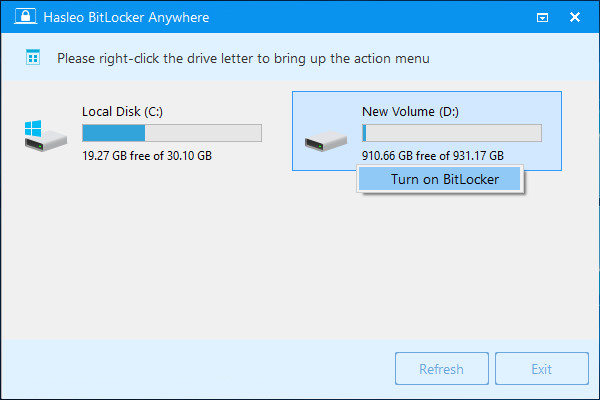
Step 2. Launch Hasleo BitLocker Anywhere, right-click the drive letter you want to encrypt, then click "Turn On BitLocker".
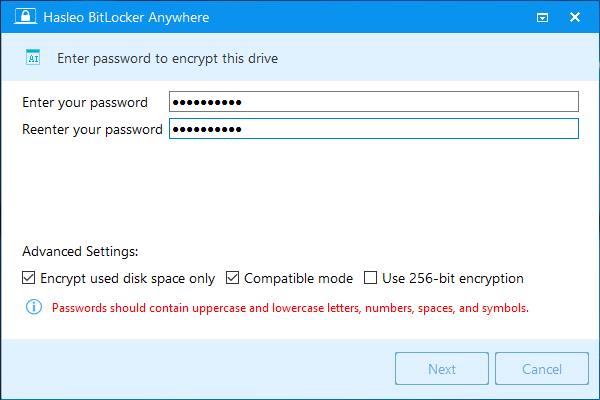
Step 3. In this step, you are required to specify a password for encrypting the drive, enter the password and click "Next". You should choose a password having a combination of upper and lower case letters, numbers, spaces, and special symbols. Once the encryption is complete, you can access the drive using this password.
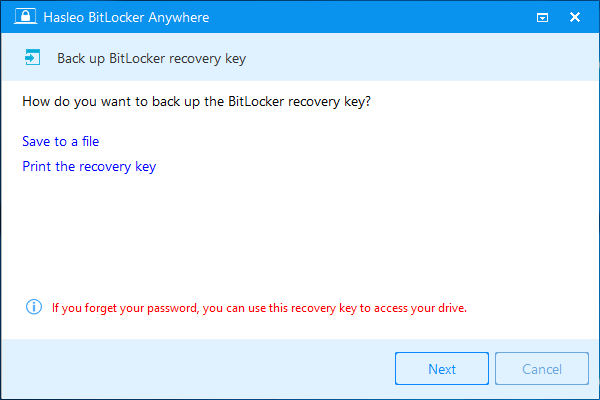
Step 4. Back up BitLocker recovery key, then click "Next" to move on. You can save the recovery key to a file or print a copy of it. Please note that anyone can use the recovery key to gain access to the drive, even if they do not know the password entered in the previous step, so please do not disclose it to others.
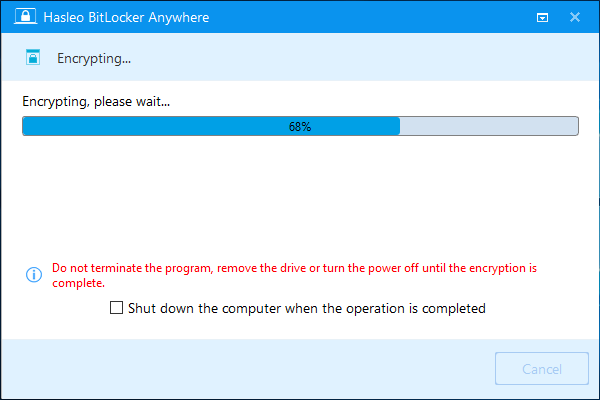
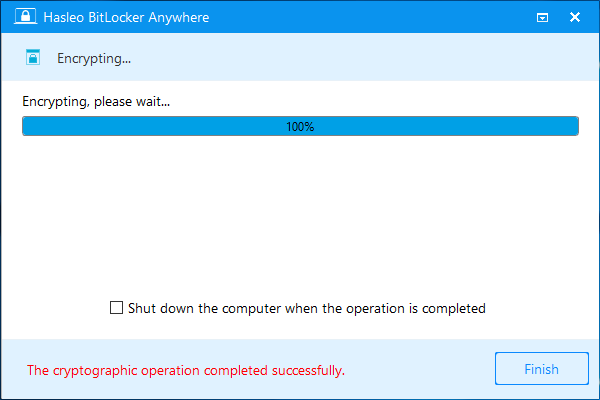
Step 5. Hasleo BitLocker Anywhere will now encrypt the selected drive using BitLocker drive encryption. The encryption process may take a long time depending on the drive size, so please be patient. If you prefer not to wait for the operation to finish, you can enable the "Shut down the computer when the operation is completed" option. Simply check the box to activate it.
Step 6. After the encryption is complete, click the "Finish" button to close the window.
Frequently Asked Questions (FAQ) for BitLocker and GDPR Compliance
A: The General Data Protection Regulation (GDPR) is a comprehensive European privacy law enforced since May 25, 2018. It requires organizations to protect personal data through appropriate technical measures, including encryption. Under Article 34, encrypted data that becomes breach compromised does not require notification to authorities.
A: BitLocker provides full disk encryption that renders data unintelligible. If a data breach occurs with encrypted data, organizations are exempt from the 72-hour notification requirement under GDPR Article 34. This helps avoid substantial fines up to €20 million or 4% of global annual turnover.
A: No, Windows Home editions do not include BitLocker. You need third-party software like Hasleo BitLocker Anywhere to encrypt drives with BitLocker in Windows Home or Windows 7 Professional editions.
A: Organizations that fail to comply with GDPR can face fines up to €20 million or 4% of their global annual turnover, whichever is higher. Additionally, data breaches affecting unencrypted personal data must be reported to authorities within 72 hours.
A: Under GDPR Article 34, if personal data was encrypted (rendered unintelligible) prior to a breach, the organization is not required to notify authorities or affected individuals. This exemption applies even if the encryption is subsequently compromised.
A: No, any encryption solution that effectively renders data unintelligible can meet GDPR requirements. However, BitLocker is widely trusted, built into Windows Pro editions, and integrates with enterprise management tools. Third-party solutions like Hasleo BitLocker Anywhere offer broader compatibility.
A: Encryption time depends on drive size and performance. For large drives, the process can take several hours. You can enable the option to shut down the computer automatically when encryption completes.
To sum it up, Hasleo BitLocker Anywhere is full-disk encryption software that helps you encrypt disks with BitLocker to meet GDPR Data Protection Officer requirements.