

The bootable WinPE medium (WinPE restore environment) of Hasleo Backup Suite can help you quickly restore Windows to a healthy state when the Windows system crashes, and you can also use it to perform backup and cloning operations, so it is very necessary to create a bootable WinPE medium for Hasleo Backup Suite in advance.
Tutorial to create a bootable WinPE media for Hasleo Backup Suite.
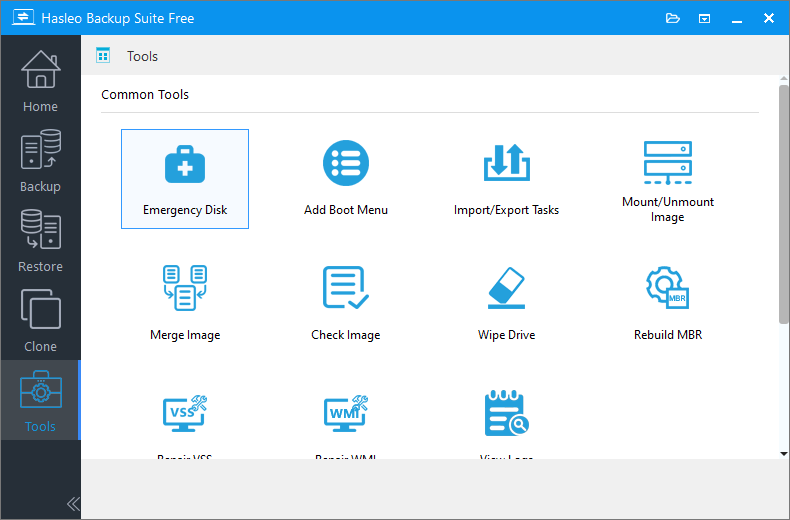
Step 1. Install and run Hasleo Backup Suite, click "Tools" button in the navigation bar, then click "Emergency Disk" button in the operation area.
Step 2. If you need to inject some additional drivers into WinPE, click the "Add Driver" button and select the drivers you want to inject, then click the "Next" button. Otherwise, just click the "Next" button to skip this step.
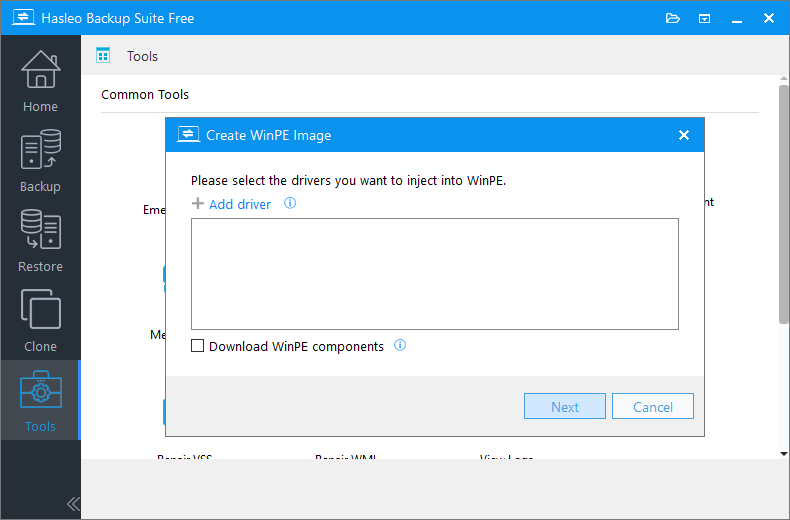
• Please note that only .inf based drivers are supported for injection into WinPE.
• The Download WinPE components option allows you to download WinPE components instead of looking for WinPE components from the current computer.
• The Automatic driver injection option will automatically extract drivers from the current Windows operating system and inject them into WinPE. Please be advised that while Hasleo Backup Suite endeavors to extract and inject all drivers into WinPE, this process is not infallible, and we do not warrant that all hardware will be fully operational in the WinPE environment.
• The Enable support for 'Windows UEFI CA 2023' option allows you to create a bootable medium that complies with the Microsoft UEFI CA 2023 security standard. This enables the medium to pass Secure Boot validation on computers that trust only this new certificate.
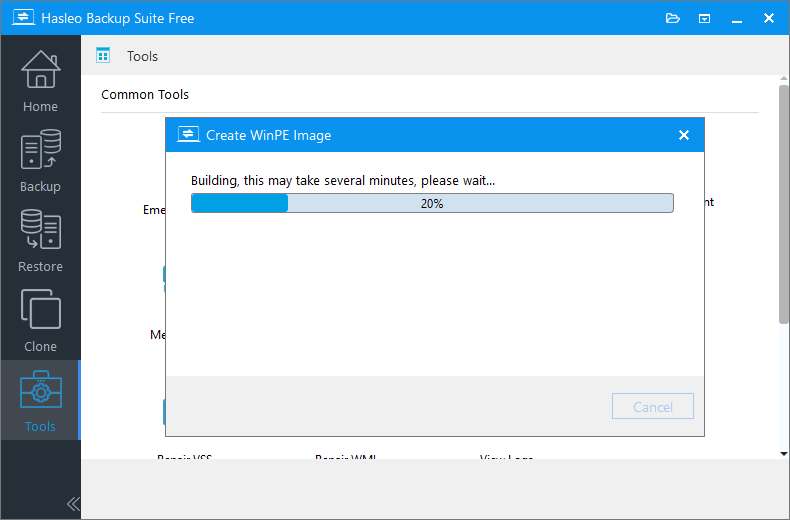
Step 3. Hasleo Backup Suite begins building bootable WinPE image.
Step 4. After successfully building the WinPE image, select "USB" to create an emergency USB drive or "Explore ISO" to export the ISO file to a specified location, then click "Proceed".
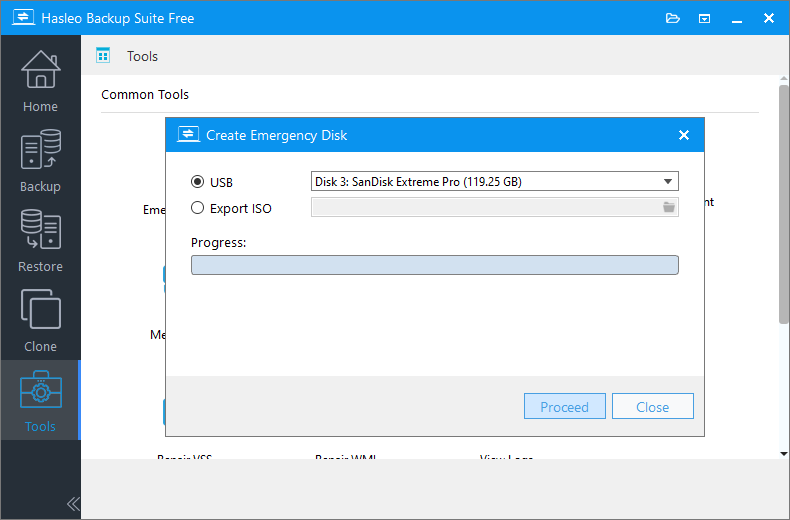
• The program will display here whether the created WinPE image supports 'Windows UEFI CA 2023'.
• You can click the "Re-create WinPE image ISO" to re-create a new WinPE image ISO.
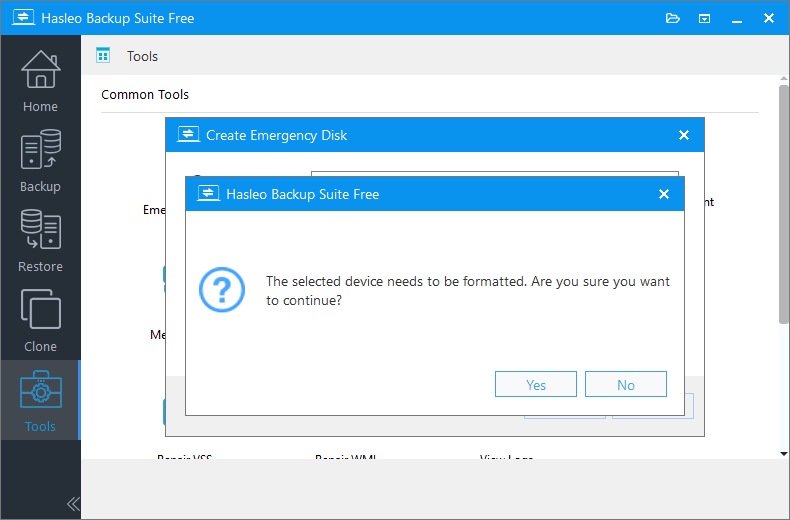
Step 5. If you choose to create a bootable USB drive, the program will prompt you that the drive needs to be formatted before it can proceed, click "Yes".
Step 6. Wait for the process to complete and click "Close" to exit.
Frequently Asked Questions
A: Recreate when: a new version of Hasleo Backup Suite is released, after purchasing new hardware, after major Windows updates, or every 6–12 months. This ensures that the recovery environment supports the latest backup image formats while keeping drivers up to date.
A: Try: 1) Disable Secure Boot in BIOS/UEFI settings, 2) Change boot order to prioritize USB, 3) Press function key (F8, F12) during startup to access boot menu.
A: Yes if you have unusual hardware. It extracts drivers from your current Windows and includes them in WinPE. However, it may not capture all drivers.
A: The Windows UEFI CA 2011 certificate expired in June 2026. Enabling this option creates a WinPE bootable medium that is compatible with Microsoft UEFI CA 2023, allowing the recovery environment to boot on computers that only trust this newer certificate.
A: Yes. Export the ISO and use third-party burning software to write to CD/DVD, or use tools like Hasleo WinToUSB to create bootable USB from ISO.
A: Recreate WinPE with "Automatic driver injection" enabled. If still failing, you may need to manually inject specific drivers for your controller.
A: Not recommended. Store backup images on separate storage. If the USB fails, you'd lose both recovery option and backups.
A: Emergency Disk is separate bootable media; boot menu adds WinPE entry to Windows boot loader. Both achieve the same recovery environment—choose based on preference.


