

Windows system backup refers to backing up all the partitions required for Windows startup, such as the system partition, boot partition and the recovery partition. All data in these partitions will be stored in a file called backup image, and when the operating system crashes or the disk where the operating system is located is damaged, we can completely restore Windows operating system from the system backup image file.
Tutorial to back up Windows operating system with Hasleo Backup Suite.
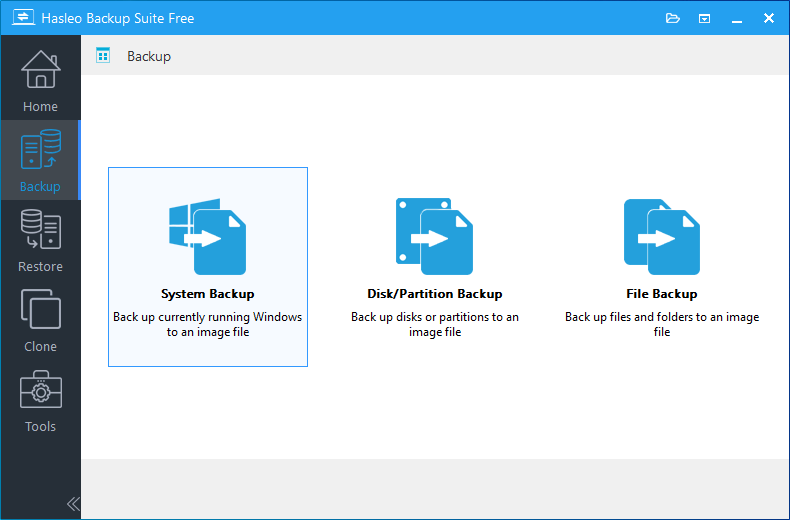
Step 1. Install and run Hasleo Backup Suite, click "Backup" button in the navigation bar, then click "System Backup" button in the operation area.
Step 2. Hasleo Backup Suite will automatically select all partitions that need to be backed up for Windows operating system backup. You only need to modify the task name, description, destination and backup options according to your needs, and then click the "Proceed" button.
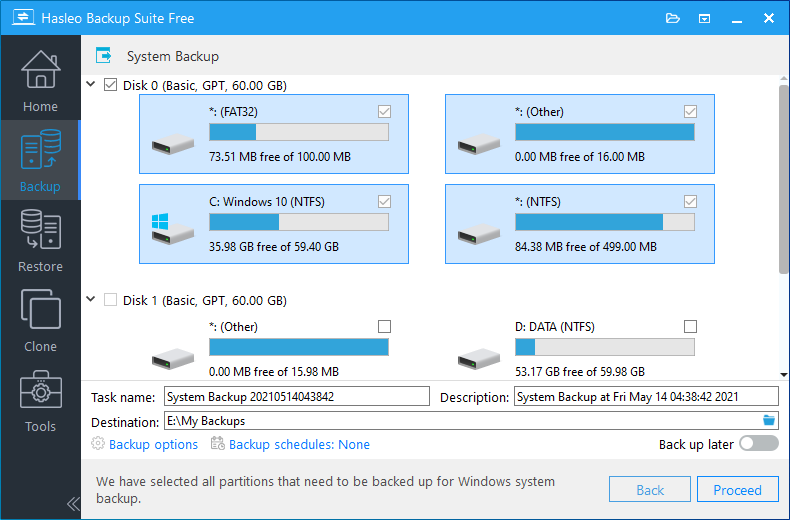
* Task name: Specify a task name so that you can quickly find and manage the backup task.
* Description: Briefly describe the purpose of the task and other information.
* Destination: The destination path where the backup image files will be stored, modify it by clicking the folder icon.
* Backup options: Advanced backup settings. For more details, please refer to Backup options.
* Backup schedule: Set up backup schedules to automatically perform the backup task on a regular basis. For more details, please refer to Backup schedule.
* Back up later: If this option is checked the program will only create the backup task and not perform the backup immediately.
Step 3. After clicking the "Proceed" button, Hasleo Backup Suite starts backing up the Windows operating system to the storage path you specify. Please note that the backup time is related to the size of the data that needs to be backed up, so please be patient.
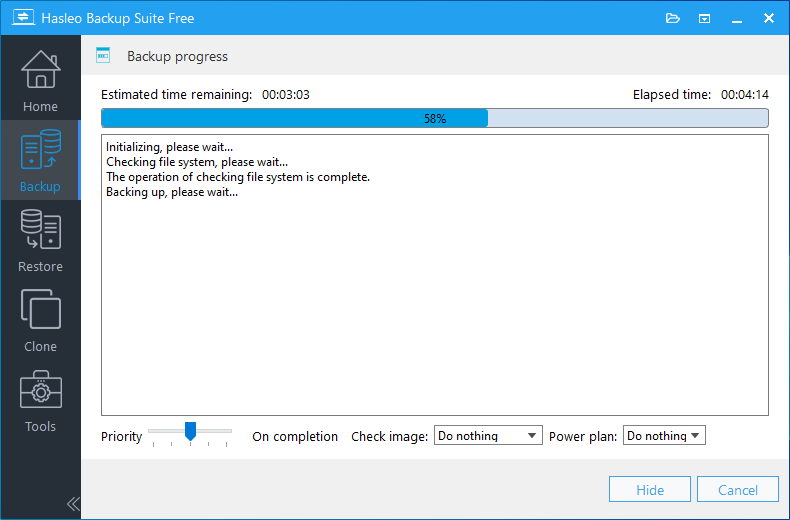
* Priority: Specify a priority for the backup process. A higher priority means that the backup process will be given more priority to get CPU cycles, which will cause other programs to wait for available CPU time.
* Check image: Check the integrity of the backup image files after the backup is complete. For detailed explanations of the image check modes, please refer to the description on the advanced page of the backup options.
* Power plan: Perform the power management action after the backup is complete.
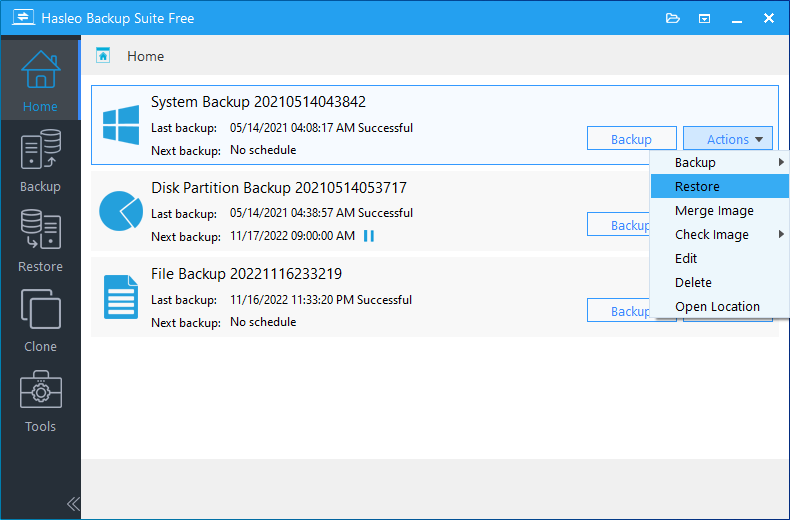
After the backup operation is completed, the backup task will be listed on the home page, and you can go to the home page to perform other operations on the task, such as incremental backup, differential backup, restore, edit, delete, etc.
Frequently Asked Questions
A: A Windows system backup is a complete copy of all partitions required for Windows to start, including the system partition, boot partition, and recovery partition. This allows you to restore your entire Windows operating system if it crashes or fails.
A: System backup includes the Windows OS, system files, boot files, and recovery environment. It captures the entire bootable state so you can restore Windows to a working condition.
A: Backup time varies based on the size of system partitions. Initial full backups take longer—typically 15 minutes to over an hour. Subsequent incremental or differential backups are much faster.
A: Yes. You can restore Windows from a system backup image when the OS crashes, fails to boot, or encounters serious errors. The backup contains everything needed to get Windows running again.
A: System backup captures all data on system and boot partitions, including your personal files stored on the system drive. For additional safety, consider separate file backups to another location.
A: System Backup only backs up Windows-required partitions for quick OS recovery. Disk Backup backs up entire drives including all partitions and data. Choose system backup for faster,OS-focused protection.
A: System backup images are stored in the destination folder you specify during backup. This can be an external drive, network location, or internal non-system drive.
A: Before major changes like installing new software or Windows updates. If no major changes are planned, regular users should back up their system once every month.


