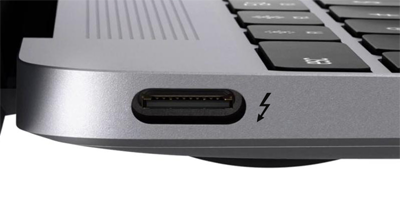
What is a Thunderbolt drive? Thunderbolt is a hardware interface developed by Intel (in collaboration with Apple) in 2011. It combines data, video, audio, and power over a single connection and provides a maximum transmission rate of 40 Gbps. A Thunderbolt drive is a portable storage device that connects to a computer via the Thunderbolt interface.
What is BitLocker? BitLocker is a full-volume encryption feature built into Windows Vista and later operating systems. It is one of the most commonly used disk encryption methods on Windows. Please note that the ability to encrypt drives using BitLocker is only available in Professional, Enterprise, and Server editions of Windows. However, you can still access (but not create) BitLocker-encrypted drives from Windows Home editions.
Why encrypt Thunderbolt drives with BitLocker? Data security is a critical concern for both individuals and businesses, as the impact of data leakage can be devastating. Thunderbolt drives, being portable storage devices, face a higher risk of being lost or stolen. Encrypting them is therefore essential. For Windows users, BitLocker is an excellent choice. It is a built-in encryption feature in Windows 7 and later, ensuring that BitLocker-encrypted drives can be accessed seamlessly on any Windows computer without additional software.
The best software to encrypt Thunderbolt drives with BitLocker in Windows Home. The built-in BitLocker cannot be used to encrypt Thunderbolt drives in Windows Home Edition. Therefore, a third-party BitLocker encryption tool is required. Hasleo BitLocker Anywhere is the world's first third-party BitLocker encryption software. It is fully compatible with Windows' built-in BitLocker encryption algorithm, so encrypted drives can be accessed normally on any Windows system that supports BitLocker.



How to Encrypt Thunderbolt Drives with BitLocker in Windows Home Using Hasleo Hasleo BitLocker Anywhere?
Step 1. Download and install Hasleo BitLocker Anywhere.
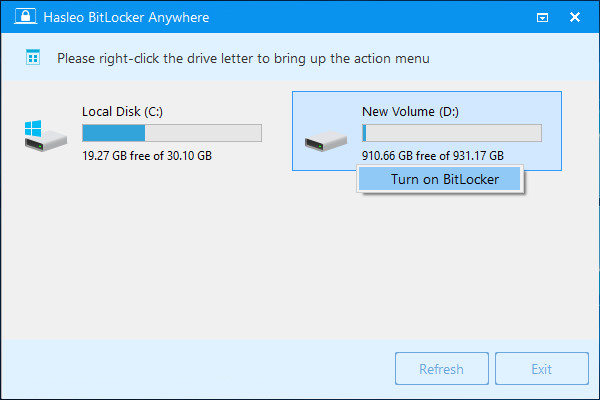
Step 2. Launch Hasleo BitLocker Anywhere, right-click the drive letter on the Thunderbolt drive you want to encrypt, then click "Turn On BitLocker".
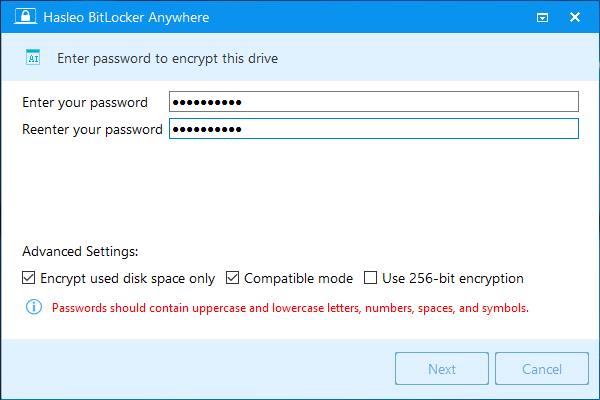
Step 3. In this step, you are required to specify a password for encrypting the drive, enter the password and click "Next". You should choose a password having a combination of upper and lower case letters, numbers, spaces, and special symbols. Once the encryption is complete, you can access the drive using this password.
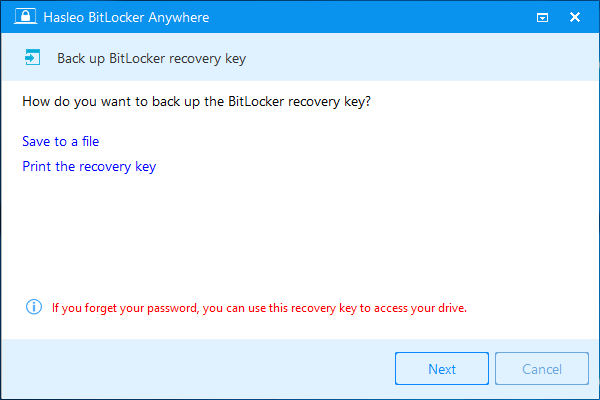
Step 4. Back up BitLocker recovery key, then click "Next" to move on. You can save the recovery key to a file or print a copy of it. Please note that anyone can use the recovery key to gain access to the drive, even if they do not know the password entered in the previous step, so please do not disclose it to others.
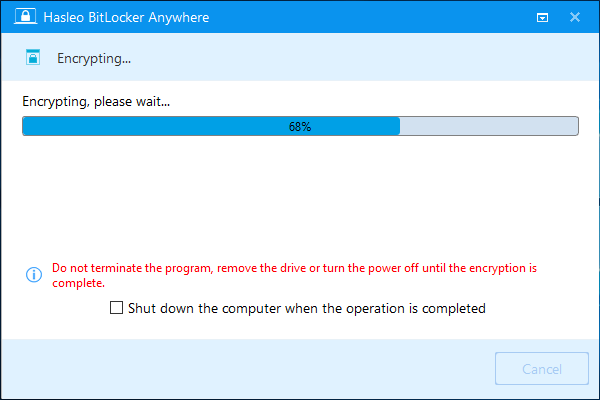
Step 5. Hasleo BitLocker Anywhere will now encrypt the selected drive using BitLocker drive encryption. The encryption time depends on the drive size and may take a while. If you prefer not to wait, check the "Shut down the computer when finished" option.
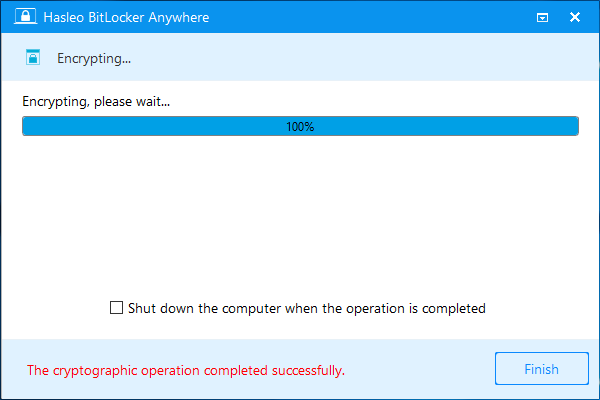
Step 6. After the encryption is complete, click the "Finish" button to close the window.
As shown above, Hasleo BitLocker Anywhere makes it easy to encrypt Thunderbolt drives with BitLocker. As an all-in-one BitLocker solution for Windows Home, it also allows you to encrypt other external storage devices, including USB hard drives, FireWire drives, and more.
Frequently Asked Questions (FAQ) for Encrypting Thunderbolt Drives with BitLocker
A: No, Windows Home editions do not include BitLocker encryption feature. You need to use third-party software like Hasleo BitLocker Anywhere to encrypt Thunderbolt drives in Windows Home.
A: Thunderbolt offers much faster transfer speeds (up to 40 Gbps) compared to USB 3.0 (5 Gbps). Thunderbolt also supports daisy-chaining multiple devices and provides more power delivery. However, BitLocker encryption works the same way for both.
A: Yes, you can use Hasleo BitLocker Anywhere for Mac to read and write data on BitLocker-encrypted Thunderbolt drives. The software is fully compatible with macOS.
A: Encryption time depends on the drive size and speed. Larger drives take longer. You can continue using your computer during encryption, and you can optionally shut down when complete.
A: No, you do not need to reformat the drive. BitLocker can encrypt the drive without erasing existing data. However, it is always recommended to back up important data before encryption as a precaution.
A: Yes, you can use the same password, but it is recommended to use unique passwords for each drive. Each encrypted drive will have its own unique recovery key.
A: BitLocker encryption has minimal impact on performance. The encryption is transparent during read/write operations, and most users won't notice any difference in speed.
A: If you forget the password, you can use the BitLocker recovery key to unlock the drive. Make sure to back up the recovery key during encryption and store it in a safe place.
Related Articles
- How to Enable BitLocker in Windows 10 Home Edition?
- How to Enable BitLocker Encryption without TPM in Windows 11/10/8/7?
- How to Encrypt External Hard Drive With BitLocker in Windows Home?
- How to encrypt Boot Camp partition with BitLocker to protect data?
- How to Encrypt Windows 7 and Start BitLocker Encrypted Windows 7 with a Password?