I have a laptop computer came with Windows 10 home edition as the operating system, and I wanted to encrypt the Windows partition with bitlocker to protect some private files. After trying, I found it impossible, because I couldn't find BitLocker anywhere in Windows 10 Home. Can someone tell me how to encrypt Windows partition with BitLocker in Windows 10 Home?
BitLocker is a disk encryption tool integrated into Windows 11/10, but it is only available in the Pro and Enterprise editions. Windows Home users also have disk encryption needs, so the absence of BitLocker is a significant limitation for them. Is there still a way to encrypt the Windows partition (C: drive) with BitLocker on Windows 11/10 Home? The answer is to use Hasleo BitLocker Anywhere, and you can find the detailed steps below.



How to Encrypt Windows Partition (C: drive) With BitLocker in Windows 11/10 Home?
Step 1. Download and install Hasleo BitLocker Anywhere.
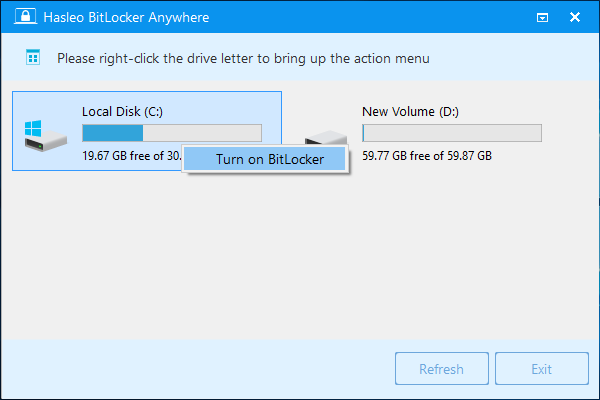
Step 2. Launch Hasleo BitLocker Anywhere, right-click the Windows drive letter (usually C:), then click "Turn On BitLocker".
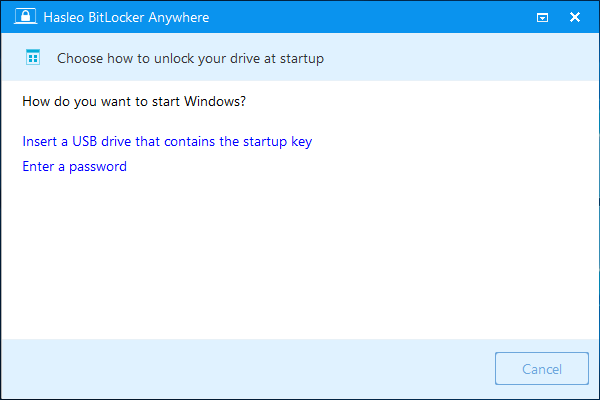
Step 3. In this step, you are asked to choose how to unlock the Windows drive at startup. You can choose to enter a password or insert a USB flash drive each time you start your PC.
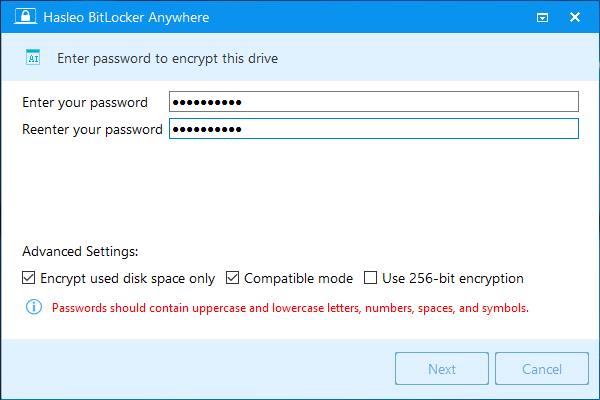
If you choose to enter a password at startup, you are required to specify a password for encrypting the drive, enter the password and click "Next". You should choose a password having a combination of upper and lower case letters, numbers, spaces, and special symbols.
If you choose to insert a USB flash drive at startup, you are required to specify a USB drive to save the startup key, select a USB drive and click "Next".
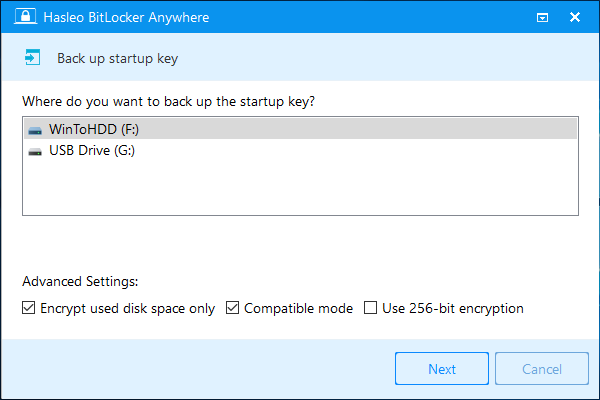
- Encrypt used disk space only: Encrypts only the space currently used by the drive's file system. Unused space remains unencrypted. This option saves time during the encryption process. After you encrypt a drive with this option, any files you add to the drive are automatically encrypted.
- Compatible mode: If the drive you plan to encrypt needs to be used on Windows operating systems prior to Windows 10 Version 1511, choose compatible mode. Windows 10 Version 1511 introduced a new disk encryption mode (XTS-AES) that is not compatible with older versions of Windows. The compatible mode (AES-CBC) is fully compatible with older versions of Windows.
- Use 256-bit encryption: BitLocker supports 128-bit and 256-bit encryption strengths. 256-bit encryption is more secure but consumes more CPU resources. Choose the encryption strength based on your needs. Select this checkbox if you want to use 256-bit encryption strength.
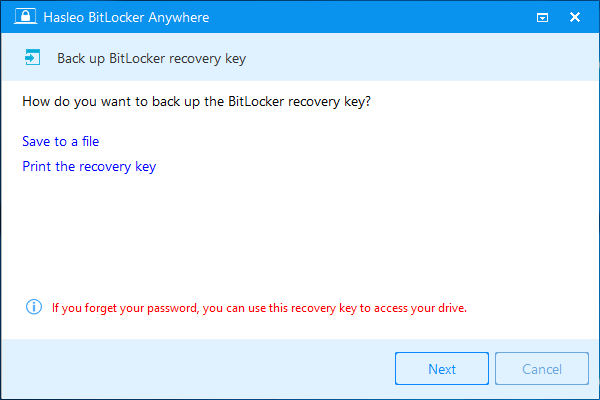
Step 4. After clicking "Next", you are asked how you want to backup the BitLocker recovery key. You can save the recovery key to a file or print a copy of it, then click "Next" to move on. Please note that anyone can use the recovery key to gain access to the drive, even if they do not have the startup key or password created in the previous step, so please do not disclose it to others.
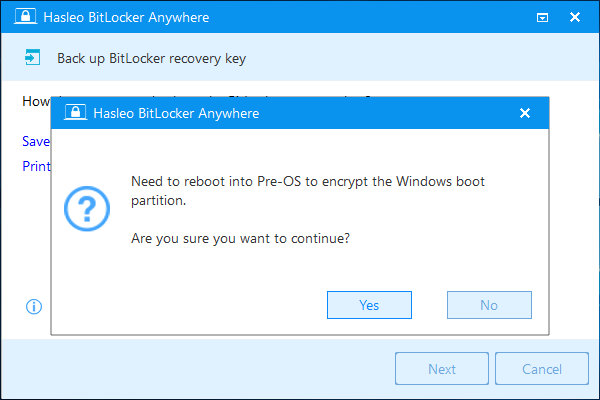
Step 5. Now a pop-up will appear asking you if you want to reboot into Pre-OS to encrypt the Windows partition. Click "Yes" to continue.
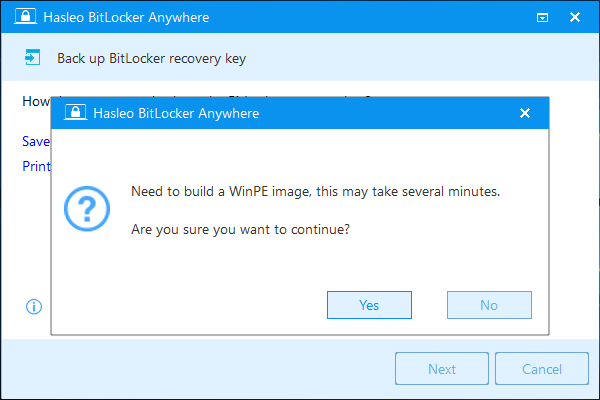
Step 6. Another pop-up will appear asking you if you want to build a WinPE image to continue. Click "Yes".
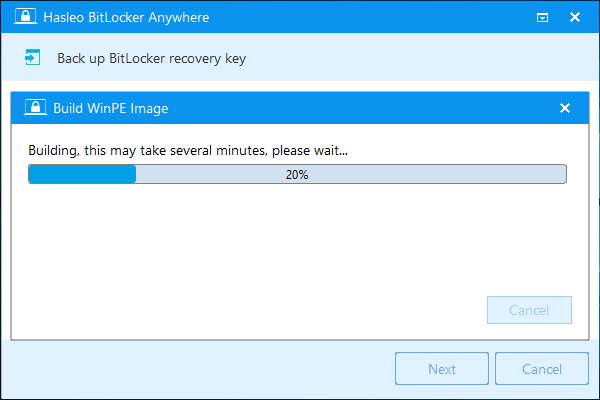
Step 7. Hasleo BitLocker Anywhere starts building WinPE. This may take several minutes, so please be patient to wait.
Step 8. After successfully builded the WinPE image, Hasleo BitLocker Anywhere will prompt you to reboot the computer, click "Yes" button to allow Hasleo BitLocker Anywhere to reboot your computer.
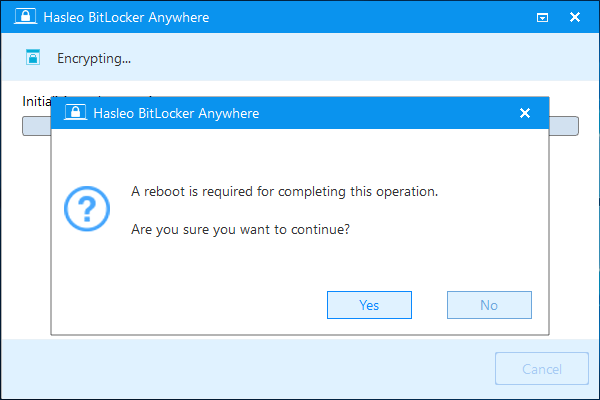
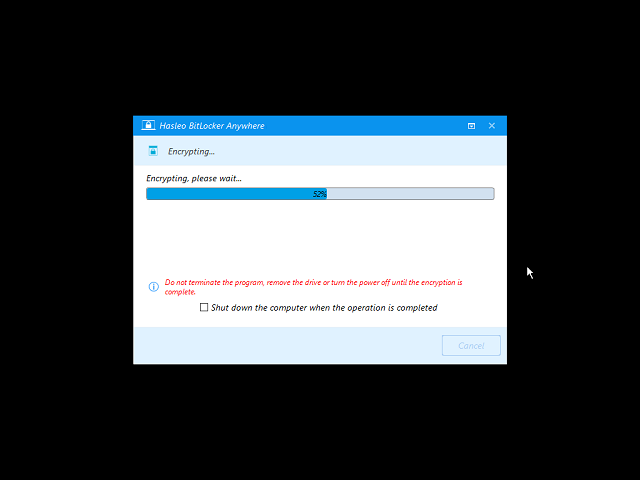
Step 9. Hasleo BitLocker Anywhere will now reboot and enter Pre-OS to encrypt the contents of the selected drive using BitLocker drive encryption. The encryption process could take a long time to finish depending on the size of the drive, so please be patient to wait. If you don't want to wait until the encryption operation is finished, "Shut down the computer when the operation is completed" option is a good idea. Just check it.
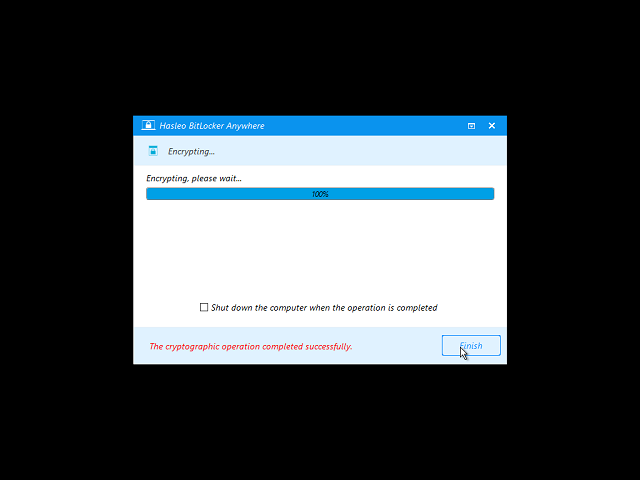
Step 10. After the encryption is complete, click the "Finish" button to close the window.
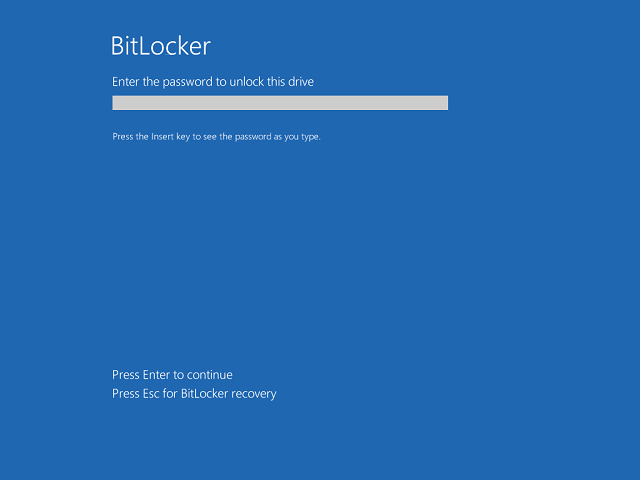
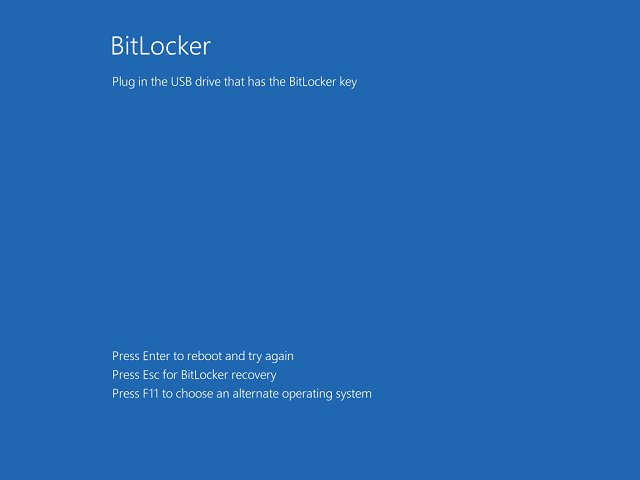
Step 11. Now you have to enter the BitLocker password or plug in the USB drive which contains the startup key before you can start the Windows.
Frequently Asked Questions (FAQ) for Encrypting Windows Partition with BitLocker in Windows 10/11 Home
A: No, Windows Home editions do not include BitLocker encryption feature. BitLocker is only available in Windows Pro, Enterprise, and Education editions. You need third-party software like Hasleo BitLocker Anywhere to encrypt drives in Windows Home.
A: Yes, you can use Hasleo BitLocker Anywhere to encrypt the Windows system partition (C: drive) in Windows 10/11 Home. The encryption process requires rebooting into pre-OS mode to complete.
A: No, Hasleo BitLocker Anywhere supports encrypting the system partition without TPM. You can choose either a password protector or a startup key (USB) for authentication at boot time.
A: The Windows partition cannot be encrypted while Windows is running because the system files are in use. Hasleo BitLocker Anywhere creates a WinPE environment to safely encrypt the system partition.
A: If you forget the password, you can use the BitLocker recovery key to unlock the drive. Make sure to back up the recovery key during encryption and store it in a safe place.
A: Yes, you can choose to use a startup key stored on a USB flash drive. You will need to insert the USB drive every time you start the computer to unlock the encrypted system partition.
A: BitLocker encryption has minimal impact on system performance. The encryption is transparent during normal operation, and most users won't notice any difference in speed.
A: Yes, System Restore and other Windows recovery options work normally with BitLocker-encrypted partitions. You will need to enter your password or use the startup key to access the system after recovery.
Related Articles
- How to Enable BitLocker in Windows 10 Home Edition?
- How to Encrypt Drive in Windows 11/10/8/7 Home & Windows 7 Pro?
- How to Encrypt Windows Partition With BitLocker in Windows 7 Pro?
- How to Encrypt Windows 7 and Start BitLocker Encrypted Windows 7 with a Password?
- Best TrueCrypt Alternatives to Safeguard Your Data in Windows 11/10/8.1/8/7 Home!