Apple released the official version of macOS 10.15 Catalina on August 8, 2019. While this version brings many important updates, it still does not allow native access to BitLocker-encrypted drives. Therefore, users who need to access BitLocker-encrypted drives on macOS 10.15 Catalina must use a third-party BitLocker solution for Mac. Hasleo BitLocker For Mac is such a solution - it provides full read and write access to BitLocker-encrypted drives and is fully compatible with macOS 10.15 Catalina.
As Hasleo BitLocker Anywhere For Mac is designed to access BitLocker-encrypted drives on a Mac, you can use it to mount a BitLocker drive and then gain full read and write access to it - as securely as you would with a Mac's native drive. Below, we will detail how to mount, read from, and write to BitLocker-encrypted drives in macOS 10.15 Catalina.



How to Get Full Read and Write Access to BitLocker-Encrypted Drives in macOS X 10.15 Catalina?
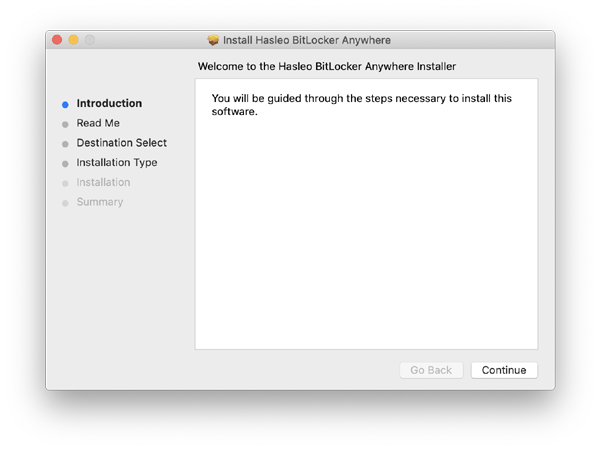
Step 1. Download and install Hasleo BitLocker Anywhere For Mac.
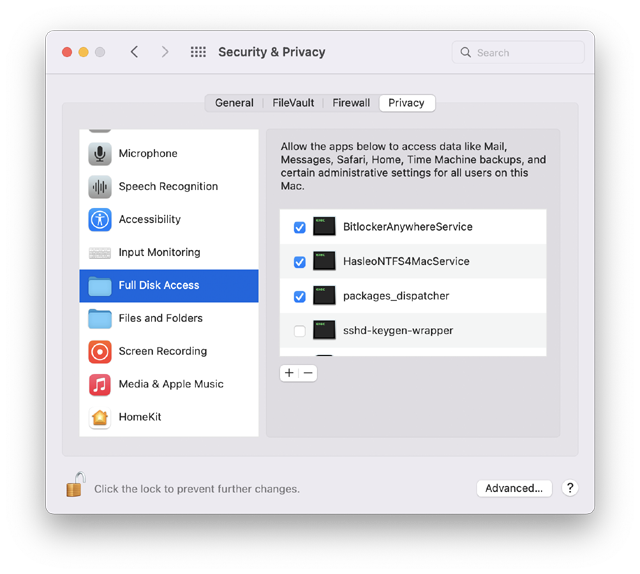
Step 2. For macOS Mojave (10.14) and later, you need to grant Full Disk Access to Hasleo BitLocker Anywhere For Mac. For more information, please refer to Granting Full Disk Access to Hasleo BitLocker Anywhere For Mac.
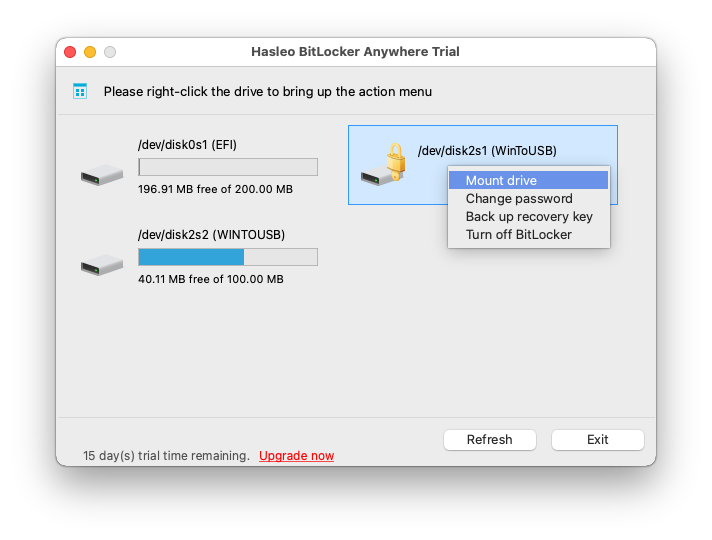
Step 3. Run Hasleo BitLocker Anywhere For Mac, right-click the BitLocker encrypted drive you want to access in main window, then click "Mount drive".
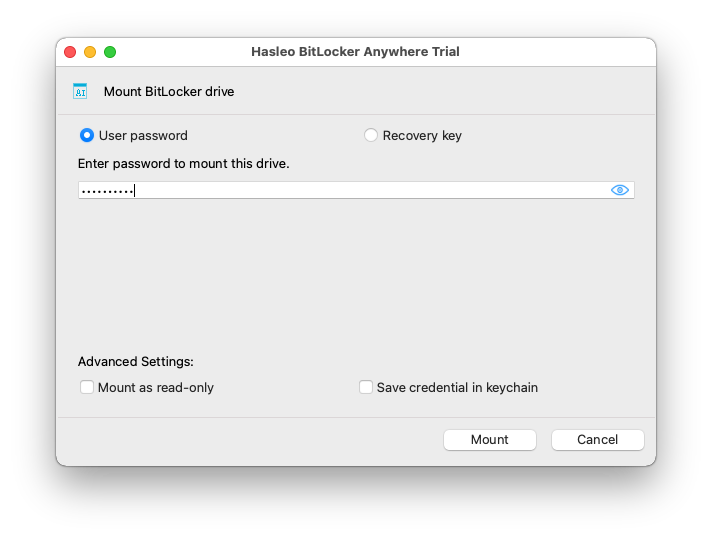
Step 4. Enter the password or recovery key, then click "Mount" button to mount the drive.
Step 5. After the operation completes, the drive has been mounted and its icon will appear on your Mac's desktop.
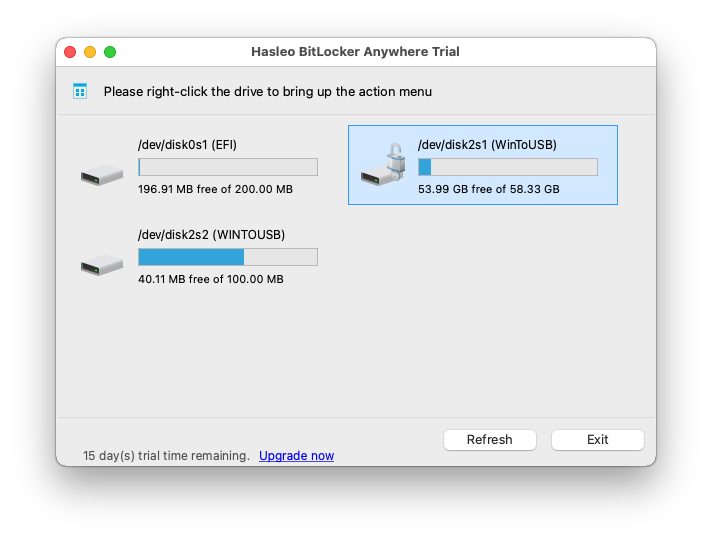
Step 6. Click the icon on your Mac's desktop to open the drive. You can now access the BitLocker-encrypted drive just like a native Mac drive - read, write, copy, delete files, and more.
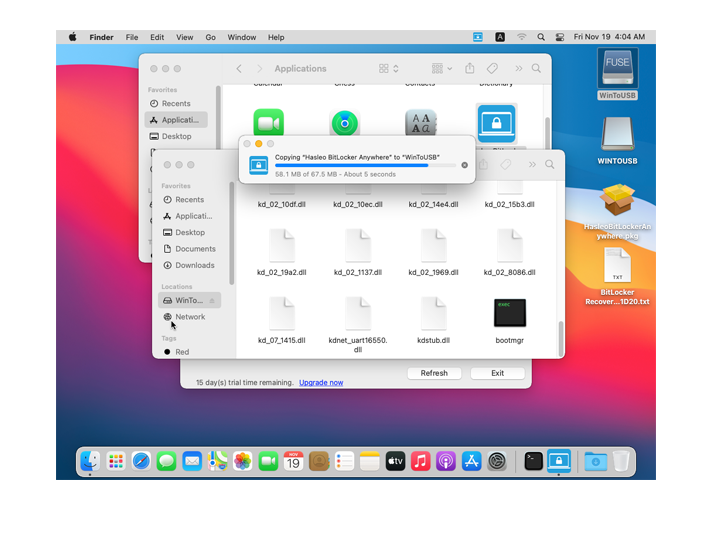
As mentioned above, you can use Hasleo BitLocker Anywhere for Mac to read and write BitLocker-encrypted drives on macOS 10.15 Catalina. In fact, as a BitLocker solution for Mac, it also supports macOS 10.14 down to OS X 10.7.
Frequently Asked Questions (FAQ) for BitLocker Drive in macOS Catalina
A: No, macOS 10.15 Catalina does not natively support BitLocker encryption. You need third-party software like Hasleo BitLocker Anywhere for Mac to access BitLocker-encrypted drives.
A: You need Hasleo BitLocker Anywhere for Mac installed on your Mac. It provides full read and write access to BitLocker-encrypted drives on macOS 10.15 Catalina.
A: Yes, after mounting the BitLocker drive with Hasleo BitLocker Anywhere for Mac, you can read, write, copy, and delete files just like a native Mac drive.
A: Go to System Preferences > Security & Privacy > Privacy > Full Disk Access, then enable it for Hasleo BitLocker Anywhere for Mac. This is required for macOS 10.14 and later.
A: Hasleo BitLocker Anywhere for Mac supports macOS 10.7 through 10.15 Catalina, including macOS Big Sur and later versions.
A: Yes, you can use either your BitLocker password or the 48-digit recovery key to unlock and mount the BitLocker drive on Mac.
A: Yes, BitLocker To Go drives can be accessed on Mac Catalina using Hasleo BitLocker Anywhere for Mac, the same as regular BitLocker-encrypted drives.
A: First, ensure Full Disk Access permission is granted. Also check if the drive is properly connected and try a different USB port. If issues persist, restart your Mac.