

When a Windows To Go (WTG) workspace enter Sleep mode, it will only resume successfully on the original hardware/computer. To ensure successful across different computers of Windows To Go workspaces, Sleep is disabled by default. This tutorial details how to enable or disable Sleep in Windows To Go workspaces using Group Policy settings.
 Tips: Sleep is unavailable for Windows operating systems running on VHD/VHDX due to Microsoft restriction. Therefore, Windows To Go workspaces deployed on VHD/VHDX cannot enable Sleep funcionality.
Tutorial to Enable or Disable Sleep in Windows To Go Workspaces Using Group Policy Settings.
Step 1. Boot Windows from the USB drive created using Hasleo WinToUSB.
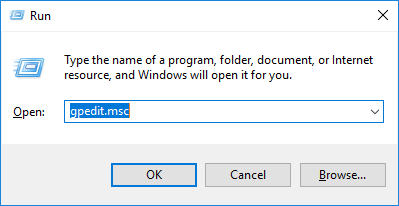
Step 2. Press the Windows + R keys to open the Windows Run dialog. Then type gpedit.msc and press Enter to open Local Group Policy Editor.
Step 3. In the left pane of Local Group Policy Editor, navigate to: Computer Configuration\Administrative Templates\Windows Components\Portable Operating System.
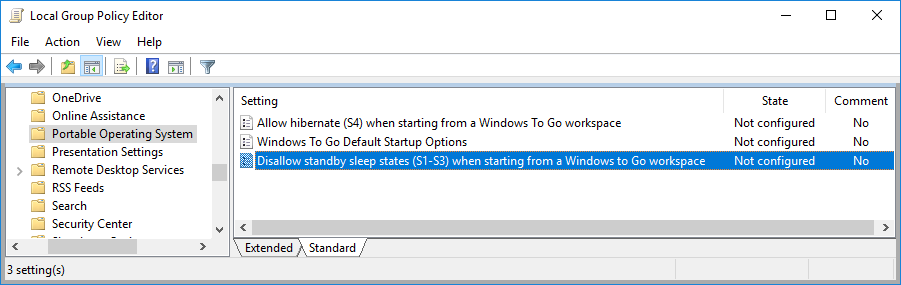
Step 4. In the right pane of Portable Operating System in Local Group Policy Editor, double-click the policy "Disallow standby sleep states (S1-S3) when starting from a Windows To Go workspace" to modify its settings. (see the screenshot above)
Step 5. In the "Disallow standby sleep states (S1-S3) when starting from a Windows To Go workspace" Window, check "Enable" to provent Sleep modes or check "Disable" to allow normal Sleep behavior. Then click "OK" or "Apply" button to confirm the setting.
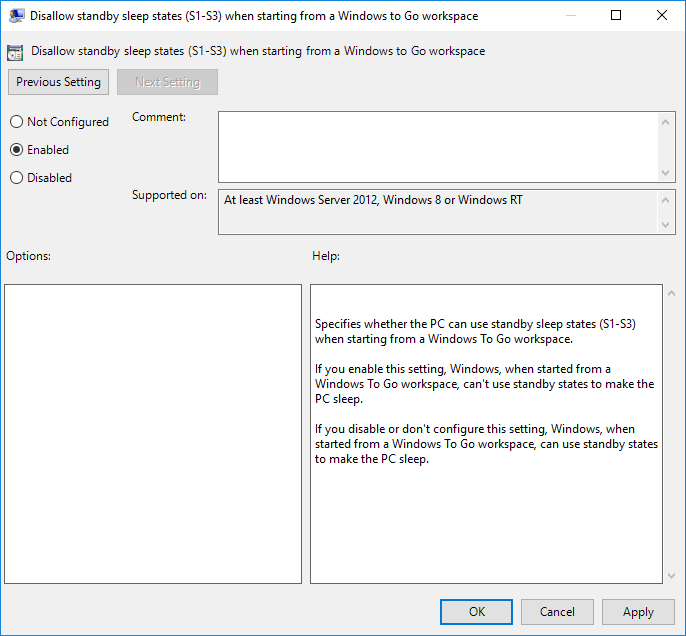
Following these steps, you can enable or disable Sleep in Windows To Go (WTG) workspaces easily.
Frequently Asked Questions
A: Sleep mode is disabled by default because when a Windows To Go workspace enters Sleep, it will only resume successfully on the original hardware or computer. This ensures cross-computer compatibility for portable Windows environments.
A: Enable sleep by opening Local Group Policy Editor (gpedit.msc), navigate to Computer Configuration > Administrative Templates > Windows Components > Portable Operating System, and disable the policy "Disallow standby sleep states (S1-S3) when starting from a Windows To Go workspace".
A: No, sleep is unavailable for Windows running on VHD/VHDX due to Microsoft restriction. Windows To Go workspaces deployed on VHD/VHDX cannot enable sleep functionality.
A: Sleep states (S1-S3) keep system state in memory with varying power consumption, while Hibernate (S4) saves state to disk and powers down completely. Both can only resume on the same hardware in Windows To Go environments.
A: Yes, WinToUSB creates Windows To Go workspaces that fully support Group Policy-based power management configuration. You can control sleep states (S1-S3) through the Portable Operating System policy settings.
Related Guides
- How to online internal disks in Windows To Go workspace?
- How to enable or disable hibernate in Windows To Go workspace?
- How to clone current Windows OS to USB drive as a portable Windows?
- How to clone Windows 10 to an external hard drive as portable Windows 10?
- How to create portable Windows 10 on Non-certification Windows To Go drive?


