

Technical Editor at Hasleo Technology, focuses on data protection and practical solutions.
Updated on May 30, 2026 | Portable Windows Creator
- Overview of Windows 11
- Why clone Windows 11 to a USB drive?
- Tutorial to Clone Windows 11 to a USB drive as a portable Windows 11 using Hasleo WinToUSB
- Change UEFI/BIOS settings to boot Windows 11 from the USB drive
- Troubleshooting
- Frequently Asked Questions
- Conclusion
Portable Windows can bring convenience to our work and digital life. This tutorial will detail how to Clone Windows 11 to a USB drive as a portable Windows 11 with Hasleo WinToUSB.
Overview of Windows 11
Windows 11, the latest version of Microsoft's operating system, is compatible with PCs and tablets. Announced on June 24, 2021, it launched globally on October 5, 2021. Any device meeting the Windows 11 system requirements can install it. Windows 11 introduces many innovative features, like the redesigned Start Menu and Android app support, while improving legacy functionalities. It supports hybrid work environments and focuses on increasing end-user productivity in a flexible and changeable experience. The following are Windows 11 system requirements:
| Processor | 1 gigahertz (GHz) or faster with two or more cores on a compatible 64-bit processor or system on a chip (SoC) |
| RAM | 4 gigabytes (GB) or greater |
| Storage | 64 GB or greater free storage space is required to install Windows 11 |
| System firmware | UEFI, Secure Boot capable |
| TPM | Trusted Platform Module (TPM) 2.0 |
| Graphics card | Compatible with DirectX 12 or later, and a WDDM 2.0 driver |
| Display | High-definition (720p) display, 9-inch or large monitor, 8 bits per color channel |
| Internet connection | Internet connectivity is necessary to perform updates, and to download and use certain online features |
Why clone Windows 11 to a USB drive?
Cloning your existing Windows 11 to a USB drive gives you a fully portable Windows environment that travels with you. Here are the most common scenarios:
- Work across multiple locations. Carry the same Windows environment with all your apps, settings, and files between home, office, and campus — no reinstalling on each computer.
- Instant disaster recovery. If your internal drive fails, boot directly from the cloned USB drive and keep working. Unlike a system image backup, there is no restore process needed.
- Bypass hardware limitations. The cloned Windows 11 can run on computers that do not meet the official Windows 11 system requirements, including older hardware without TPM 2.0 or Secure Boot.
- Test without risk. Try new software or system changes on the portable drive without affecting your main Windows installation.
Unlike a clean installation from an ISO, cloning completely transfers your current Windows environment, including all applications, personalized settings, and personal files, saving you the hassle of reinstalling and reconfiguring. This is made possible by Hasleo's deep technical expertise in the Windows file system. WinToUSB supports all Windows 11 editions and optionally allows you to enable BitLocker encryption to protect your portable workspace. The cloned drive can boot directly on most computers, including those that only support legacy BIOS or have hardware that does not meet Microsoft's minimum requirements.
Tutorial to Clone Windows 11 to a USB drive as a portable Windows 11 using Hasleo WinToUSB.
Step 1. Connect the USB drive to your computer, and run Hasleo WinToUSB. Click the "Windows To Go USB".
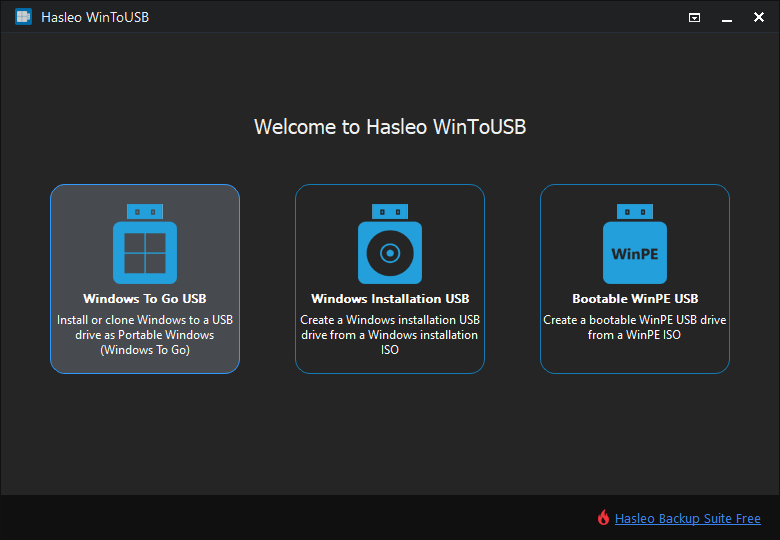
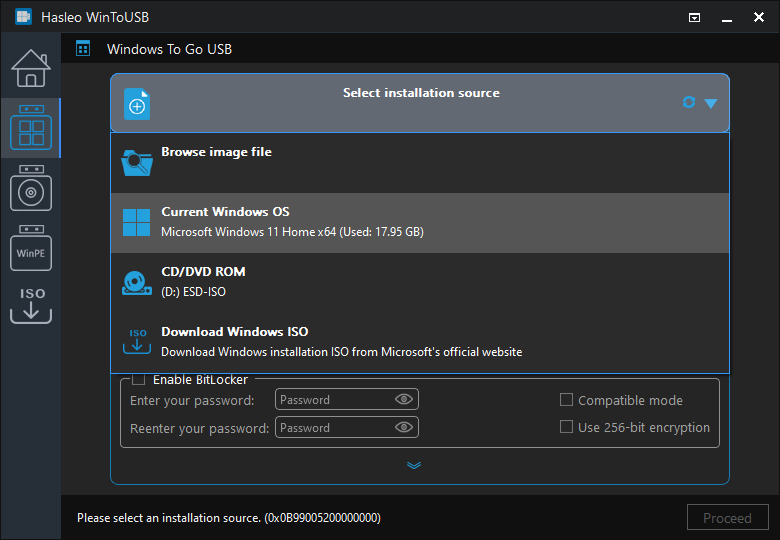
Step 2. Click "Select installation source" and then select "Current Windows OS" from the pop-up list.
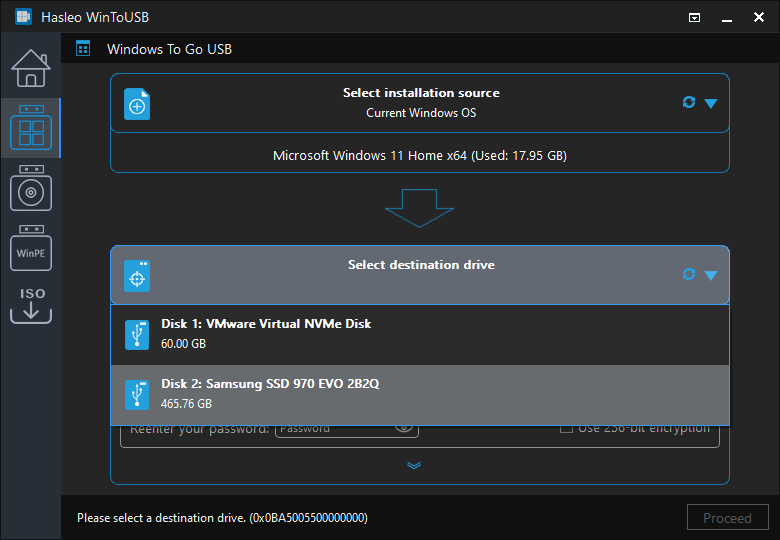
Step 3. Click "Select destination drive" and choose the target drive from the pop-up list.
Step 4. Select your preferred partition scheme and installation mode. Optionally, you may specify additional drivers or enable BitLocker encryption for the Windows To Go drive, then click "Proceed".
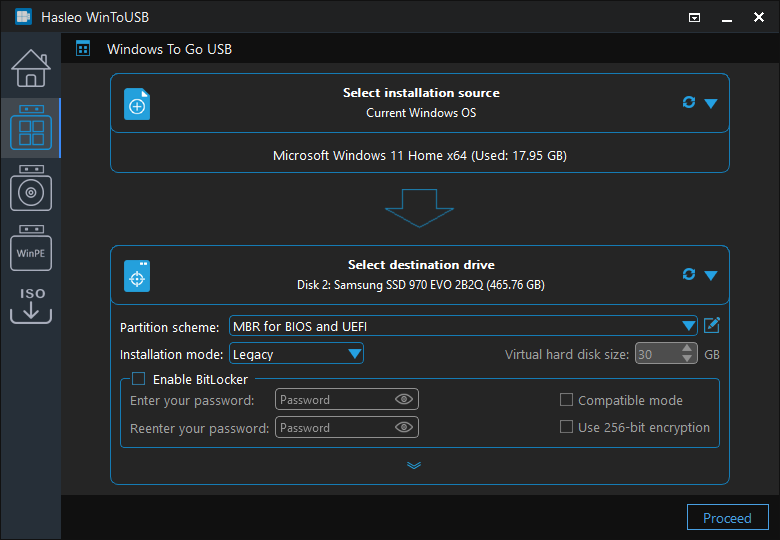
• For detailed information about "Partition scheme", "Installation mode" and "Enable BitLocker", please refer to: How to Clone an Existing Windows to a USB Drive as a Windows To Go Workspace?
Step 5. After clicking "Proceed", a confirmation dialog will appear asking whether to continue formatting the drive. Click "Yes" if you accept the operation.
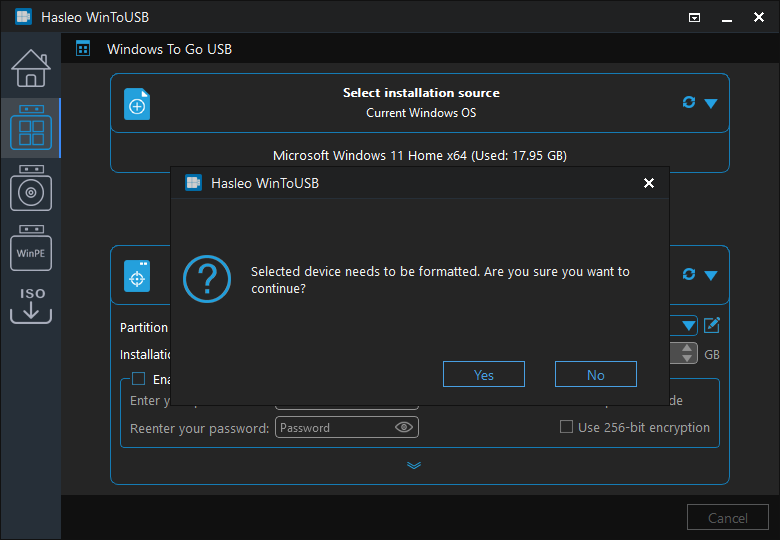
Step 6. After clicking "Yes", WinToUSB initiates Windows cloning on the destination drive. Cloning time depends on the size of the data being cloned.
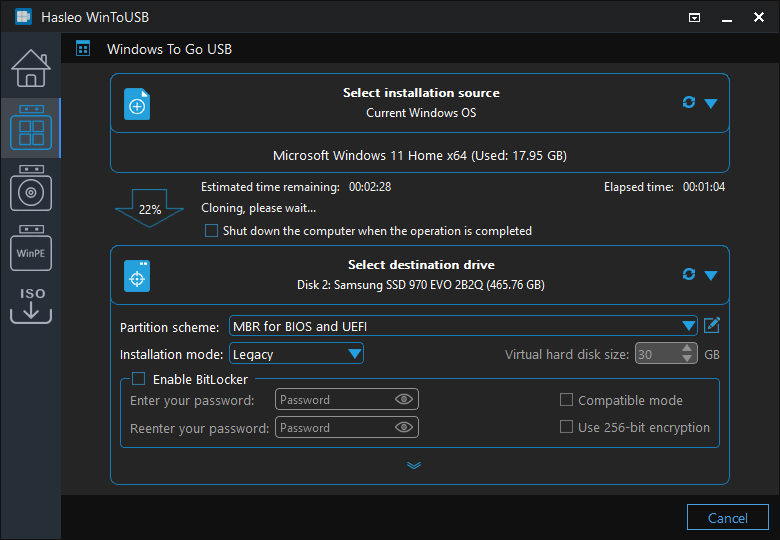
Step 7. Wait for the cloning process to finish. Upon successful completion, restart the computer and enter UEFI/BIOS settings to boot from the USB drive.
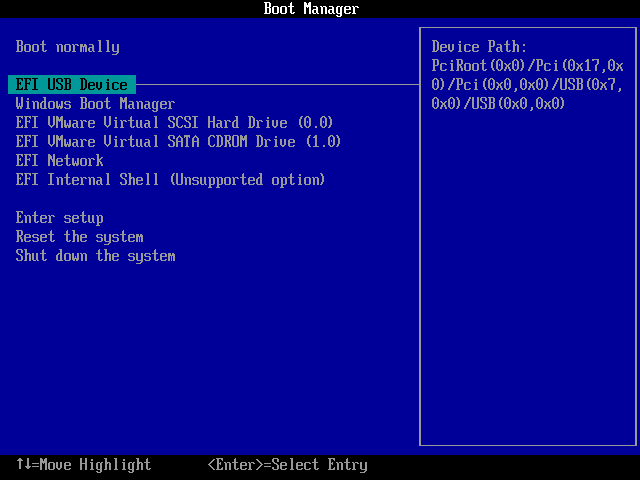
How to change UEFI/BIOS settings to boot Windows 11 from the USB drive
To boot the computer from a USB drive, set it as the first boot device in the UEFI/BIOS settings. How do you get into the UEFI/BIOS setup and change the boot order? Press a specific key to enter the UEFI/BIOS settings during startup. The key varies by brands of computers and motherboards. Usually you can find it in your motherboard manual. The following diagram displays BIOS/UEFI access keys for popular computer manufacturers and common motherboard brands.
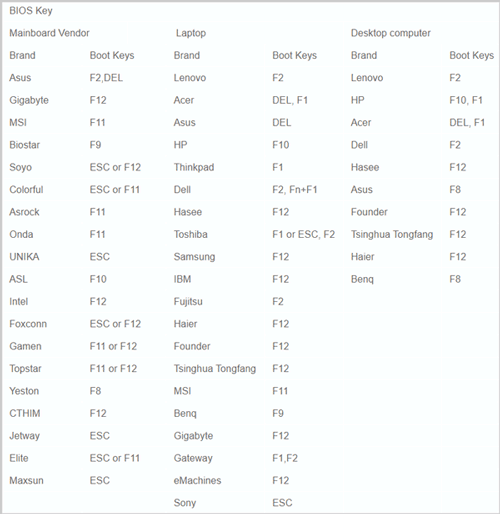
Step 1. Connect the USB to the computer and turn it on, then press the specific key to enter UEFI/BIOS.
Step 2. After accessing the BIOS/UEFI interface, change the boot order to set your Windows 11 To Go USB drive first.
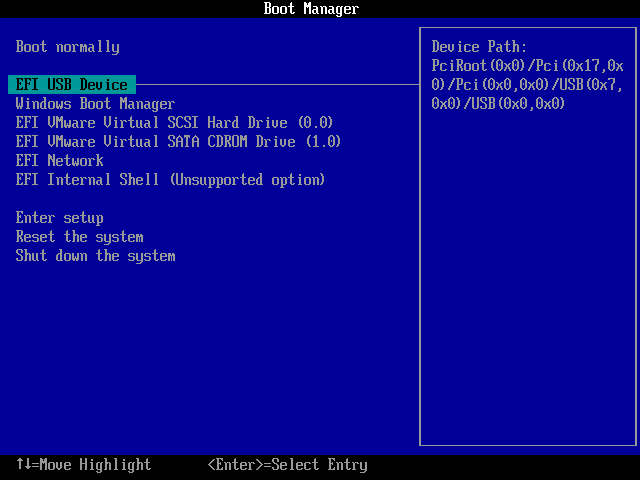
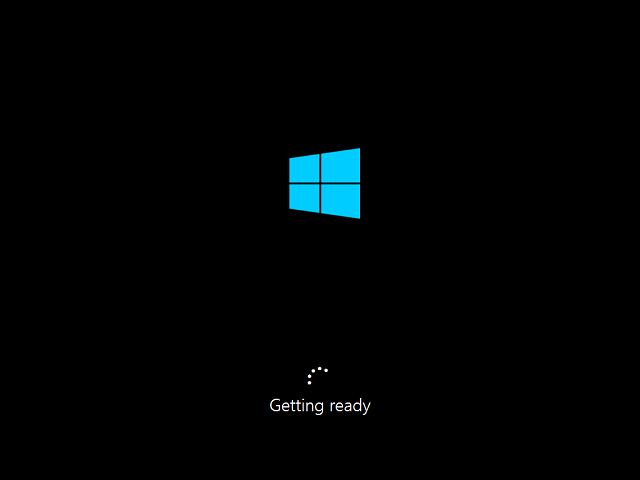
Step 3. Windows 11 starts running after installation. The Windows OS on the USB drive is cloned from a fully installed system, so you don't need to wait long before you boot into Windows.
Troubleshooting Common Issues
Click the refresh button next to the drive list. If the drive still does not appear, reconnect the USB drive or try a different USB port (USB 3.0 recommended). Make sure the drive can be correctly recognized by the Windows Disk Management tool.
The last 8 characters of the error code shown by Hasleo WinToUSB correspond to Windows kernel error 0x1B1 (A device which does not exist was specified.). This typically means the USB drive was unexpectedly disconnected. Try the following:
- Replace the data cable or enclosure
- Connect an external power supply to the USB drive
- Reconnect the USB drive or use a different USB port
Windows error 0x5 (Access is denied.) indicates antivirus software is blocking the write operation. Temporarily disable your antivirus or add WinToUSB to the exclusion list before retrying.
Enter BIOS/UEFI settings and verify the USB drive is set as the first boot device. Ensure the drive is connected directly to a USB port on the computer (not via a hub). Make sure to select the correct partition scheme: for UEFI systems, use the 'GPT for UEFI' or 'MBR for BIOS and UEFI' partition scheme; for legacy BIOS, use MBR.
Use a USB 3.0/3.1 drive or external SSD connected to the computer's USB 3.0 port. Cloning speed depends on the size of your Windows installation and drive write speed.
Frequently Asked Questions
A: Yes, Hasleo WinToUSB supports cloning Windows 11 to most USB drives, including USB flash drives and external hard drives. For optimal performance, we recommend using a USB 3.0 or higher drive with sufficient storage capacity.
A: Cloning creates an exact copy of your existing Windows 11 installation, including all apps, settings, and files. Installation from ISO creates a fresh Windows on the USB drive from Microsoft's installation files.
A: The cloned Windows 11 may require hardware drivers specific to each computer. Windows usually installs these automatically, but you may need to manually install some drivers for full functionality.
A: Cloning time depends on the size of your Windows installation and the speed of the USB drive. Typically, it takes between 15-30 minutes for a standard Windows 11 installation.
A: Yes, you can update Windows 11 on the USB drive like any regular installation. However, frequent large updates may reduce the lifespan of USB flash drives due to limited write cycles.
Conclusion
As mentioned above, Hasleo WinToUSB, the world's first third-party software to create Windows To Go, can easily Clone Windows 11 to a USB drive as portable Windows 11. In addition, you can use Hasleo WinToUSB to install Windows 11 from a Windows 11 installation ISO file on a USB drive.
As a professional portable Windows creation tool, Hasleo WinToUSB supports creating portable systems from Windows 11, 10, and 8 installations.
Related Guides
- How to create Windows 11 To Go with any edition of Windows 11?
- How to clone Windows 11 to USB flash drive as portable Windows 11?
- How to install and run Windows 11 on a USB flash drive as portable Windows 11?
- How to install and run Windows 11 on an external hard drive as portable Windows 11?
- How to create Windows 11 To Go with Windows 11 25H2 (Windows 11 2025 Update)?


