

Data protection is a critical priority for both enterprises and individuals. The most common safeguards include regular data backups and encryption. Among these, BitLocker Drive Encryption—Microsoft's full-volume encryption solution—stands as a cornerstone of Windows data security. Despite best efforts, data loss remains a persistent reality. Storage devices can fail for numerous reasons: virus attacks, improper shutdowns, removing USB drives without safe ejection, accidental deletion, formatting errors, or mistaken partition operations. For BitLocker-encrypted drives, these incidents often lead to drive corruption and, ultimately, irreversible file loss.
What if your BitLocker drive suddenly becomes inaccessible? Don't panic. Hasleo Software has developed a powerful and reliable BitLocker Data Recovery software to recover data from corrupted encrypted drives. Continue reading to learn how it works.

How to Recover Data from a Corrupted BitLocker-Encrypted Drive Using Hasleo Data Recovery?
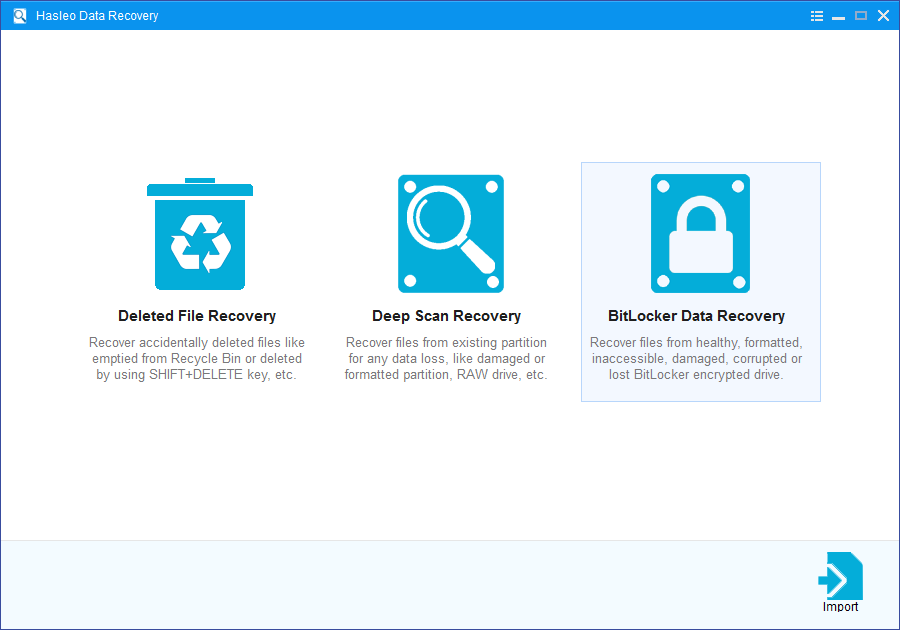
Step 1: Choose BitLocker Data Recovery
Download, install, and run Hasleo Data Recovery. On the main interface, you'll see several recovery options. Please select BitLocker Data Recovery mode.
Step 2: Select the drive to Scan
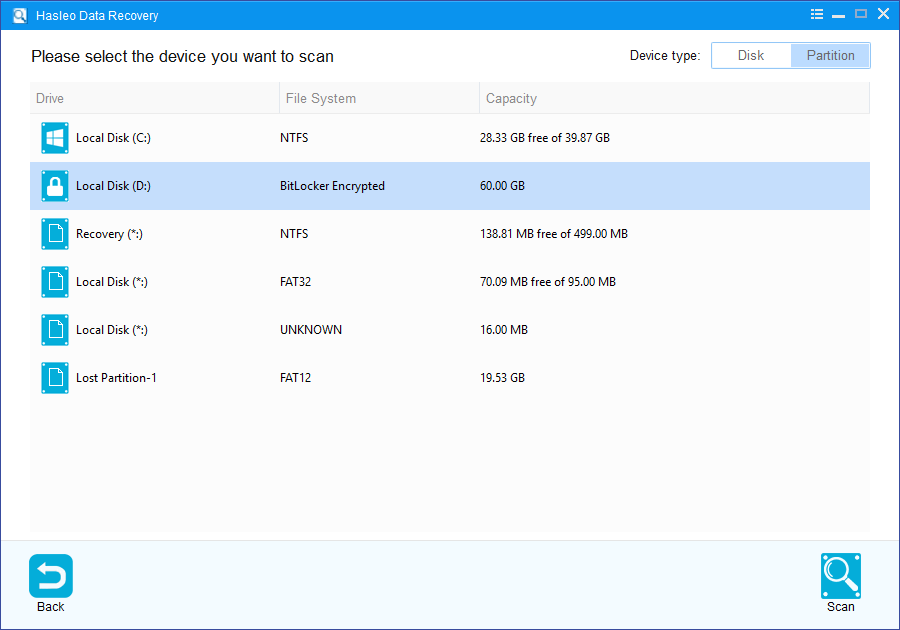
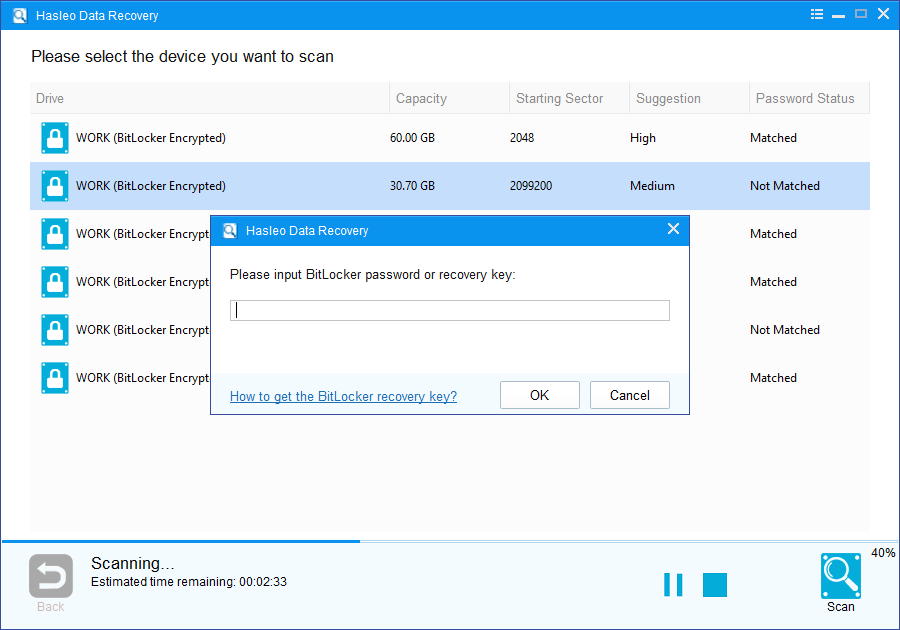
1. Please select the drive where you lost files, then click "Scan" to find all BitLocker-encrypted partitions on the device.
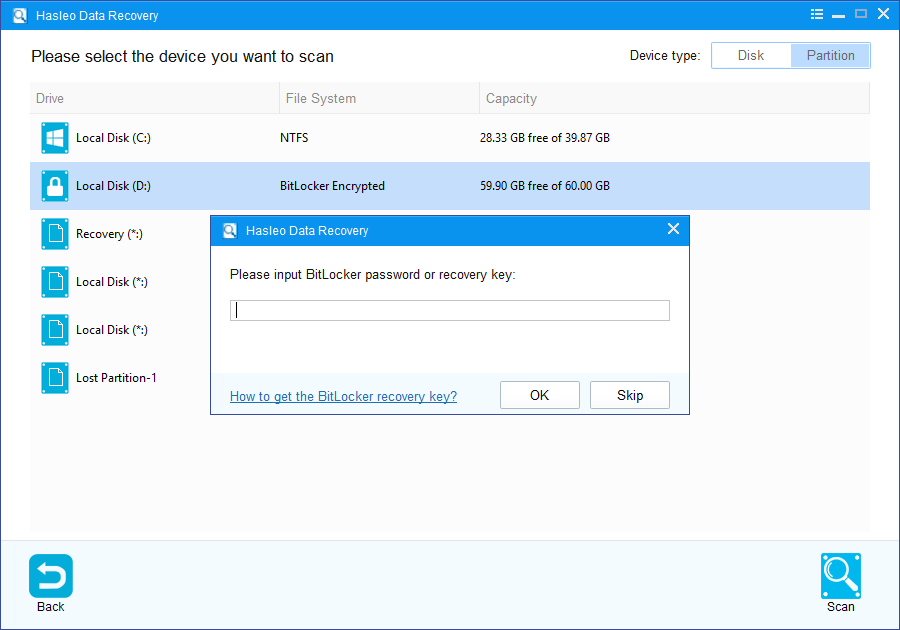
2. A pop-up window will appear asking you to enter the BitLocker password or 48-digit BitLocker recovery key. If you don't want to enter the password or BitLocker recovery key here, just click the "Skip" button to skip it.
3. Hasleo Data Recovery will display all detected BitLocker-encrypted partitions on the target device. If you provided the password or BitLocker recovery key in the previous step, the password status will show whether they match the partition.
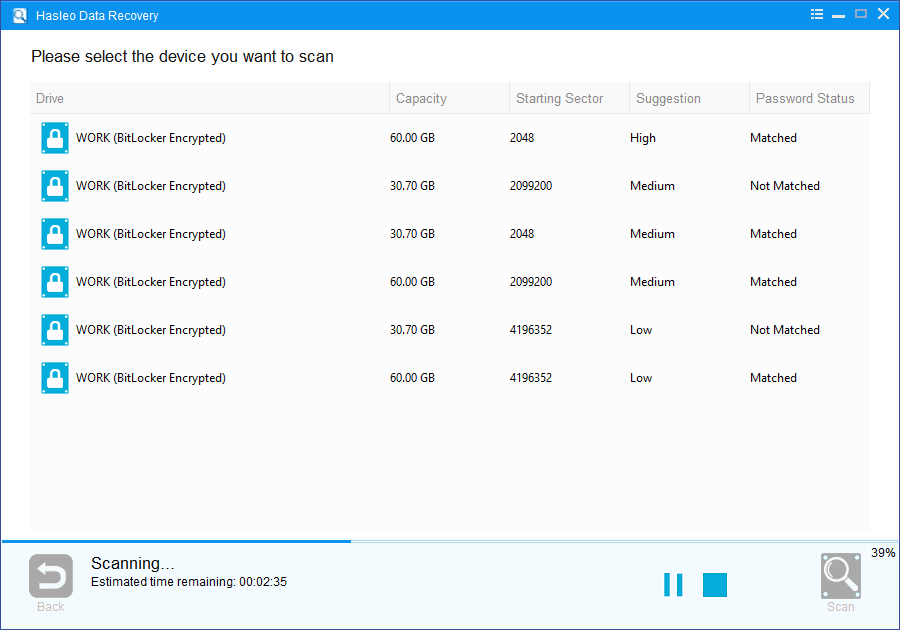
4. Double-click the partition you want to recover data from. If you've already entered the password or BitLocker recovery key and the password or recovery key matches, Hasleo Data Recovery will start scanning lost files. Otherwise, a prompt will appear asking for your BitLocker password or 48-digit recovery key. After entering the correct credentials and clicking "OK", the scan will start.
Step 3: Preview and Recover Deleted Files
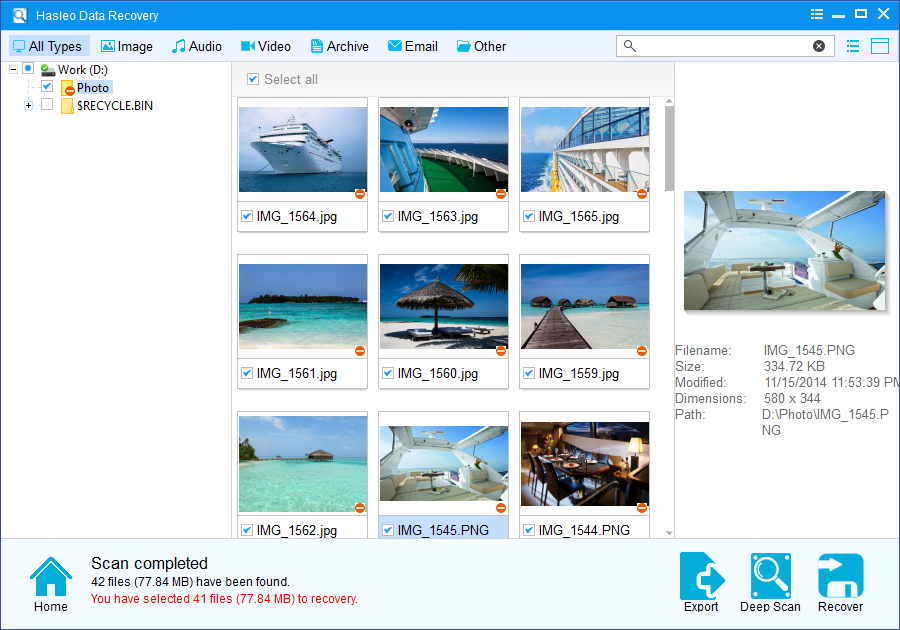
After scanning, the software will display a list of found files. You can preview them by browsing their paths or types. Select the files you wish to recover, then click the "Recover" button to save them to a destination of your choice. If your desired files are not found, click "Deep Scan" to initiate the Deep Scan Recovery process. This process takes additional time but can recover many more lost files.
Important Notes:
- You must enter the correct Bitlocker password or the 48-digit Bitlocker recovery key to successfully recover data from a BitLocker-encrypted drive.
- If the metadata area of a BitLocker-encrypted drive is severely corrupted, data recovery from that partition may fail—even with the correct password or recovery key.
- Do not save recovered files to the original partition where the lost data was stored. This prevents the data from being overwritten.
- You can export or save the scan results for later use or future recovery sessions.
Frequently Asked Questions (FAQ)
A: BitLocker drives can become corrupted due to various reasons including virus attacks, improper system shutdowns, removing USB drives without safe ejection, accidental deletion, formatting errors, mistaken partition operations, bad sectors, and power failures. These issues can damage the file system or BitLocker metadata, making the drive inaccessible.
A: Yes, you can recover data from a corrupted BitLocker-encrypted drive using Hasleo Data Recovery in BitLocker Data Recovery mode. The software can scan the encrypted drive, decrypt the data using your password or recovery key, and recover files that have been lost due to corruption.
A: Yes, you must enter the correct BitLocker password or 48-digit recovery key to recover data from a corrupted BitLocker-encrypted drive. Without these credentials, the recovery software cannot decrypt the data and access the files.
A: If the BitLocker metadata area is severely corrupted, data recovery may fail even with the correct password or recovery key. In such cases, you can try using the BitLocker Repair Tool (Repair-bde.exe) as an alternative. If all recovery attempts fail, you may need to consider professional data recovery services.
A: To prevent BitLocker drive corruption, always safely eject external drives before removing them, keep your system and antivirus software updated, avoid sudden power shutdowns, regularly back up important data, and check your hard drive's health status periodically using disk diagnostic tools.
Related Articles
- How to recover a deleted or lost Bitlocker encrypted partition?
- How to recover data from inaccessible BitLocker encrypted drive?
- How to recover data from Bitlocker encrypted partition in Windows 11/10?
- How to recover data from accidentally formatted BitLocker encrypted drive?
- How to recover data from corrupted/damaged BitLocker encrypted external hard drive?


