

- Solution 1: Unlock the BitLocker-Encrypted Drive Using Different Windows Versions
- Solution 2: Unlock BitLocker encrypted drive with Hasleo Data Recovery
- Frequently Asked Questions (FAQ)
I have an external hard drive that was encrypted with BitLocker on an earlier version of Windows 10 Pro. After upgrading to the latest version of Windows 10, I am no longer able to access the drive using my previous password. When I try to unlock it, I receive one of two errors: "The password entered is incorrect" or "The key doesn't match this drive." I am pretty sure both the password and the recovery key are correct. The drive contains a large number of important files, so this is a major problem for me. How can I unlock this drive?
BitLocker is a popular full-disk encryption scheme employed in all versions of Windows (but not in every edition) since Windows Vista. It can help us protect data security, but it can also bring us disaster, such as losing both the password and recovery key can cause us to lose data forever. We should avoid this, but sometimes we are unable to unlock BitLocker drive even if we have the correct password or recovery key, and we get the "the password entered is incorrect." or "The Key doesn't match this drive." errors when trying to unlock the device. In fact, this problem may be caused by a BUG in the Windows operating system itself, and of course we can't rule out other reasons.
In this tutorial, we offer you two solutions to solve 'Unable to unlock BitLocker drive with correct password or recovery key' problem.
Solution 1: Unlock the BitLocker-Encrypted Drive Using Different Windows Versions
1. Connect the drive to a computer running a different version of Windows. If you clearly remember the Windows version used during encryption, you can reinstall that version directly.
2. In File Explorer, try to unlock the drive using the password or recovery key.
If you are still unable to unlock the BitLocker-encrypted drive with the correct password or recovery key, proceed to Solution 2 to unlock the drive and recover your data.
Solution 2: Unlock BitLocker encrypted drive with Hasleo Data Recovery
Step 1: Choose BitLocker Data Recovery
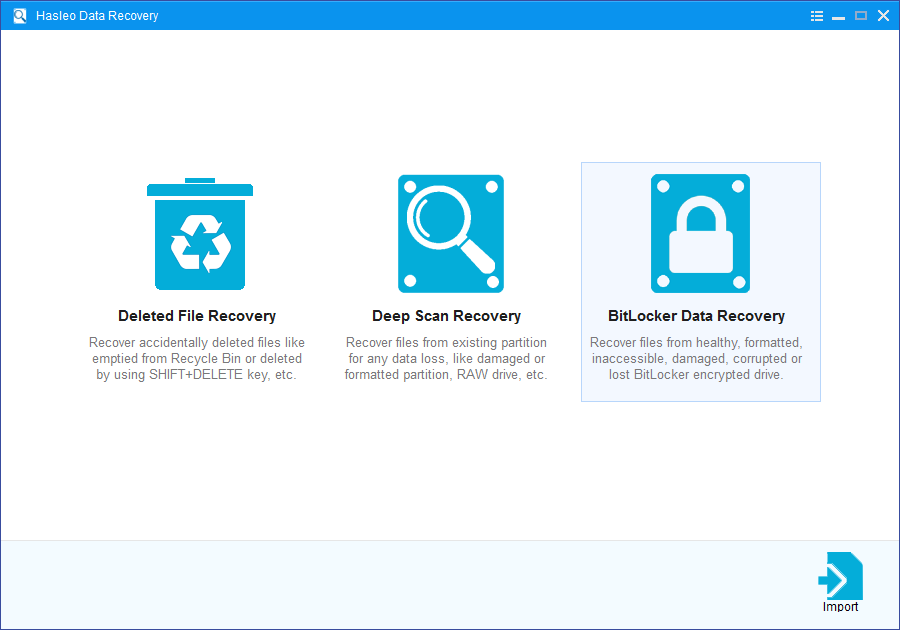
Download, install, and run Hasleo Data Recovery. On the main interface, you'll see several recovery options. Please select BitLocker Data Recovery mode.
Step 2: Select the drive to Scan
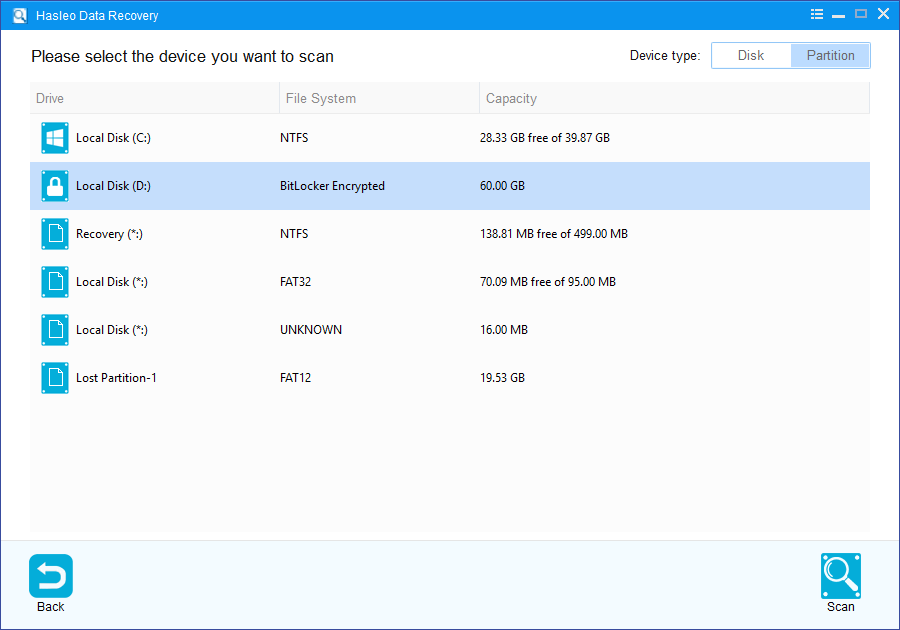
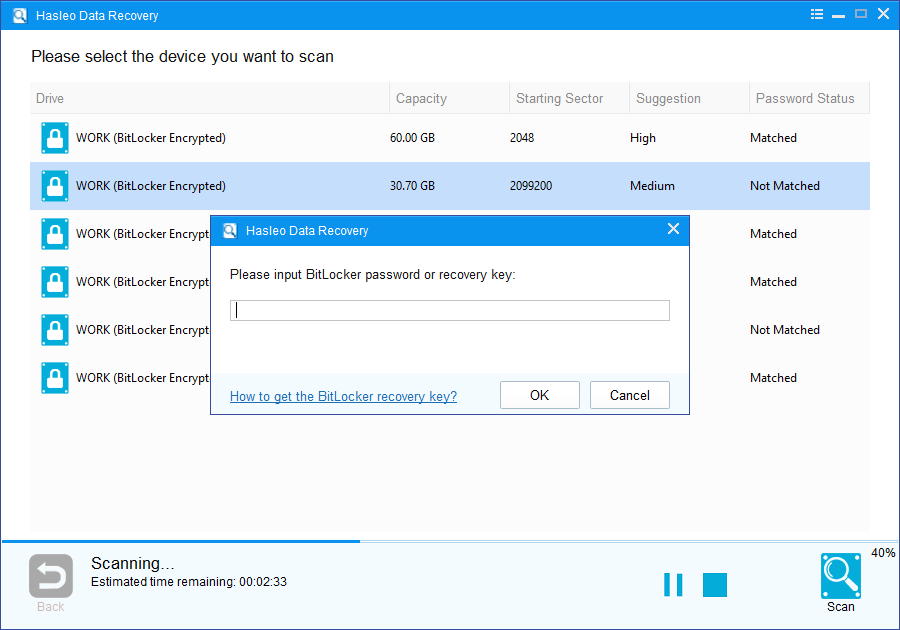
1. Please select the drive where you lost files, then click "Scan" to find all BitLocker-encrypted partitions on the device.
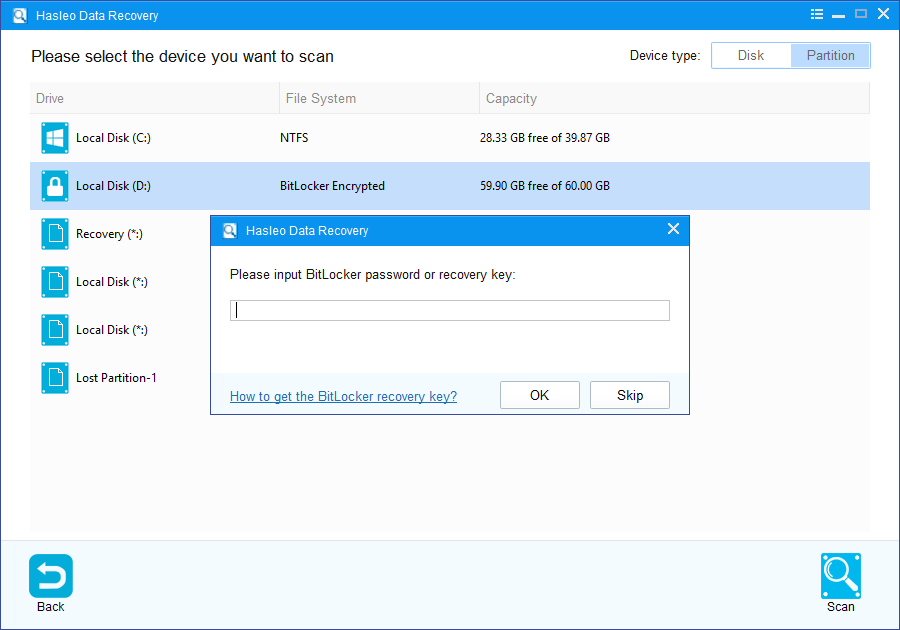
2. A pop-up window will appear asking you to enter the BitLocker password or 48-digit BitLocker recovery key. If you don't want to enter the password or BitLocker recovery key here, just click the "Skip" button to skip it.
3. Hasleo Data Recovery will display all detected BitLocker-encrypted partitions on the target device. If you provided the password or BitLocker recovery key in the previous step, the password status will show whether they match the partition.
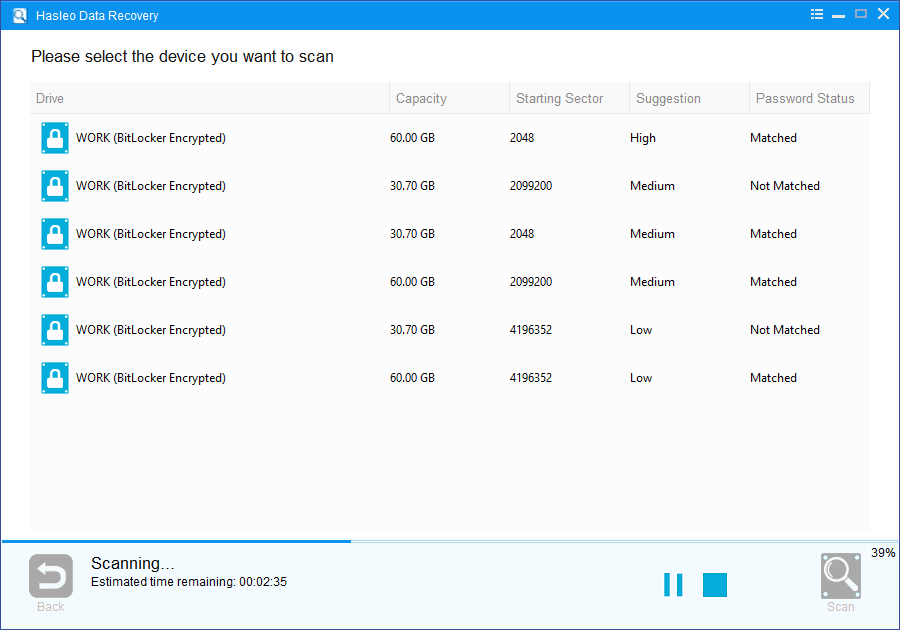
4. Double-click the partition you want to recover data from. If you've already entered the password or BitLocker recovery key and the password or recovery key matches, Hasleo Data Recovery will start scanning lost files. Otherwise, a prompt will appear asking for your BitLocker password or 48-digit recovery key. After entering the correct credentials and clicking "OK", the scan will start.
Step 3: Preview and Recover Deleted Files
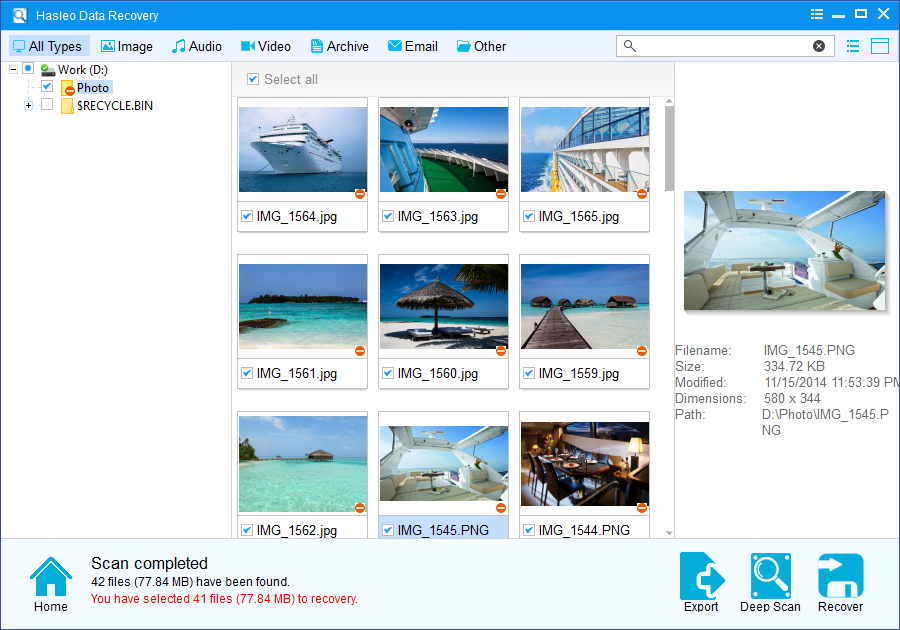
After scanning, the software will display a list of found files. You can preview them by browsing their paths or types. Select the files you wish to recover, then click the "Recover" button to save them to a destination of your choice. If your desired files are not found, click "Deep Scan" to initiate the Deep Scan Recovery process. This process takes additional time but can recover many more lost files.
To summarize, this tutorial introduced two solutions to resolve the "Unable to unlock BitLocker drive" issue. For cases where the correct password or recovery key is rejected, Hasleo Data Recovery—professional BitLocker data recovery software—can help you recover your data efficiently.
Important Notes:
- You must enter the correct Bitlocker password or the 48-digit Bitlocker recovery key to successfully recover data from a BitLocker-encrypted drive.
- If the metadata area of a BitLocker-encrypted drive is severely corrupted, data recovery from that partition may fail—even with the correct password or recovery key.
- Do not save recovered files to the original partition where the lost data was stored. This prevents the data from being overwritten.
- You can export or save the scan results for later use or future recovery sessions.
Frequently Asked Questions (FAQ)
A: BitLocker password rejection after Windows upgrade is often caused by a Windows bug that changes how the password is validated across versions. The encryption metadata may be affected when Windows updates modify the BitLocker implementation. Try using the exact same Windows version that was used when BitLocker was first enabled, or use the 48-digit recovery key instead of the password.
A: A BitLocker password is the user-defined credential you set during encryption. The recovery key is a 48-digit numeric string automatically generated by BitLocker during encryption. The recovery key is stored in your Microsoft account, printed, or saved to a file. If the password doesn't work, the recovery key may still work, and vice versa—try both if one fails.
A: If both password and recovery key fail due to Windows bugs, try these methods: 1) Connect the drive to a computer running the same Windows version used during encryption, 2) Use Hasleo Data Recovery which has alternative decryption methods, 3) Check if the drive's metadata is corrupted—if so, recovery may be impossible. The key is to try different Windows versions or recovery software before giving up.
A: To find your BitLocker recovery key: 1) Check your Microsoft account at https://account.microsoft.com/security (sign in with the same account used to enable BitLocker), 2) Look in the folder where you saved it during encryption (default is Documents), 3) If the drive was on a domain-managed computer, check with your IT department. Without the recovery key, data recovery from BitLocker is extremely difficult.
A: Hasleo Data Recovery uses different decryption methods than Windows' standard BitLocker unlock. It can bypass Windows-specific validation issues that may be causing the password rejection. The software reads the encrypted data directly and attempts alternative decryption algorithms, making it effective for cases where Windows displays 'password incorrect' errors even with correct credentials.
Related Articles
- How to recover data after Bitlocker encryption stuck?
- How to recover a deleted or lost Bitlocker encrypted partition?
- How to recover data from corrupted BitLocker encrypted drive?
- How to recover data from Bitlocker encrypted partition in Windows 11/10?
- BitLocker Drive encryption failed to recover from the abruptly terminated.


