

I was trying to decrypt a Bitlocker protected external hard disk overnight and it seems to be stuck at 45%. I waited for another couple of hours, but the progress was still unchanged, then I paused and then resumed the decryption, the problem persists, so I realized that the decryption had failed. There's over 100 GB worth of some pretty important files on this drive, so I'm eager to get those files back. Can someone tell me how to recover data after Bitlocker decryption failed? I'd be willing to pay a reasonable amount for a software solution.
If you encounter a decryption failure, first try pausing the process, restarting your computer, and attempting decryption again. You may also try decrypting on a different computer. If the problem persists, it indicates that the file system or BitLocker metadata has been corrupted due to the failed decryption. Once Windows can no longer unlock the partition, standard data recovery software is ineffective because the drive remains encrypted. In this scenario, you need a specialized solution: Hasleo Data Recovery, professional BitLocker data recovery software designed to recover data after Bitlocker decryption failed. This tutorial walks you through the complete process of recovering lost data from a BitLocker-encrypted drive after a failed decryption using Hasleo Data Recovery.

How to Recover Data After BitLocker Decryption Fails Using Hasleo Data Recovery?
Step 1: Choose BitLocker Data Recovery
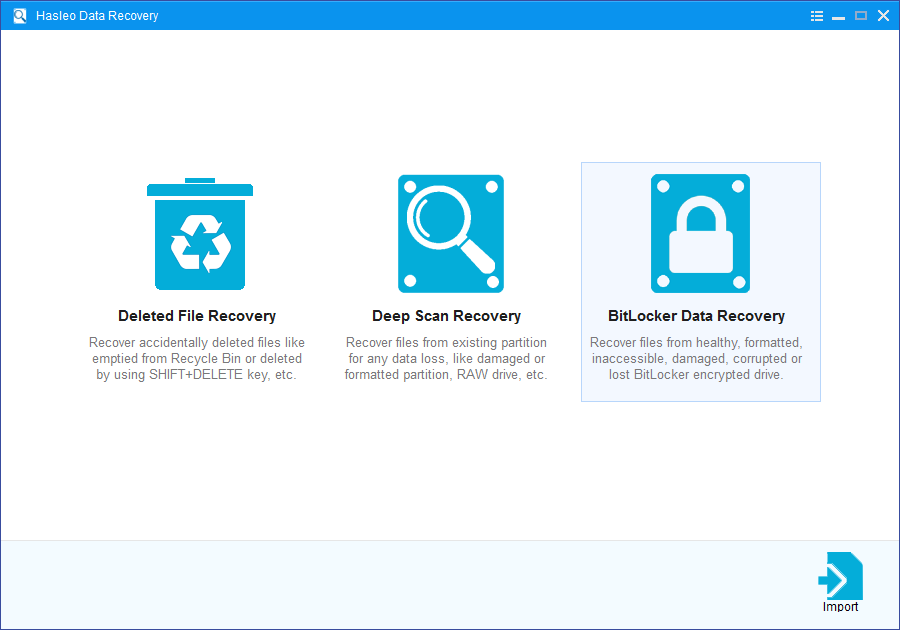
Download, install, and run Hasleo Data Recovery. On the main interface, you'll see several recovery options. Please select BitLocker Data Recovery mode.
Step 2: Select the drive to Scan
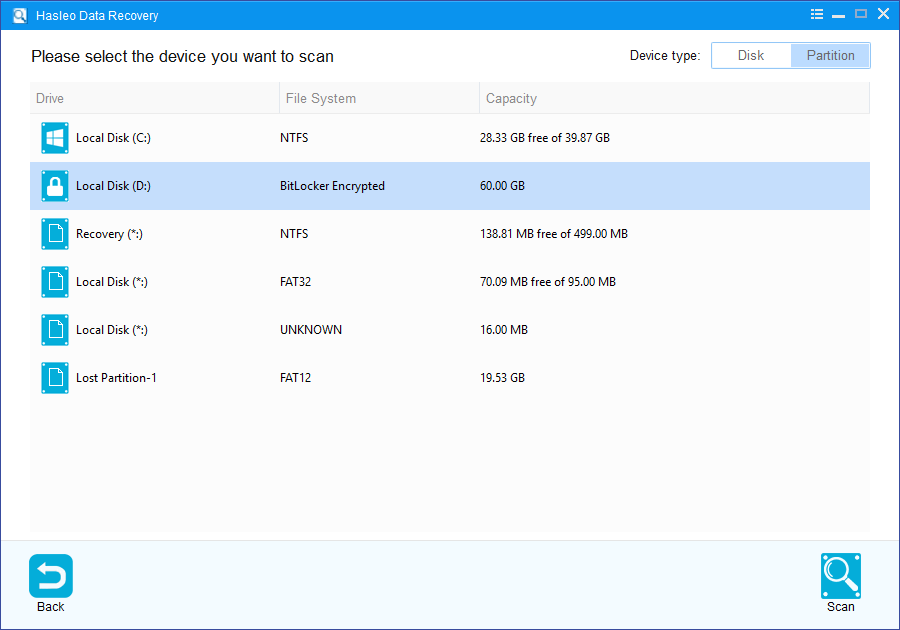
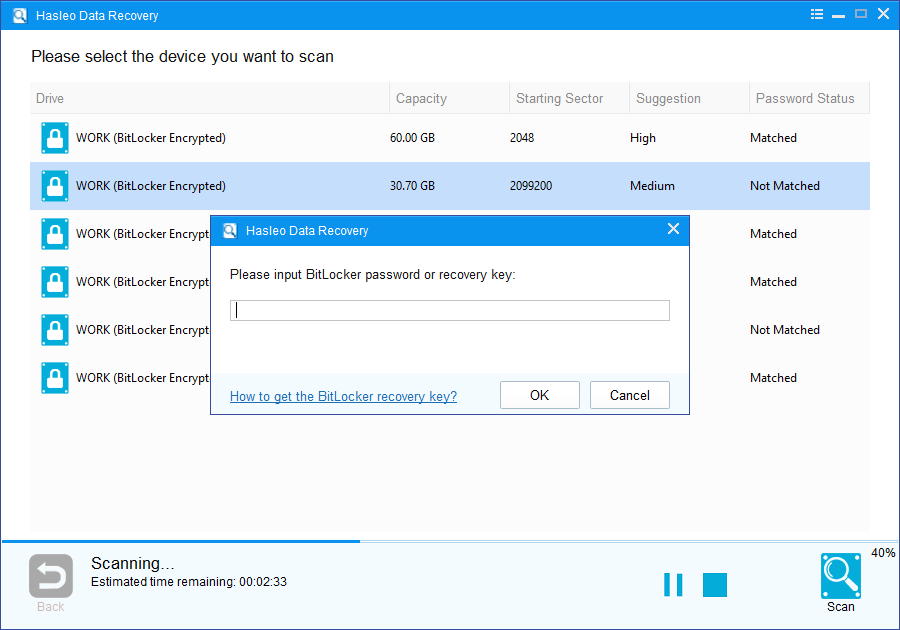
1. Please select the drive where you lost files, then click "Scan" to find all BitLocker-encrypted partitions on the device.
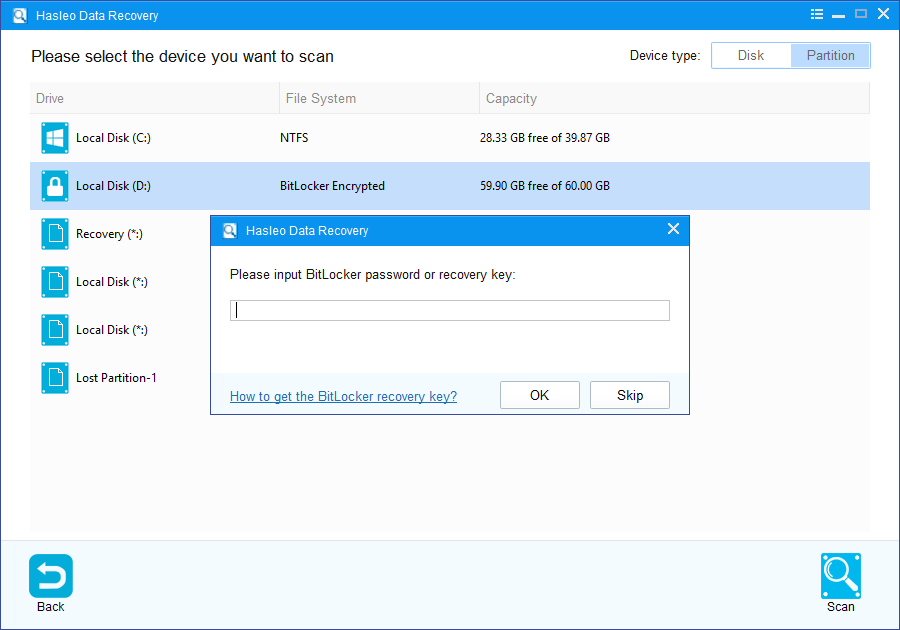
2. A pop-up window will appear asking you to enter the BitLocker password or 48-digit BitLocker recovery key. If you don't want to enter the password or BitLocker recovery key here, just click the "Skip" button to skip it.
3. Hasleo Data Recovery will display all detected BitLocker-encrypted partitions on the target device. If you provided the password or BitLocker recovery key in the previous step, the password status will show whether they match the partition.
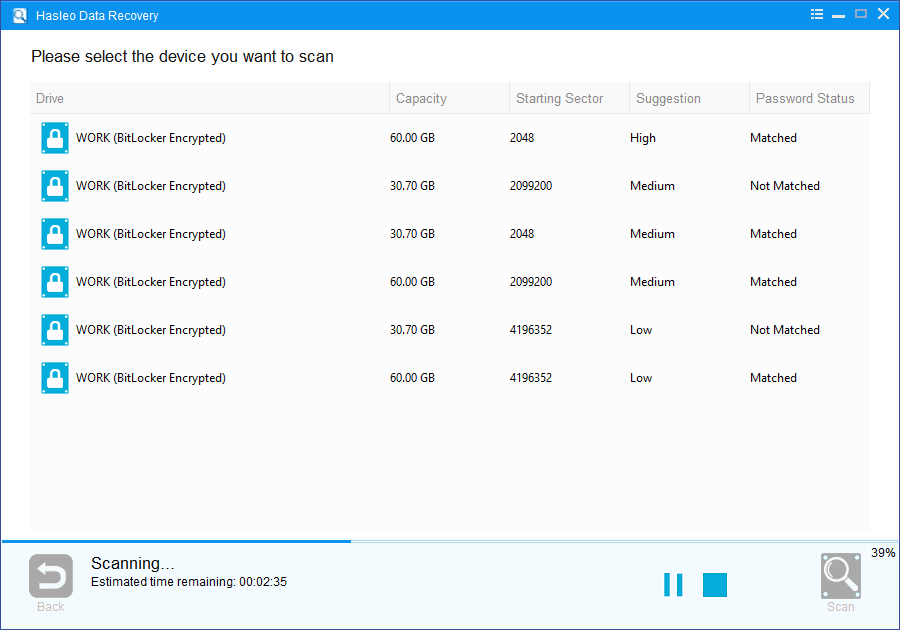
4. Double-click the partition you want to recover data from. If you've already entered the password or BitLocker recovery key and the password or recovery key matches, Hasleo Data Recovery will start scanning lost files. Otherwise, a prompt will appear asking for your BitLocker password or 48-digit recovery key. After entering the correct credentials and clicking "OK", the scan will start.
Step 3: Preview and Recover Deleted Files
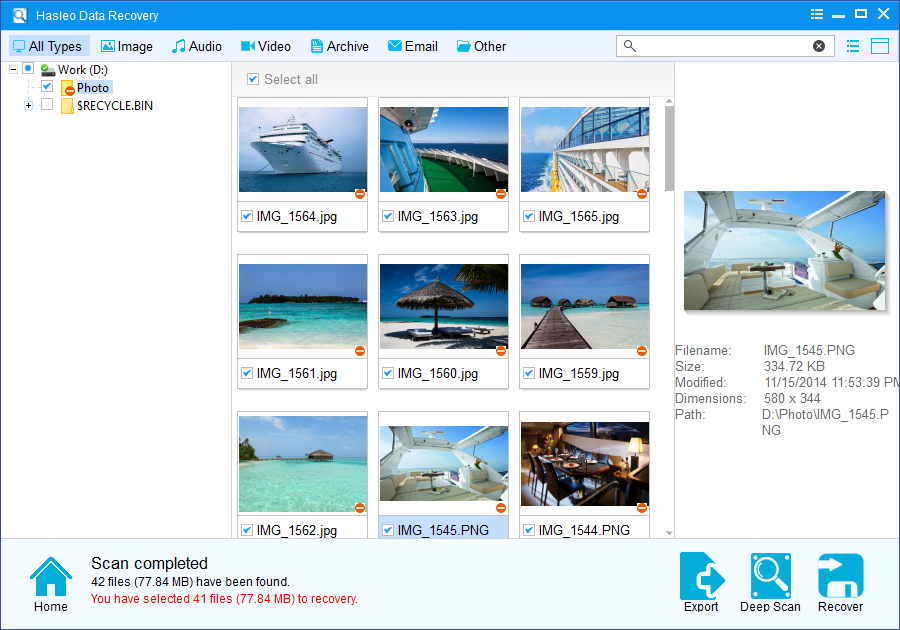
After scanning, the software will display a list of found files. You can preview them by browsing their paths or types. Select the files you wish to recover, then click the "Recover" button to save them to a destination of your choice. If your desired files are not found, click "Deep Scan" to initiate the Deep Scan Recovery process. This process takes additional time but can recover many more lost files.
As a professional BitLocker Data Recovery software, Hasleo Data Recovery can not only recover data from an decryption-failed BitLocker drive, but also recover data from a encryption-stuck BitLocker drive.
Important Notes:
- You must enter the correct Bitlocker password or the 48-digit Bitlocker recovery key to successfully recover data from a BitLocker-encrypted drive.
- If the metadata area of a BitLocker-encrypted drive is severely corrupted, data recovery from that partition may fail—even with the correct password or recovery key.
- Do not save recovered files to the original partition where the lost data was stored. This prevents the data from being overwritten.
- You can export or save the scan results for later use or future recovery sessions.
Frequently Asked Questions (FAQ)
A: BitLocker decryption can fail or get stuck due to file system corruption, corrupted BitLocker metadata, sudden power interruption during decryption, insufficient disk space, or conflicts with third-party encryption software. When the decryption process is interrupted or corrupted, Windows can no longer unlock the partition.
A: Yes, you can recover data from a BitLocker drive after decryption fails. However, standard data recovery software won't work because the drive remains encrypted. You need specialized BitLocker recovery software like Hasleo Data Recovery that can decrypt and recover files using your password or recovery key.
A: First, try pausing the process, restarting your computer, and attempting decryption again. You can also try decrypting on a different computer. If the problem persists, use Hasleo Data Recovery to recover your data before attempting any further decryption or formatting.
A: Yes, you must enter the correct BitLocker password or 48-digit recovery key to recover data from a BitLocker-encrypted drive. Without these credentials, recovery software cannot decrypt and access the data on the drive.
A: After recovering your data, you can repair the BitLocker drive by formatting it. Formatting will remove the corrupted file system and BitLocker metadata, allowing you to use the drive normally again. If needed, you can then re-enable BitLocker encryption on the newly formatted drive.
Related Articles
- How to recover data from crashed BitLocker encrypted drive?
- How to recover data from corrupted BitLocker encrypted drive?
- How to recover data from Bitlocker encrypted partition in Windows 11/10?
- How to recover data from accidentally formatted BitLocker encrypted drive?
- BitLocker Drive encryption failed to recover from the abruptly terminated.


